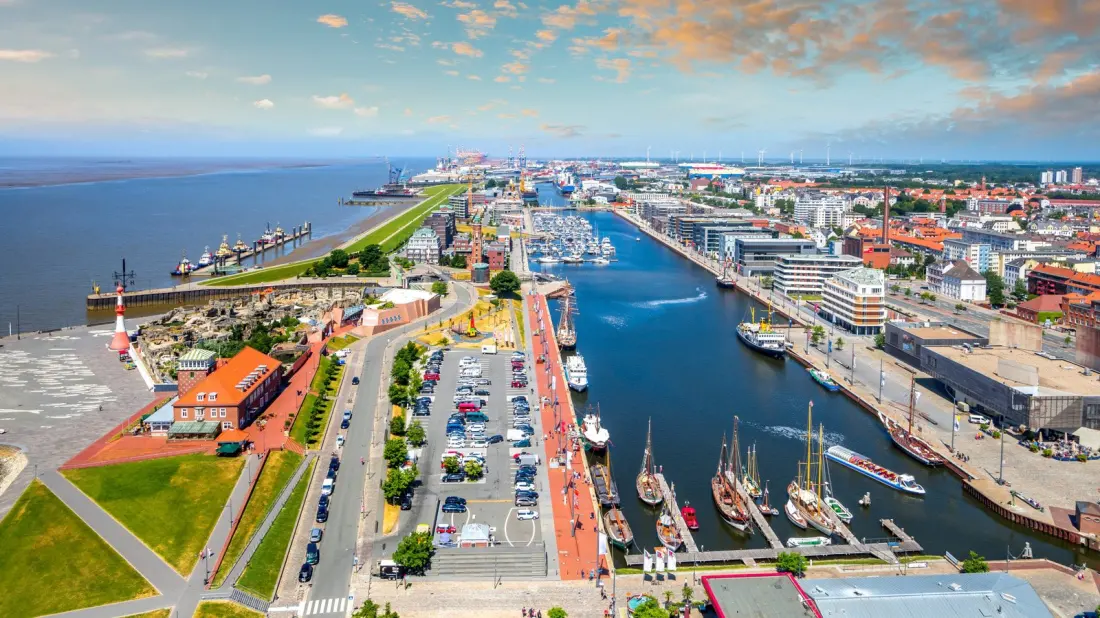
Germany's coastline rarely makes the itinerary. Most visitors chase Berlin nightlife or Bavarian castles and skip the roughly 750 miles of North and Baltic Sea shore entirely. That's their loss, because about two hours from Hamburg sits Bremerhaven, a port city of some 120,000 people that has quietly turned its maritime past into a very walkable waterfront.
Founded in 1827, Bremerhaven made its name in shipbuilding and as an emigration port — for decades, German families boarded steamers here to start new lives in America. Today the mood is reversed, with hundreds of thousands of arrivals each year exploring old cargo berths that have become promenades, marinas and museums. Tall ships still dominate the skyline, including the Alexander von Humboldt II, built to train young sailors. If your timing is exceptionally good, the city throws SAiL Bremerhaven every five years, when more than 250 vintage vessels from around the world sail into the harbour; the next edition is planned for 2030.
The waterfront's strangest building is the Klimahaus, shaped like a futuristic passenger ship with curved walls and a central tower. Inside it's a science centre devoted to climate change: interactive exhibits recreate different ecosystems, house living creatures, and show how human activity reshapes the planet. Families should pair it with the Zoo am Meer next door — a compact three-acre zoo with 47 species, polar bears included, all viewable in an afternoon. The two attractions are a five-minute walk apart.
Getting there is simple. Fly into Hamburg, then catch a train that takes as little as 90 minutes, or drive in about two hours for more flexibility. Bremerhaven's main station sits just over a mile from the waterfront — a half-hour walk or a quick taxi. Hotels cluster near the harbour, many for under $100 a night, and staying close to the port puts nearly everything within strolling distance. For dinner, harbour-side bistro Restaurant Schiffergilde gets strong reviews for seafood and water views.
Bremerhaven suits travellers who want a low-key German city break with a salty edge: maritime history, hands-on science, a small zoo, and cold North Sea air — all reachable on a modest budget without renting a car. It also pairs neatly with nearby Bremen, a sustainability-focused city that rewards eco-conscious visitors.