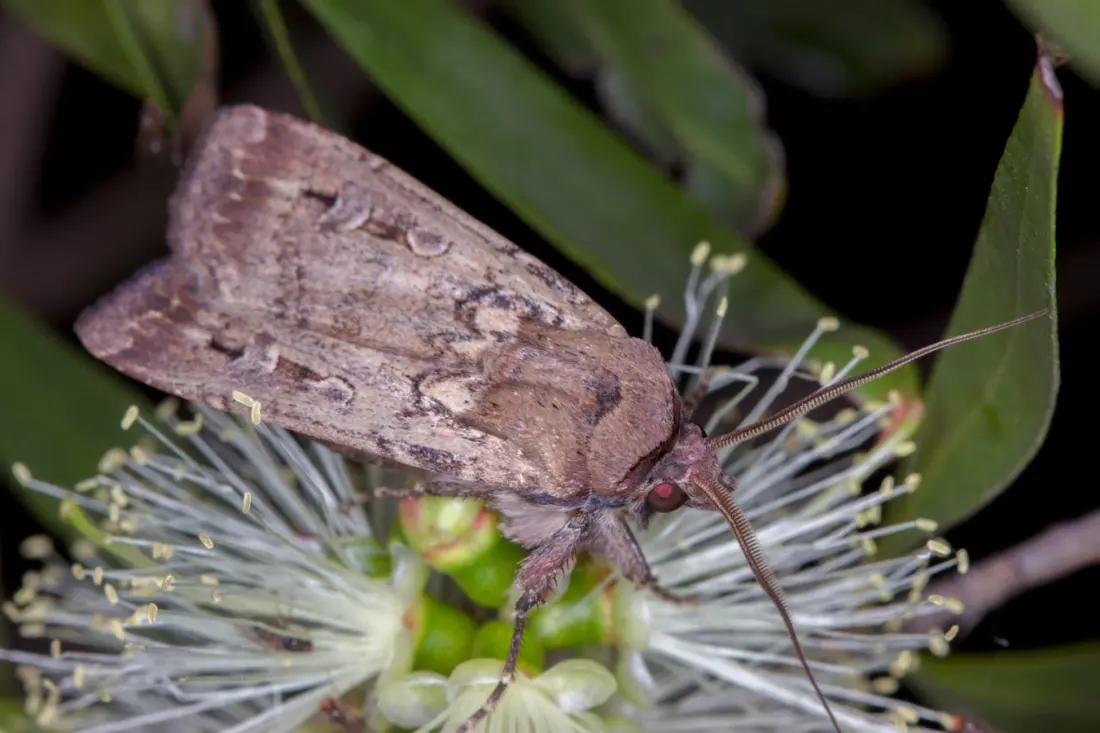
Each spring, a quiet spectacle unfolds across southeastern Australia: billions of bogong moths lift off from their lowland breeding grounds and fly hundreds of kilometres to the Australian Alps, where they'll shelter in cool alpine caves through the summer. This year's migration is in full swing, with sightings flooding in across New South Wales and beyond.
The moths come from southern Queensland, most of New South Wales, the ACT, patches of western Victoria and even into South Australia. Sightings spike every spring — including on the coast — which entomologist Dr Eleanor Drinkwater of Western Sydney University says points to some seriously long-haul journeys. If one turns up in your garden, she notes, it's in the middle of an extraordinary trip.
How do they find their way? Bogong moths navigate using the Milky Way and Earth's magnetic field. What makes this remarkable is that each moth makes the round trip only once — there's no learning from elders, no following a parent. The entire route is hardwired into their tiny brains. For anyone who has struggled to navigate an unfamiliar city, that's humbling.
Identifying one is easier than you'd think. The bogong (Agrotis infusa) is a medium-sized dark brown moth with a telltale marking: a dark stripe on each wing with a round blob at the top and a bean-shaped patch below it.
The migration also matters well beyond the moth world. When the insects reach the alpine caves, they become a crucial food source for the endangered mountain pygmy-possum — pregnant females in particular rely on them. A strong moth year generally means well-fed possum joeys, so this season looks promising for the little alpine marsupials.
There's a traveller angle here too. Anyone heading to the Snowy Mountains or the NSW high country in spring and early summer may see moths resting on walls, windows or even inside houses, especially at night. The insects are drawn to artificial light — light pollution is one of the biggest hazards they face, alongside the inconvenient fact that cities now sit on routes they've flown for thousands of years.
The advice from researchers is simple: leave them be. They're harmless to people and will move on within days. And if you want to do more than admire one, log your sighting with Bogong Watch, a citizen science project that helps researchers map the migration. Turning a garden moth into a data point is about as low-effort as conservation gets — and it genuinely helps scientists understand how this ancient journey is holding up.
For nature-minded travellers, spring in the Alps now offers two drawcards in one: the chance to witness part of one of the world's great insect migrations, and a better-than-average bet on seeing mountain pygmy-possums thriving in the high country as a result.