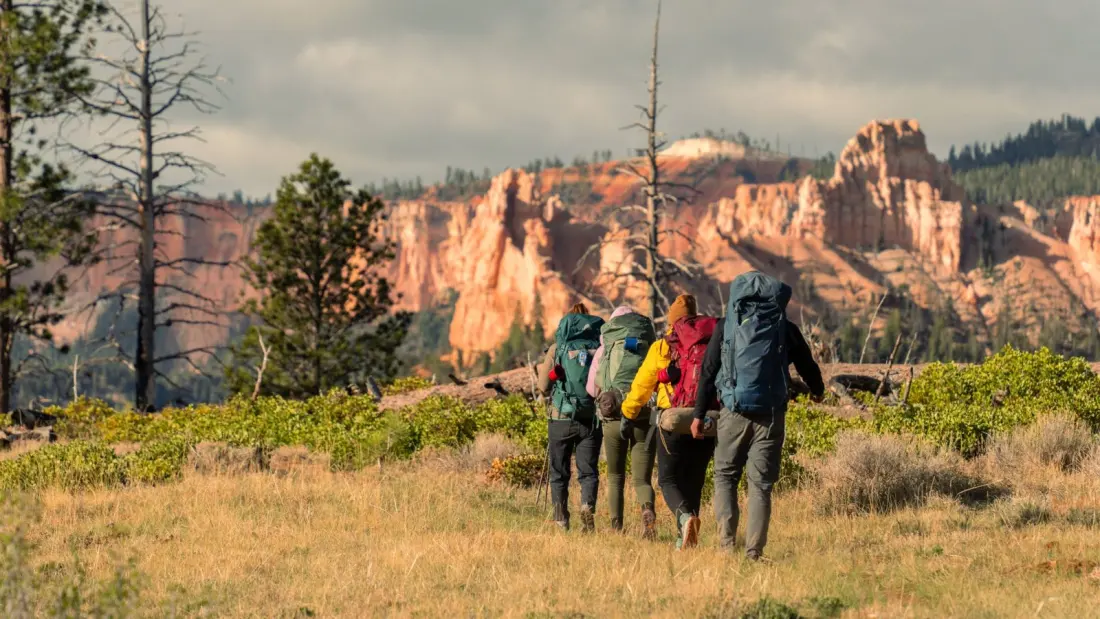
Most visitors to Bryce Canyon National Park see it from overlooks: a quick photo of the orange hoodoos, then back in the car. A writer at Backpacker decided to go beneath the rim instead, hiking the Under-the-Rim Trail — a 23.6-mile point-to-point route from Bryce Point to Rainbow Point with roughly 5,200 feet of elevation change — and came back arguing it deserves to be mentioned alongside the Grand Canyon's famous Rim-to-Rim hike.
The comparison isn't casual. Both routes exceed 20 miles with big elevation swings through dramatic Southwest scenery, and the author, who has done both, actually gives the difficulty edge to Bryce. The reason: relentless "pointless ups and downs" between the rim and the forest floor, rather than one big descent and climb. With the Grand Canyon's Rim-to-Rim currently dealing with flooding, fire damage and construction, Bryce offers a compelling alternative a few hours north.
What surprises most hikers is how un-Bryce-like the trail feels. Instead of endless hoodoo views, the route passes through pine forest, sandy hills and open meadows, with the rock formations towering above. Early highlights include the "Hat Shop," a cluster of hoodoos with boulders balanced on skinny pillars, and a two-mile stretch between Swamp Canyon and Whiteman Bench through an old burn scar now filling with green growth, where Swamp Canyon Butte and Mud Canyon Butte rise overhead. Below the rim, the park's big crowds simply vanish.
Practicalities matter here. Overnight permits are required and reservable on Recreation.gov up to three months ahead, with a ranger check-in before departure — and demand is low enough that the author's group was the only one out that week. Bear-resistant canisters are mandatory, but the park lends them free. Camping is at designated sites, with Swamp Canyon and Natural Bridge as sensible overnight stops. Water is the real challenge: the trail crosses dry washes, and reliable sources like Yellow Creek and Iron Spring can be bone dry by midsummer, so carry extra, check conditions with rangers, and consider caching water. Expect hot days and freezing nights — the author hiked in late April and wished for more spring greenery, suggesting late spring or early fall as the sweetest windows.
One logistics snag: the park shuttle doesn't serve Rainbow Point, the finish, so you'll need a second car or an NPS-listed shuttle option.
For travellers, this is a rare thing: a genuine multi-day wilderness route inside one of America's busiest national parks, still flying under the radar. If you're fit, comfortable with route planning and water hauling, and after canyon country solitude the rim crowds will never see, this is one to bookmark before everyone else does.