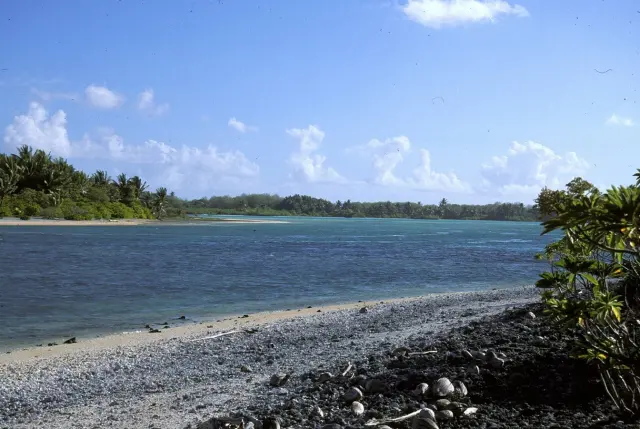
A 17-person research team has landed on Nikumaroro, an uninhabited atoll in Kiribati, to examine an elongated shape in the lagoon that might — might — be the wreck of Amelia Earhart's aircraft. There's just one complication: the island is patrolled at night by coconut crabs the size of a toddler, so the crew sleeps back on their ship.
The story behind the search: Earhart, who in 1932 became the first woman to fly solo across the Atlantic, vanished in 1937 with navigator Fred Noonan while trying to circle the globe. They left Papua New Guinea on 2 July and never reached Howland Island, their refuelling stop. The official version says her Lockheed Electra ran out of fuel and went down at sea, but the alternative — championed by TIGHAR, the International Group for Historic Aircraft Recovery — is that the pair made it to Nikumaroro, then called Gardner Island, landed on the reef and died there as castaways.
The current expedition, run by the Archaeological Legacy Institute and Purdue University, arrived this week after a 1,500km voyage. Their target is the Taraia Object, spotted in satellite imagery in 2020 and also visible in aerial photos from 1938. It sits about three metres from shore in water as shallow as 1.5 metres, and the team plans roughly five days of work: clearing vegetation, scanning for metal and dredging the site. An update on what it actually is — aircraft debris or, more prosaically, a fallen tree — is expected within days.
This is the first authorised visit to the island in seven years and the first to the Taraia Peninsula in over 15. Previous efforts, including one by Robert Ballard, the man who found the Titanic, have turned up nothing.
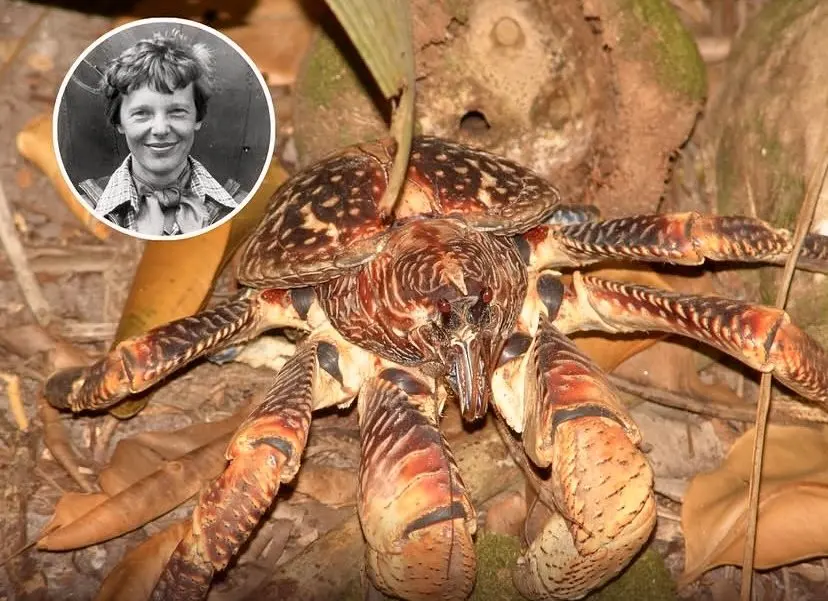
As for the crabs: coconut crabs are the largest land-dwelling invertebrates on Earth, with a leg span of up to a metre, a body weight over four kilos, and the ability to hoist around 28kg. They crack coconuts, climb trees, and hunt rats and seabirds after dark. They don't attack people, but a defensive pinch from those claws is nothing to brush off — which is why the team's communications flag overnight activity on the island as impractical.
The crabs even feature in the castaway theory. In 1940, British colonists found 13 bones near a fire on the island; the bones were later lost, but re-analysis of their measurements suggested they could belong to a woman of Earhart's build. In 2018, TIGHAR left pig carcasses on a similar island and watched the crabs strip most of the flesh and drag bones into burrows in under two weeks — a neat explanation for why so little physical evidence survives.
Why care? Even if the Taraia Object proves to be driftwood, this is one of aviation's great unsolved mysteries getting a fresh, hands-on attempt at an answer — staged on a remote Pacific atoll where nature has been quietly disposing of evidence for nearly 90 years. The answer to a 1937 disappearance may come down to what the dredge pulls up this week.