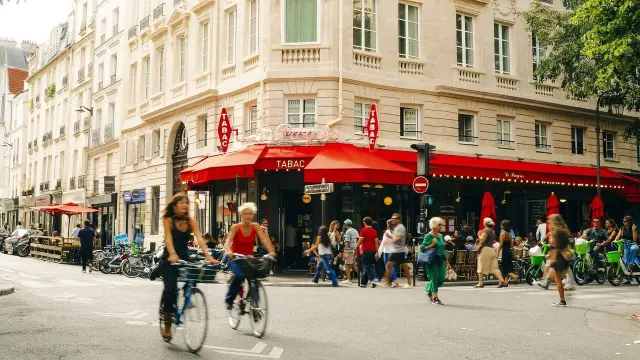
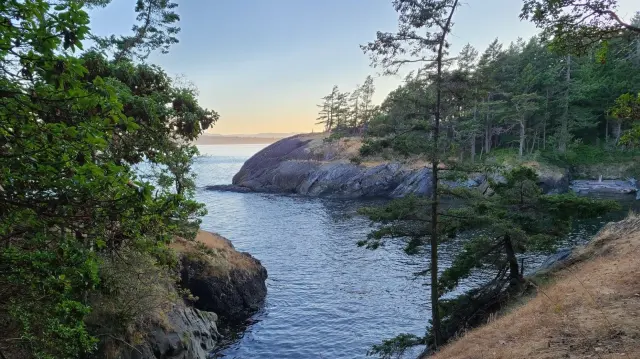
Budva has a split personality, and that's exactly its appeal. Behind medieval stone walls sits one of the oldest settlements on the Adriatic — a maze of narrow lanes, small squares and churches — while outside those walls, a full-on summer resort runs on late nights, packed terraces and music along the seafront. Beach in the morning, old town at sunset, bars until the early hours: that's the formula winning over European travellers.
The boom is visible. Iberostar now runs four hotels in Montenegro, two of them in Budva, including the five-star Iberostar Waves Slavija with its rooftop infinity pool about 1.5km from the old town. Big international chains moving in is a sign Montenegro's coast is shifting from a niche Balkan escape to a mainstream Mediterranean competitor — beaches, heritage, food and climate all packed into a very short stretch of coastline where the mountains practically fall into the sea.
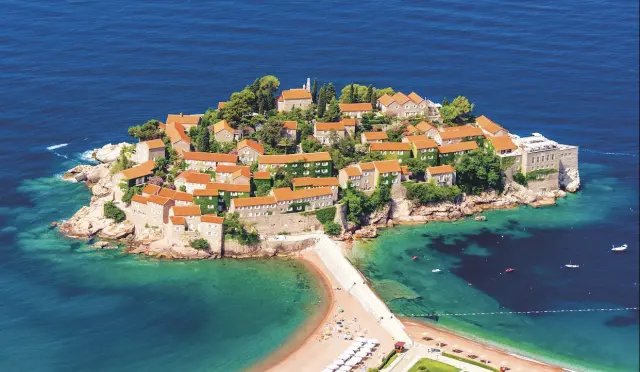
Just a few kilometres down the coast is Sveti Stefan, the country's postcard star: a former fishing village on an islet joined to the mainland by a narrow isthmus, transformed since the mid-20th century into an exclusive tourist enclave. The viewpoints along that stretch deliver some of the most striking sea-meets-mountain scenery on the Adriatic.
But growth has a cost, and summer visitors feel it directly. The coastal road chokes in July and August — trips that look short on the map take far longer. Anyone driving in from Croatia should budget roughly two hours at the border in peak season. Montenegro is among the most advanced EU candidate countries, and accession could eventually smooth those crossings, but for now patience is part of the itinerary.
The good news for fly-in holidaymakers: Tivat airport sits close to Budva, making it one of the easiest gateways on this coast.
So who is Budva for? Not travellers seeking silent mountain retreats — Montenegro can do that elsewhere. Budva suits those who want history and beach by day, and a resort town that barely sleeps by night; for some visitors it echoes the Spanish Mediterranean of the 1990s, endless nights included. It can be noisy and crowded in peak weeks, but that intensity is part of the character. With its compact old town, growing hotel scene and dramatic setting, Budva looks set to lead Montenegro's push into Europe's top tier of holiday destinations.