
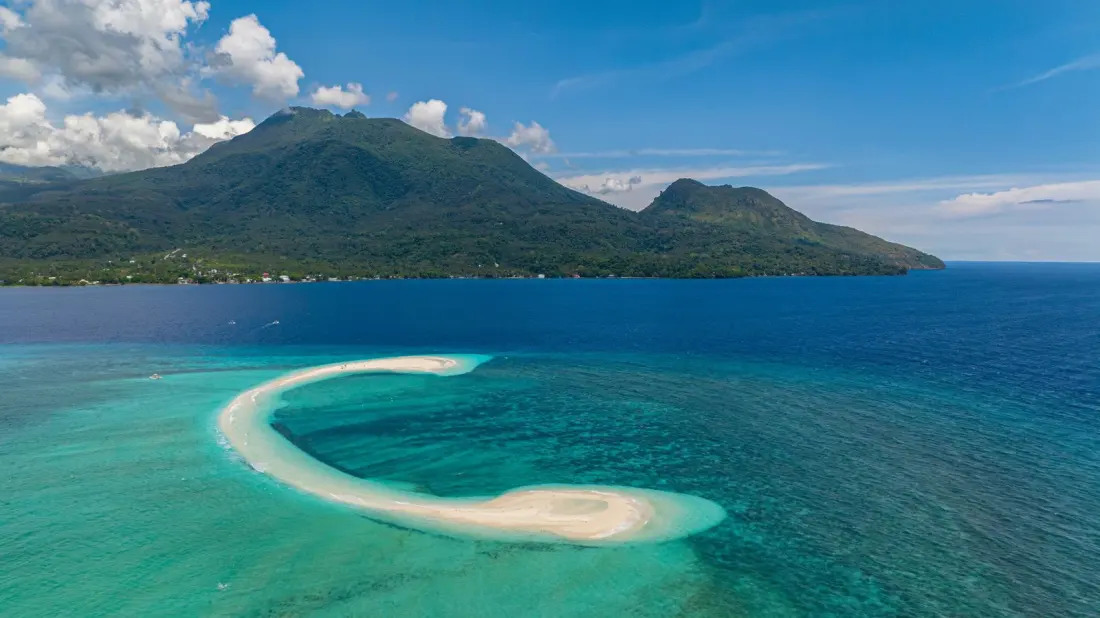
Seven volcanoes, hot springs, a soda-flavoured swimming pool and a cemetery swallowed by the sea — all packed into an island of roughly 92 square miles in the Bohol Sea. Camiguin, sitting between Mindanao and Bohol in the southern Philippines, gets far fewer visitors than Thailand's beach hubs, and that's precisely its draw.
Known locally as 'The Island Born of Fire', Camiguin's volcanic résumé includes 4,370-foot Mt. Hibok-Hibok, which last erupted in 1953. That geology is the source of its best experiences. Ardent Hot Springs, at the mountain's northern base, has a series of warm soaking pools at different temperatures plus a resort and campground. The Bura Soda Water Pool is a family-friendly oddity: cool, naturally carbonated water with spigots where you can drink the lightly sweet stuff straight from the source.
Out on the water, Mantigue Island — a 20-minute boat ride from the east coast — is a marine sanctuary set up by local fishermen, with coral reefs, turtles and barracudas for snorkellers. Boats and gear can be hired at Mantigue Port. Closer to shore, the Sunken Cemetery off the west coast is Camiguin's most haunting sight: a cross stands in the sea above a cemetery submerged by an 1871 eruption, and you can snorkel over the old headstones. On land, Katibawasan Falls drops about 250 feet into a shallow pool you can swim in, and there are several other waterfalls in the interior, some easier to reach than others.
The practical headline for budget travellers: locals' guides put daily costs at roughly $35 to $60, covering meals, lodging, transport and activities. Even a splurge here stays reasonable. Getting in is the trickiest part — there's currently just one direct flight into Camiguin Airport (CGM), from Cebu. Once on the island, most visitors rent a scooter, though the local motorela shuttles, jeepneys and multicabs get you around cheaply. Base yourself in Agoho, near the ferries and restaurants, or Mambajao, the main town.
Two things to weigh before booking. First, the surrounding Mindanao region carries a Level 2 U.S. travel advisory, with higher-level warnings in specific areas — flying directly into Camiguin lets you bypass the zones of concern, including Marawi City. Second, timing matters: dry season runs roughly March to June for the clearest skies, while the heaviest rain falls in December and January. Wet season means fewer crowds but rougher seas, which can scupper island-hopping plans.
Camiguin isn't for travellers who want nightlife, big resorts or easy connections — Thailand does that better. It's for people who want a slow, green, under-visited island where the highlight of the week might be soaking in a hot spring under a volcano, and recent visitors consistently mention the friendly locals and lack of crowds. If you're already nearby, it pairs naturally with a trip to Siargao or El Nido on Palawan.