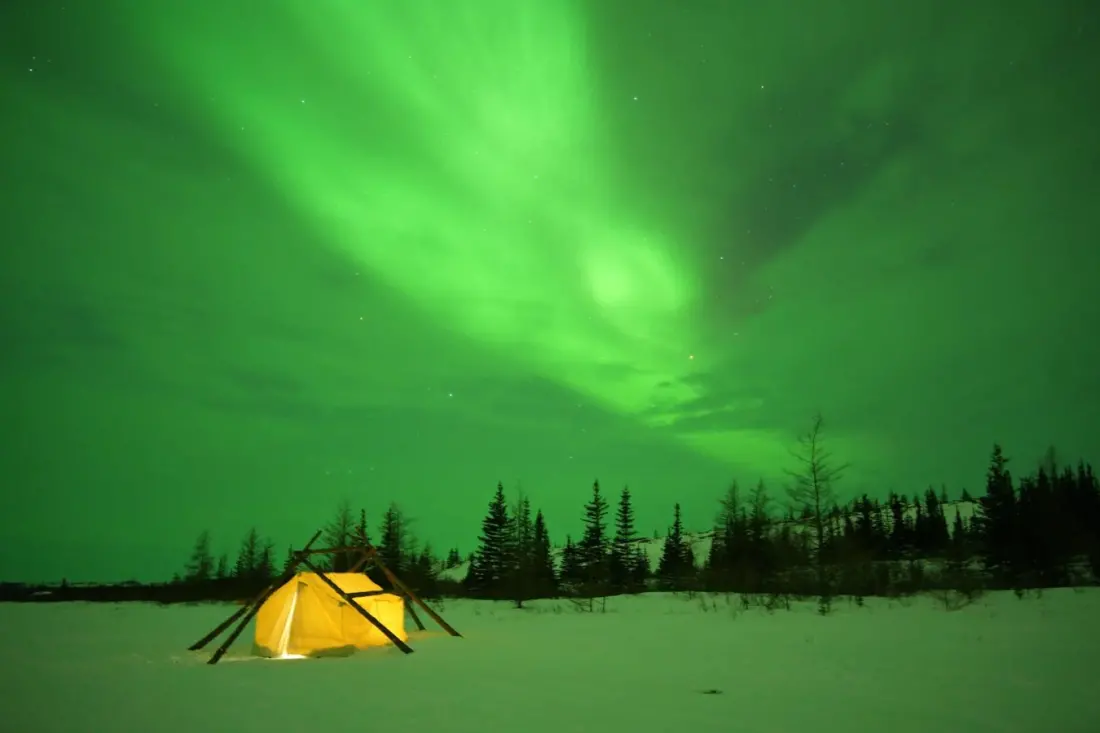
If you want to see the aurora borealis, Canada is one of the most reliable places on earth to do it. The country's northern latitudes sit directly under the auroral oval — the band around the magnetic North Pole where the lights appear most often — and the good news is that you don't need to be an extreme adventurer to reach the best viewing spots.
The Yukon is a perennial favourite. Whitehorse, the territorial capital, has aurora tour operators, heated viewing cabins and a road network that lets you drive out of city light in twenty minutes. Because it sits inland and cold, clear winter nights are common, which matters more than raw northern latitude when you're hoping for a display.
In the Northwest Territories, Yellowknife has built a small industry around the aurora. Its flat terrain, dry climate and position under the oval make it one of the statistically strongest places on the planet for sightings — regular viewers here often see the lights on the majority of clear winter nights between December and March.
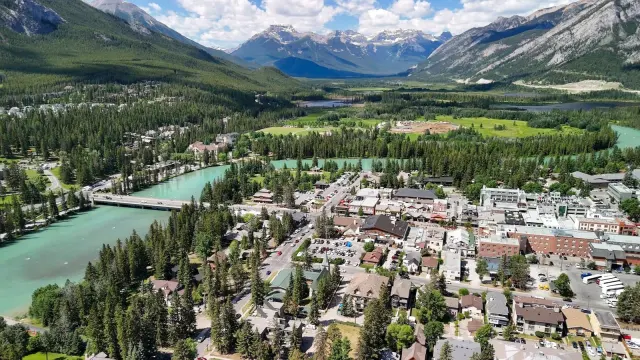
Further east, Churchill in northern Manitoba trades on a double act: polar bears in autumn, aurora all winter. The town sits on the edge of Hudson Bay and is reachable only by plane or train, which keeps the skies wonderfully dark. Meanwhile, in Alberta, the area around Fort McMurray and the northern reaches of Banff and Jasper offer occasional aurora visible much further south — a bonus for travellers already heading to the Rockies.
Timing is everything. Aurora season in Canada generally runs from late August to mid-April, with the strongest and most reliable displays in the deep winter months of December through February, when nights are longest and darkest. The lights tend to be most active around the equinoxes in September and March. You'll want to stay at least three or four nights wherever you go — aurora is unpredictable, and even under the oval, cloud cover can spoil a night.
A few practical tips make a big difference. Get well away from artificial light: even the glow of a small town can wash out a faint display. Dress properly — you'll be standing still outside at minus 30°C, so layered insulation and warm boots matter. Cameras catch aurora that naked eyes sometimes miss, so even a phone on night mode can be worth trying. And check aurora forecasts like those from NOAA or the Canadian Space Agency before heading out; geomagnetic activity ratings tell you when a night is worth the cold.
For a traveller, the appeal is obvious: this is a natural spectacle you can genuinely plan a winter holiday around, combining the lights with skiing, dog sledding, hot springs or a northern-road-trip itinerary. Who it suits best: anyone with cold-weather patience, photographers chasing a bucket-list shot, and travellers who'd rather earn their views in silence than watch them from a crowded bus tour.
Explore Magazine Canada