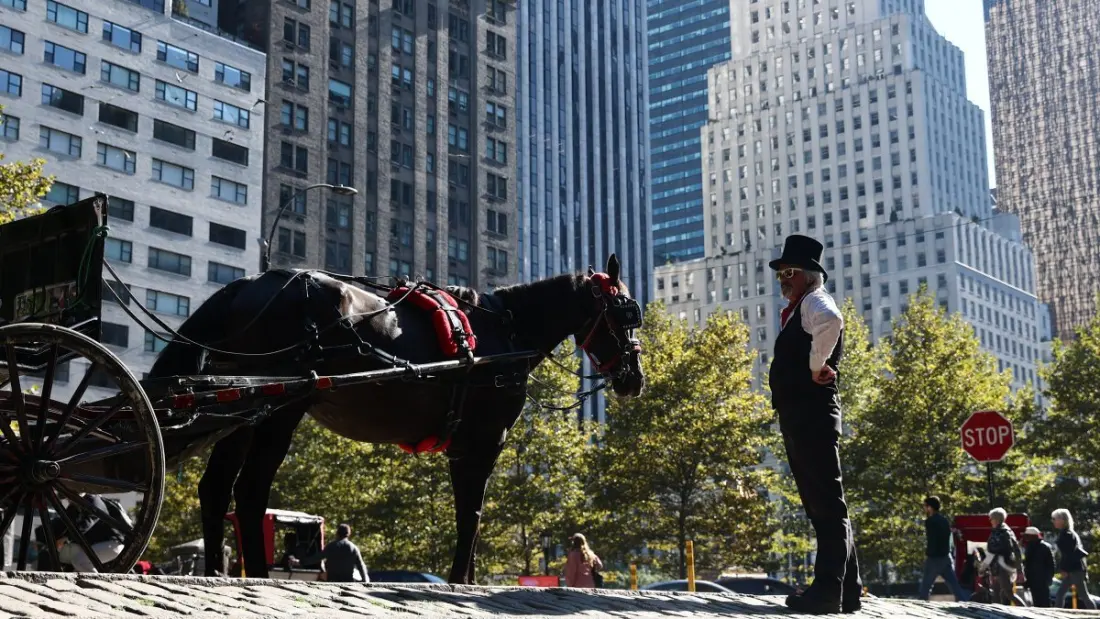
One of New York City's most storied tourist traditions is heading for retirement. The City Council is expected to approve a bill within days that would ban horse-drawn carriages from Central Park by 2028, closing the book on roughly 150 years of rides that have carried everyone from honeymooners to Hollywood stars.
The decisive turning point came in June, when 18-year-old Romanch Mahajan, visiting from India, died after leaping from a runaway carriage that had bolted during a ride with his family. His mother had been thrown from her seat, and he jumped to help her. It is believed to be the first fatality since the rides began, and his family has since appeared repeatedly at City Hall urging lawmakers to act.
Animal welfare concerns have simmered for decades — horses have collapsed or spooked in traffic before — but previous mayors failed to finish the job. Bill de Blasio pledged to end the rides on day one, then backed off after union pressure and a media campaign featuring actor Liam Neeson. Eric Adams made a late call for a ban that went nowhere. This time, though, Mayor Zohran Mamdani and Council Speaker Julie Menin have struck a deal, and the votes appear to be there.
The carriage industry is fighting back. Drivers like longtime operator Conor McHugh argue the rides are among the most iconic New York experiences, familiar from films like "Barefoot in the Park" and "Home Alone 2." The Transport Workers Union has accused the Council of political opportunism that will destroy immigrant families' livelihoods, saying the bill offers no real economic relief.
The legislation does include some cushions: the mayor's office must develop a workforce transition plan for drivers, the city may consider compensation for industry workers, and owners are barred from selling horses for slaughter — they must be rehomed humanely. Existing welfare rules already require the horses to get five weeks of annual pasture time outside the city, twice-yearly vet checks, retirement by age 26 and no work above 89 degrees.
For travellers, the takeaway is simple: if a carriage ride through Central Park is on your New York bucket list, you have a limited window before it becomes a movie-memory rather than a real option. Expect the ban to take full effect by 2028, and don't be surprised if the debate resurfaces as the phase-out begins. The park itself isn't going anywhere — the rides that have rolled through it since the 1800s are.