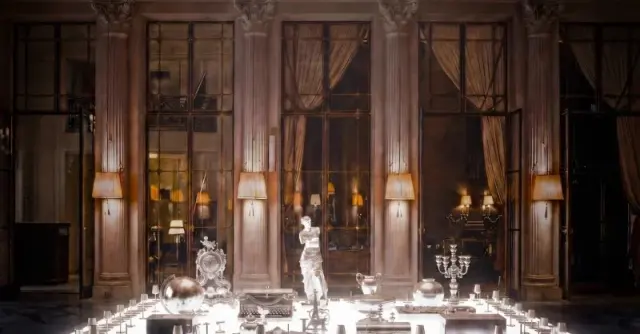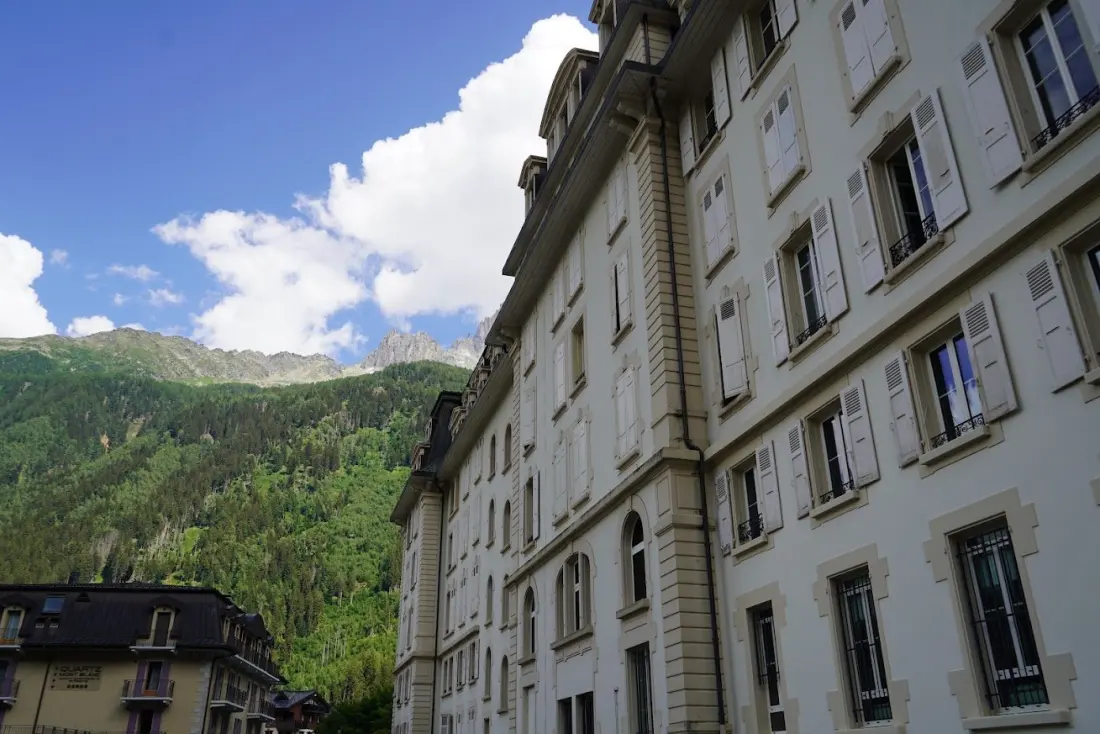
Chamonix has a shiny new reason to duck indoors between hikes. This July, exactly 100 years after the town's original Alpine Museum opened in 1926, the freshly renovated Musée du Mont-Blanc swings open its doors after five years of work — now with 1,800 square metres of exhibition space inside the old Chamonix Palace, the town's first grand hotel, steps from the Arve River.
This isn't just a facelift. The reimagined museum tells the whole story of the valley through three themes — Adaptations, Feats and Landscapes — starting with the subsistence farmers who grew barley and rye here long before anyone thought to visit, and ending with flying machines over a dried-up glacier in an animated film set in the year 2100.
The star artefacts are wonderfully odd. There's a wooden baton said to have belonged to Jacques Balmat, who made the first ascent of Mont Blanc in 1786 with Michel-Gabriel Paccard. After Balmat's death a local blacksmith bought it, and his son spent years gathering witness statements and mayoral documentation to prove its provenance — a paper trail strong enough that the museum held a conference before putting it on display. Nearby sits a manuscript in Balmat's own hand describing his climbs.
The centrepiece is the Bivouac des Perriades, a battered wooden A-frame shelter that once stood at 3,341 metres on the Mont Blanc route until melting permafrost made it unsafe. Locals crowdfunded its helicopter rescue, and after years in storage it's been restored at the heart of the museum, its original sign — Les Perriades, 3341m — still above the door.
Art lovers get the Landscapes section, anchored by Gabriel Loppé, the painter-photographer-mountaineer who first came to Chamonix in 1849 and painted glaciers from on high, not from the valley floor. Seven of his restored canvases hang here, including a wintry valley scene from the 1890s.
The museum also charts how tourism itself was born here: in 1741, Englishmen William Windham and Richard Pococke trekked up to Montenvers with farmers as guides, and Windham's description of the ice as a "frozen sea" gave the Mer de Glace its name. Display cases hold Victorian alpinists' kit — hemp ropes, early crampons, tinted goggles — alongside ski-race posters from the 1924 Winter Olympics through to UTMB race bibs, tracing Chamonix's evolution from demon-haunted glacier country to global adventure capital.
For travellers, it's a smart rainy-day plan and a useful reality check: Bricard's 1860 painting of the Mer de Glace, vast and blue-white, hangs beside what today's shrunken glacier actually looks like. Anyone visiting Chamonix — hikers, skiers, UTMB fans or Mont Blanc dreamers — will come out understanding the valley far better than a cable-car ride alone can teach.