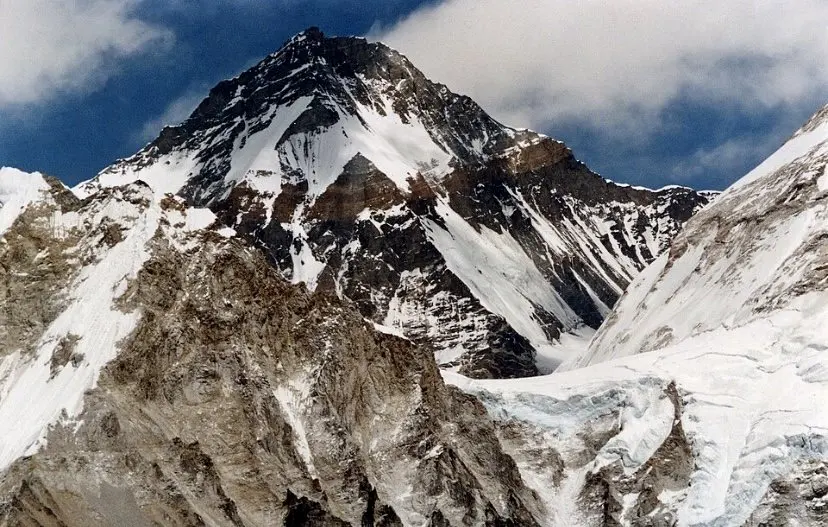
Everyone photographs the north face of Everest from Rongbuk. Few realise the shapely peak beside it, Changtse, is a 7,543m giant in its own right — linked to Everest by the North Col and flanked by the Rongbuk glaciers. Fewer still have stood on top: around 60 ascents in total, on a mountain that helped write the early history of Himalayan climbing.
Changtse's story starts with Everest itself. In 1924, George Mallory and Andrew Irvine became the first people to set foot on it, scouting the East Ridge for camp sites. In 1935, Eric Shipton's reconnaissance team — including Bill Tilman and a young Dan Bryant — pushed to within 460m of the summit before waist-deep monsoon snow stopped them. In 1952, Edmund Hillary and George Lowe slipped illegally over the Nup La into Tibet after aborting a Cho Oyu climb, and turned back on Changtse at 6,600m, short of food.
The first ascent came in October 1982, and twice. Dutch climber Johan Taks soloed the peak on October 3 without a permit, defying his own expedition leader. Eleven days later, a German Alpine Club team led by Eduard Geyer and Hansjuergen Tauscher made the first official climb, with Udo Zehetleitner topping out first via the four-kilometre northeast ridge. Yaks, not porters, hauled their loads to camps at 5,601m and beyond.
The mountain attracts bold loners. In 1983, 25-year-old Chilean glaciologist Gino Casassa slipped out of his Everest camp at 3:30am, climbed unroped and unpermitted, survived a snowpack collapse on the ridge, and summited at 5pm — then was expelled by his national federation. In 2016, Kilian Jornet and Jordi Tosas each soloed different faces within a fortnight. Ed Webster added a new southeast face route in 1986, a 15-hour round trip. Tibetan climber Gunsang remains the only woman to have summited, back in May 1986.
Why care? Changtse is a reminder that even in the Everest massif, genuine solitude and unclimbed-history routes exist — for now. It sits within the Everest region of Tibet, viewable from the Rongbuk Monastery area, where travellers can see the peak that humbled climbers for six decades before anyone officially stood on top.