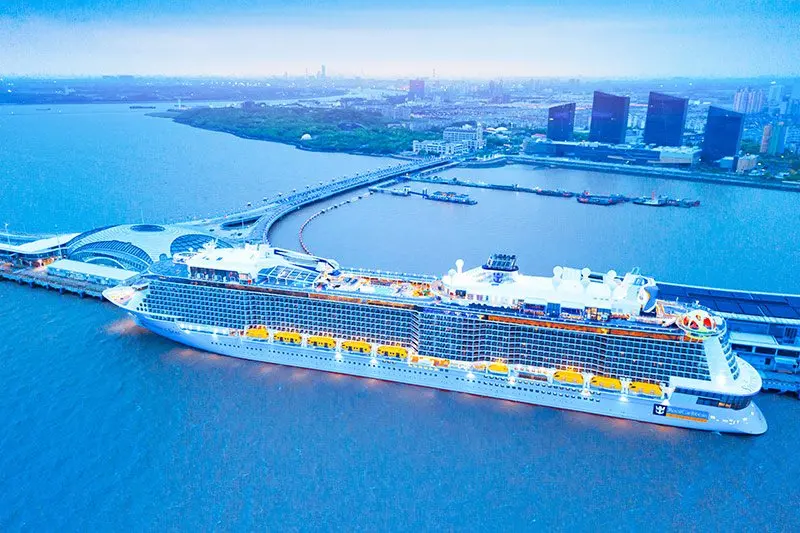
Royal Caribbean is betting big on Asia, and China is still at the heart of the plan. After 17 years in the market, the cruise line says the region is entering what its Asia chief calls a "second golden decade" — and it's backing that up with ships, itineraries and a new way of selling cruises in China.
For the 2026-27 season, Spectrum of the Seas will keep sailing from two homeports: Shanghai and Hong Kong. The pairing works because each port does a different job. Shanghai taps mainland China's fast-growing outbound travel market, while Hong Kong acts as an international gateway, pulling in overseas guests on longer itineraries towards Southeast Asia. The ship is scheduled to run more than 70 cruises of two to nine nights, calling at roughly 20 destinations across Japan, South Korea and Vietnam. Onboard, expect multilingual service and a mix of dining and entertainment aimed at an increasingly international crowd.
The 2027-28 season goes further: 56 sailings of three to 11 nights across 22 Asian destinations, with new flexible "open-jaw" options — including itineraries that start and finish at different points, using Yokohama in Japan as both an arrival and departure port. It's a nod to travellers who want to tack a land stay onto their cruise rather than do a simple round trip.
Singapore is also becoming a serious hub. Navigator of the Seas moves there year-round from October 2026, Quantum of the Seas follows from October 2027 to March 2028, and Voyager of the Seas will split time between Singapore and Hong Kong from January to April 2028 — including a new Singapore-to-Hong Kong sailing.
What's driving all this? Changing tastes. Royal Caribbean's Asia president Benjamin Bouldin says Chinese travellers now want novelty, deeper destination experiences and flexibility — not the shopping-focused trips of years past. The company is also adjusting to a distribution shift: China's cruise bookings are moving online and towards independent travellers. Its Royal Partner+ agent platform, offering live inventory and booking tools, had signed up more than 200 travel partners and nearly 6,000 registered users across 40-plus Chinese cities by mid-year.
Why it matters for travellers: if you've been curious about cruising in Asia, choice is about to widen considerably. Short tasters from Shanghai, longer international sailings out of Hong Kong, and a year-round Singapore base covering Southeast Asia make the region workable whether you have a long weekend or two weeks. It's also a sign that Asia is being treated as a connected network of cruise markets rather than isolated ones — which should mean more creative itineraries combining Japan, Korea, Vietnam and beyond. For anyone who prefers independent travel over packaged tours, the move towards flexible open-jaw sailings is the most interesting development here.
Story via Cruise Industry News.