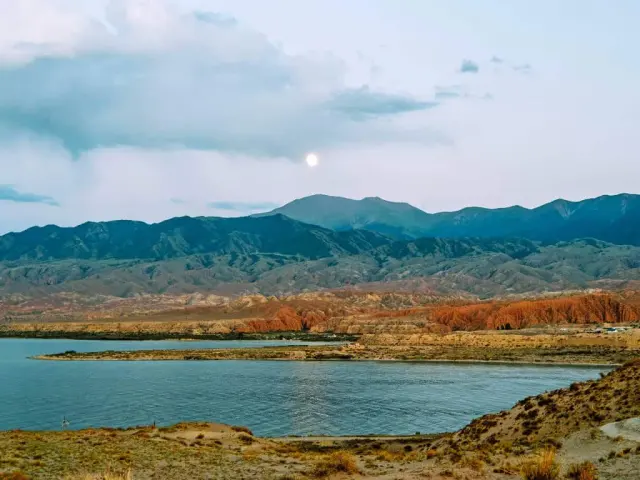
On a wild stretch of the Yarlung Zangbo River — the Tibetan upper reaches of the Brahmaputra — a dam more than 100 metres tall was once the kind of project that simply ended fish migration. At the Huaneng Zangmu Hydropower Station, engineers did things differently. Since the station began operating in 2015, roughly 570,000 fish have climbed an artificial ladder back up past the dam, according to figures shared with Global Times.
The Zangmu station, about 400 metres long, supplies nearly a quarter of the electricity demand in China's Xizang Autonomous Region and ended the region's reliance on large-scale diesel power. But the river's seven fish species that use the fishway — including the black-spotted catfish and the Lhasa schizothoracin, both nationally protected — are cold-water fish with weak swimming ability, unlike the powerful salmonids that inspired fish ladders in North America and Europe. So the design team spent six years running flow tests on a scale model with real fish, eventually settling on an inlet flow speed of 0.92 to 1.2 metres per second. The resulting zigzag channel climbs in gentle steps with a 2 percent gradient, rest pools every 10 metres, and an observation room where staff watch migrations through a glass wall.
The investment is not small: the fishway itself cost about 360 million yuan (roughly $53 million), plus 48 million yuan for a fish breeding and release station and nearly 7 million yuan a year in breeding costs. Over 12 years the release programme has put 1.97 million young fish back into the river, and tagged fish have been found around 200 kilometres downstream where the Nyang River joins the main stem — evidence they survive in the wild.
The monitoring side has gone properly high-tech. An AI system using optical and sonar cameras identifies individual fish by fin shape and swimming posture — a kind of fish face recognition — with about 95 percent accuracy, logging migration times and water temperatures. The data is shared with research institutions and other Chinese hydropower projects. Staff report that fish numbers in the middle gorge have stayed stable, and that otters and mergansers are increasingly seen around the dam.
Why should a traveller care? For anyone drawn to the Tibetan Plateau — one of the world's most fragile ecosystems and a claimed 'gene bank of species' — this is a rare example of mega-infrastructure and conservation coexisting. It's also a preview of things to come: China is planning far larger hydropower projects downstream on the same river, and Zangmu has become the template for how fish passage is handled at extreme altitudes. Breaking the old rule that dams over 40 metres tall don't get fish passes, the project won first prize in Xizang's 2023 Science and Technology Awards. If you find yourself travelling the middle reaches of the Yarlung Zangbo between March and June, that's peak spawning season — the time when thousands of fish race up the ladder each day.