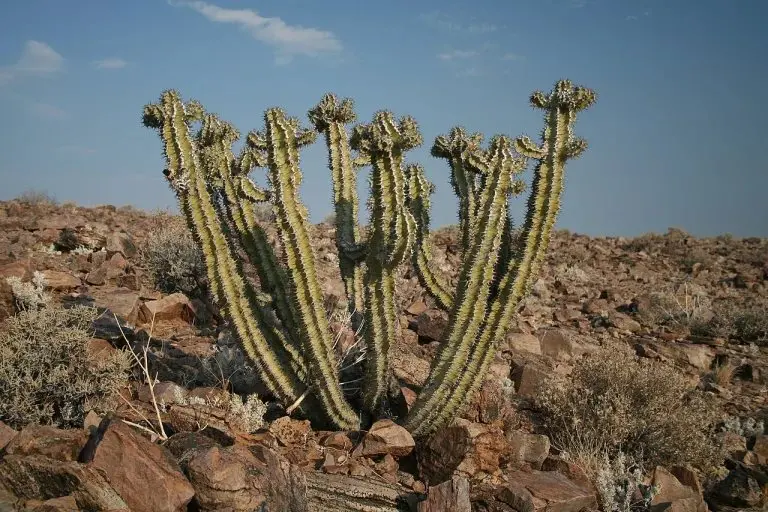
Spring in Southern Africa turns the veld into a flower show — and some of the prettiest or most unassuming plants out there pack a serious chemical punch. A recent feature rounds up the dangerous flora hikers and gardeners should know to leave alone, and several of them are surprisingly easy to bump into.
The most theatrical is the poison euphorbia (Euphorbia virosa), a thorny, angular succulent with twisted branches that grows across arid parts of South Africa, Namibia and southern Angola. Snap a stem and you get a milky latex that severely irritates skin, can injure eyes and in bad cases cause blindness. San hunters once used it in arrow poison — which tells you how hazardous handling it was even for people who knew what they were doing.
The poison bulb (Boophone disticha), or gifbol, looks friendlier: a neat fan of grey-green leaves and a distinctive rounded flower head that eventually dries and lets the wind carry its seeds off. The trouble sits underground in a toxic bulb, long used in traditional medicine. That popularity has a conservation side-effect too — harvesting for medicinal plant markets is putting wild populations under pressure in parts of South Africa.
Then there is bushman's poison (Acokanthera oppositifolia), an evergreen shrub or small tree with pale flowers and fleshy fruit where toxic compounds run through much of the plant. Like the euphorbia, it featured in San arrow-poison preparations. The third familiar face is one many readers already have at home: oleander, the cheerful flowering shrub planted beside driveways and pools across the region. Every part of it is poisonous — it contains cardiac glycosides that interfere with heart function — and the toxins persist even in dried plant material.
None of these plants are villains, exactly. The toxins evolved to deter herbivores, and some species have shaped human history and culture along the way. The practical takeaway for travellers is simple: look, don't touch, and never assume a colourful fruit is edible or that a plant used traditionally is therefore safe. If you think you have been exposed or have ingested something unfamiliar, get medical help quickly rather than consulting an app or a home remedy.
For anyone planning a spring hiking trip in South Africa or Namibia, this is less a reason to stay home than a nudge toward basic trail literacy. The same veld that produces these plants also produces some of the best walking and wildflower viewing on the continent — October, when spring growth peaks, is prime time. Walk with a guide or a good field guide, keep kids and dogs from nibbling anything green, and give that sculptural desert euphorbia the distance it has earned. The most beautiful thing beside the path is sometimes the one that most deserves respect.
Original source: Getaway South Africa