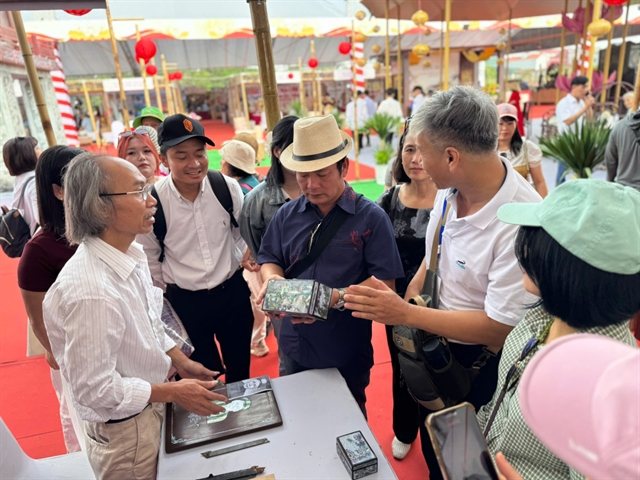
Forty kilometres south of central Hà Nội, the commune of Chuyên Mỹ has been making mother-of-pearl inlay, tailored suits and leather shoes for centuries. Now it wants visitors. On October 16, the Hà Nội Department of Culture, Sports and Tourism, alongside local officials, brought a delegation of experts and travel-company representatives through the area to sketch out a roadmap for turning the commune into a weekend and short-break destination.
The raw material is genuinely impressive. Chuyên Mỹ counts 18 officially recognised craft villages, including Chuyên Mỹ itself for lacquerware and mother-of-pearl inlay, Vân Từ for custom tailoring and Phú Yên for leather footwear. Forty-four recognised artisans live here — 12 Meritorious Artisans and 29 Vietnamese Artisans — and they are the keepers of the techniques and the likely faces of any hands-on workshop tours.
There is more than craft. The commune holds 85 cultural and historic heritage sites and stages 24 traditional festivals. The standout is Cựu, a village more than 500 years old, where around 40 historic houses survive in a mix of traditional Vietnamese, Western and Indochinese architecture. It is exactly the kind of place that suits slow wandering, photography and homestays. The surrounding farmland adds another angle: a 5,000-square-metre clean vegetable operation using Israeli aeroponic technology and a lotus farm that already doubles as a brand and visitor attraction.
So why haven't you heard of it? Because the plumbing isn't there yet. Officials and experts at the October 16 conference were blunt: roads and parking are inadequate, promotion is weak, there are few experiential activities, almost no lodging and no on-site guides. Residents haven't been trained for community-based tourism, and the artisans, workshops and travel agencies barely coordinate. A new tourism information centre, digital marketing and packaged itineraries are on the to-do list.
The ideas on the table are the interesting part for travellers. The Vietnam Tourism Association's Dr Phùng Quang Thắng wants products where visitors actually craft something themselves and learn the stories behind the villages. Vũ Văn Tuyên of tour operator Travelogy Vietnam pitched guided hands-on workshops where you leave with a finished piece, plus farm-to-table days combining village visits, cooking and shopping. Hanoi Tourism Association vice president Nguyễn Tiến Đạt's line — sell experiences, not products — comes with a reminder that souvenirs should be small, refined and genuinely Vietnamese, and that local households should be the ones profiting.
For now, Chuyên Mỹ is a place to visit before the tour buses do. Independent travellers comfortable arranging transport can already reach the craft workshops, Cựu's old houses and the farms, and a day trip or relaxed overnight works well given the proximity to National Highway 1A and the Pháp Vân–Cầu Giẽ Expressway. If the plans land, expect structured craft tours, homestays and links to Hà Nội Old Quarter narratives — especially around Cựu's tailoring heritage — within the next few years. Watch this one.