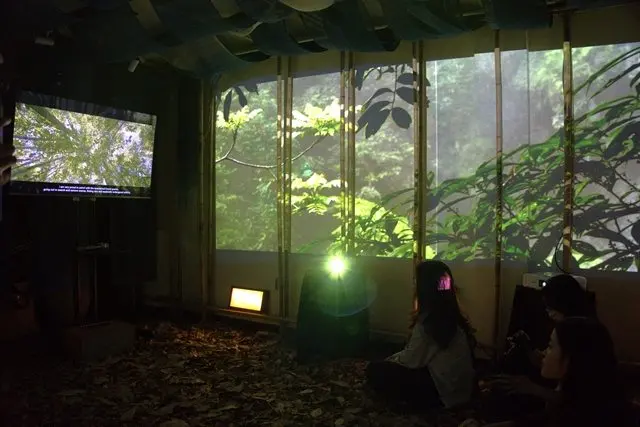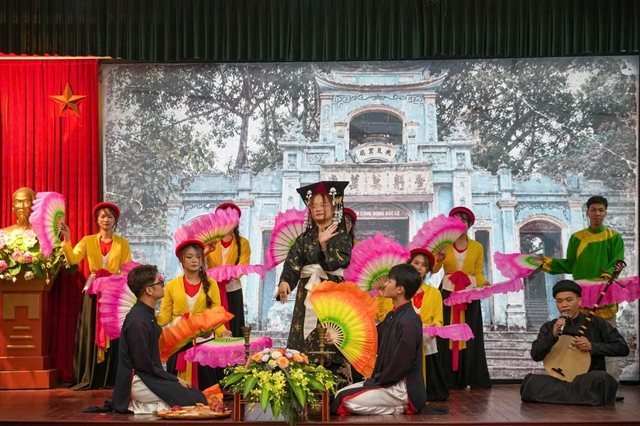
A museum in Hanoi handed its galleries over to college students for a day, and the result was less lecture, more theatre. On October 16, the Vietnamese Women's Museum hosted Thanh Âm Di Sản (Sounds of Heritage), an event where FPT Polytechnic students researched artefacts from the collection and performed their stories for the public.
The event marked the International Day of the Intangible Cultural Heritage (October 17) and Vietnamese Women's Day (October 20). Students chose items or clusters of artefacts and built narratives around three themes: Women in the Family, Women in History, and the Mother Goddess Worship tradition — its spirituality, heart, beauty and joy.
The centrepiece was a three-act theatrical performance mixing storytelling, acting, music and performance art. One act honoured the sacrifices and losses of Vietnamese mothers during wartime; another celebrated young female volunteers and their courage and patriotism; the third traced the preservation of Bắc Lệ Temple and the practice space of the Mother Goddess religion — a distinctly Vietnamese tradition recognised by UNESCO.
Museum director Nguyễn Thị Tuyết framed the day as a new model of heritage education. In her view, an exhibition space can become a classroom, artefacts can be raw material for creativity, and students can act as connectors between history and a young audience that might otherwise drift past it. She noted the students went beyond dates and facts, digging out the emotion and human experience inside each story — and that when heritage is told with empathy, the gap between past and present narrows considerably.
For the students, it clearly landed. Participant Nguyễn Thị Hà Khanh said preparing her act deepened her knowledge but also stirred gratitude and pride, especially towards the "Heroic Vietnamese Mothers" who sacrificed for the country's independence.
Why should a traveller care? Because this is what a modern museum visit can look like in Vietnam — not glass cases and silence, but performance, interaction and young people actively interpreting their own culture. The Women's Museum in Hanoi's Hai Bà Trưng district is already one of the city's most respected small museums, and it is explicitly working to update exhibitions and blend heritage with contemporary art and interactive experiences. If you time a visit around cultural dates like these, you may catch exactly this kind of living programming — and even without it, the permanent galleries on women's roles in family, history and religion are among the best-curated in the country.