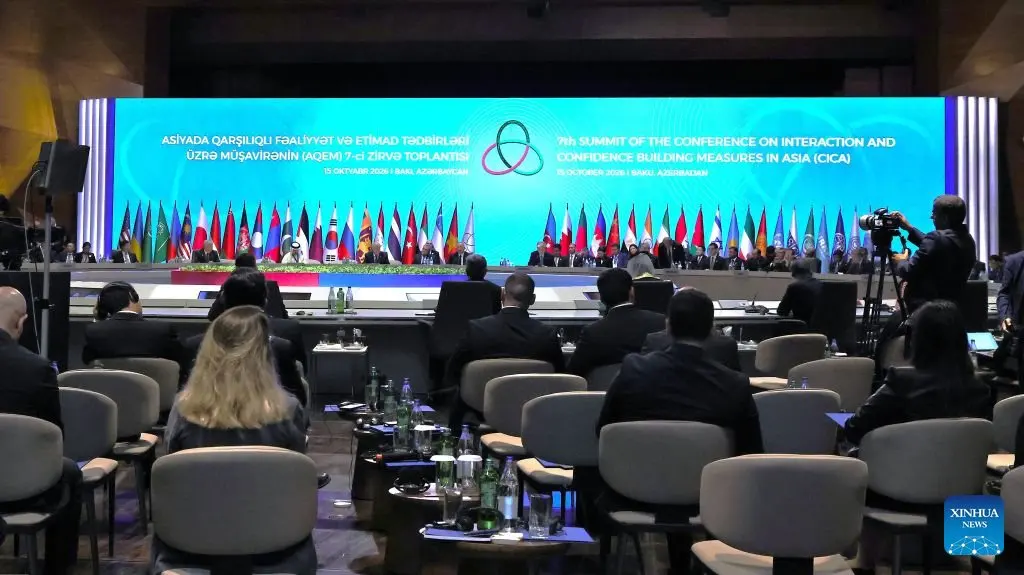
The seventh CICA summit, held in Baku on October 15, was meant to be the moment the 29-member Asian security forum graduated into a full international organisation. Instead, the Baku Declaration left the new CICA Charter unfinished, extended Azerbaijan's chairmanship through 2028 and admitted Laos as the 29th member. For anyone tracking overland routes across Asia, the more interesting story is what the summit revealed about the continent's transit corridors — and how quickly conflict can close them.
CICA, a Kazakh initiative launched in 1992, remains the only forum where India and Pakistan, Israel and Palestine, and China and its maritime neighbours all share a table. But its consensus rules have kept it away from hard security questions, and the past year showed the cost of that caution. The war that began with US and Israeli strikes on Iran in February 2026 disrupted the International North-South Transport Corridor and cut Central Asia's shortest route to open water, forcing freight onto costlier detours. Pakistan's five main crossings with Afghanistan — part of a trade relationship worth roughly $2.35 billion a year — have now been shut for a year, halting transit goods from China, Malaysia and Vietnam too.
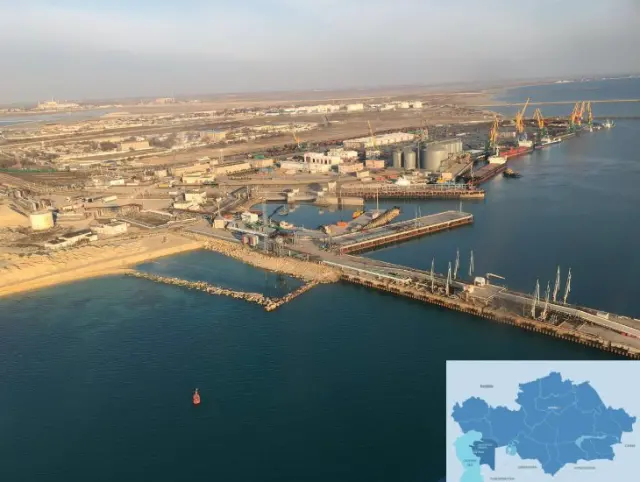
That pressure has piled onto the Trans-Caspian International Transport Route, better known as the Middle Corridor, which runs from China and Kazakhstan across the Caspian to Azerbaijan, Georgia and Turkiye. Kazakhstan's volumes have climbed from 0.8 to 4.5 million tonnes a year, and the World Bank thinks the corridor could handle around 11 million tonnes by 2030. Its growth has depended on fragile diplomatic progress: the initialled Azerbaijan-Armenia peace agreement of August 2025 and a Kyrgyz-Tajik border treaty that reopened Fergana Valley crossings. One flare-up in the South Caucasus, and the route's reliability is gone.
At the summit, Kazakh President Kassym-Jomart Tokayev proposed two fixes: a CICA Transport Connectivity Strategy covering major routes including the Middle Corridor, and a Mechanism for Preventive Diplomacy. The argument made by analysts writing in The Astana Times is that these should be treated as one agenda — make corridor security part of confidence-building work, agree a norm that trade crossings stay open during bilateral disputes, and write the security-connectivity link into the Charter before 2028.
For travellers, this matters more than it might sound. The same corridors moving freight are the rail lines, border posts and ferry crossings that overland journeys through Central Asia and the Caucasus depend on. The Pakistan-Afghanistan closures make overland travel between the two effectively impossible for now, while Iran disruptions have pushed more Caspian ferry and rail traffic — and more travellers — onto the Baku-Tbilisi route. If CICA's charter talks succeed, borders along these routes could become measurably more predictable. If not, the region's overland map stays hostage to whatever crisis flares next.
Story reported by The Astana Times.