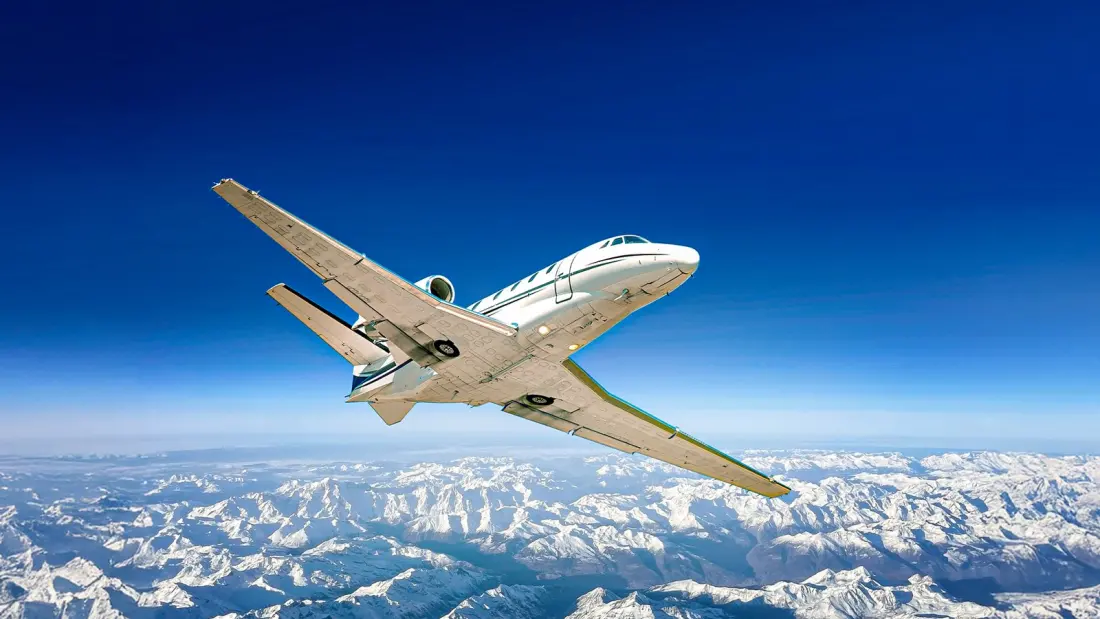
There's an altitude band where a jet can neither speed up nor slow down safely, and pilots call it the coffin corner — or, more officially, the q-corner. It's not a myth or an urban legend of aviation. It's basic physics, and it has played a role in some of the deadliest accidents in commercial flying.
Here's how it works. As an aircraft climbs, the air gets thinner, so the wings need a faster true airspeed to generate the same lift — which pushes the stall speed up. At the same time, the falling temperatures lower the speed of sound, dragging the aircraft's maximum safe speed down. Climb high enough and the two limits converge. At 40,000 feet or above, the gap between 'too slow' and 'too fast' can shrink to just a few knots, with no room for turbulence, steep turns, or temperature spikes. Fly a few knots under the limit and the wing stalls; a few knots over and shockwaves form over the wing, causing violent vibration and a nose-down pitch known as Mach tuck.
The Lockheed U-2 spy plane is the extreme case. It cruises at 70,000 feet with only a five-knot window between stall and structural breakup, and its pilots fly in full pressure suits that muffle feedback and restrict vision, relying almost entirely on autopilot for stability. A simple bank can stall the inner wing while the outer wing exceeds its critical Mach limit.
Commercial aviation isn't immune, and the accidents are sobering. Air France Flight 447 in 2009 lost its airspeed readings when ice blocked the pitot tubes; the autopilot dropped out, a confused crew pulled the nose up into thinner air at 38,000 feet, stalled the Airbus A330, and kept pulling back all the way to the Atlantic. In the West Air Europe crash, a Bombardier CRJ200 captain trusting a faulty attitude indicator pushed the plane into a near-vertical dive from 33,000 feet that hit the ground just sixty seconds later.
Part of the danger is human, not mechanical. At high altitude, a low-speed stall and high-speed Mach buffet feel nearly identical in the cockpit. Sudden deceleration can fool the inner ear into sensing a climb during a dive, and 'automation shock' — the adrenaline hit when a rarely-flown manual handover goes wrong — can cause pilots to fixate on one instrument and ignore blaring stall warnings. The correct recovery is counterintuitive: cut power and lower the nose into denser air to widen the safe speed envelope.
Why should a traveller care? Because it explains why airliners cruise where they do, why turbulence at altitude is taken so seriously, and why modern autopilots quietly make tiny corrections all flight long. Your flight stays well inside a safely managed envelope — the horror stories happen when the margin gets eroded by error or malfunction, not by routine flying. It's also just one of the more fascinating pieces of physics hiding behind every long-haul cruise.