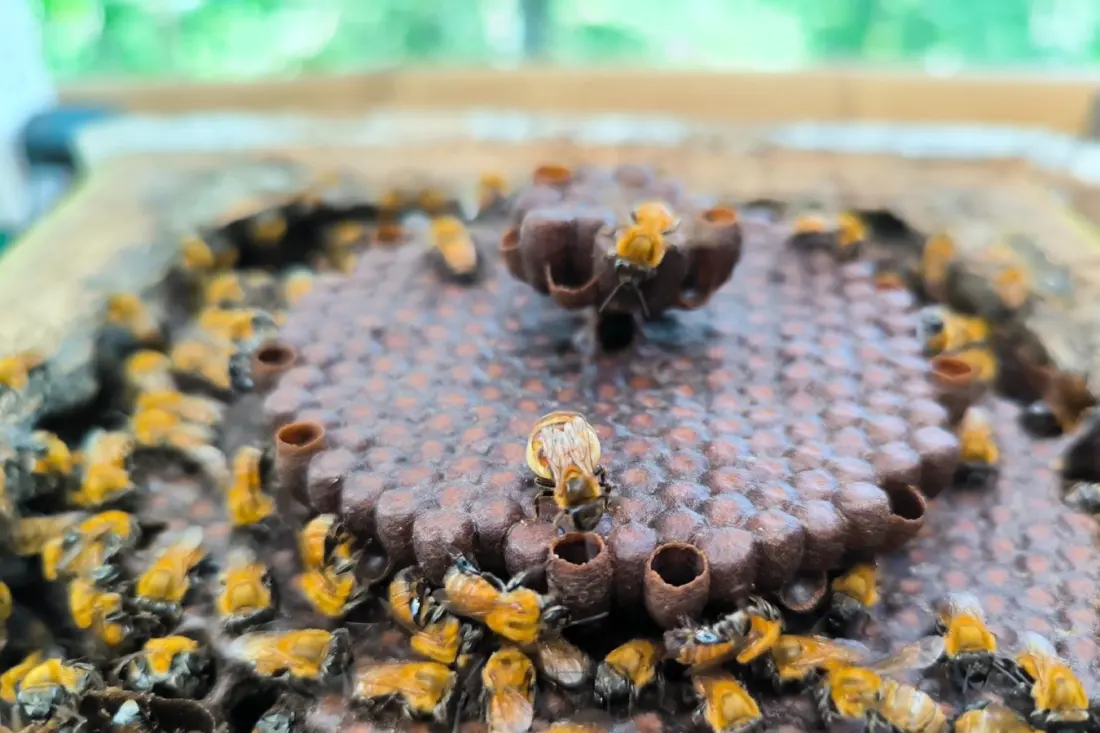
Colombia has published the first-ever draft regulations for meliponiculture, the ancient practice of keeping native stingless bees, putting a formal framework around an activity that until now had no national rules. The Ministry of Environment and Sustainable Development opened the draft resolution for public comment as part of its ABC Agenda — Water, Biodiversity and Communities.
Why now? Around 166 species of native stingless bees have been documented in Colombia, and at least 175 meliponaries are already operating across 23 departments, holding 4,823 colonies and 44 bee species. More than half of the country's current meliponiculturists only started recently, according to the Alexander von Humboldt Institute. But populations are under pressure from habitat loss, agricultural pesticides and overexploitation — including people felling trees to reach wild colonies.
Under the proposed rules, keepers will register their meliponaries through a single, free procedure with their local environmental authority. Each colony gets a unique identification number and a management logbook, so populations can be tracked and risky practices — agrochemical use near hives, moving colonies to places they can't survive — can be prevented.
The economics matter as much as the ecology. Stingless bees produce honey, pollen and cerumen (a resin-like wax), giving rural families a sustainable income stream while supporting pollination and ecological restoration projects. Environment Minister Fabio Arjona pointed out that Colombia already regulated European honeybees but had nothing for meliponines, which do much of the pollination in the Amazon rainforest. Globally, IPBES and FAO figures suggest around 75% of food crops and roughly 90% of wild flowering plants rely on pollination to some degree.
For travellers, this is a quietly good sign. Stingless bee honey is one of Colombia's most distinctive artisanal products — tangy, medicinal, and often sold at rural markets — and healthy pollinator populations underpin the forests, coffee zones and cloud forests visitors come for. The regulation should mean better-managed apiaries, more legitimate local producers, and communities earning from keeping bees alive rather than harvesting them destructively. If you're heading to coffee-region farms or Amazon lodges, expect stingless bee products and tours to become a more established part of the experience.