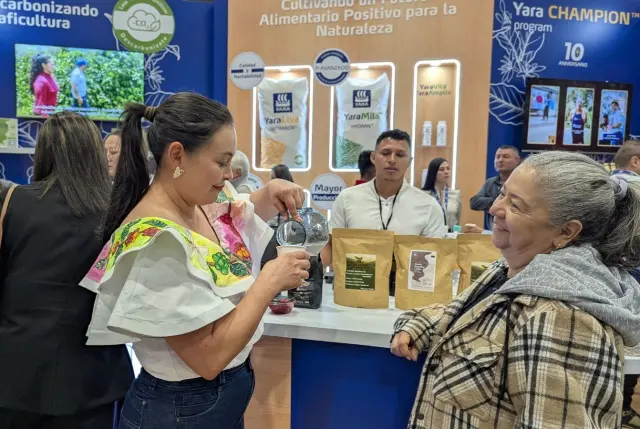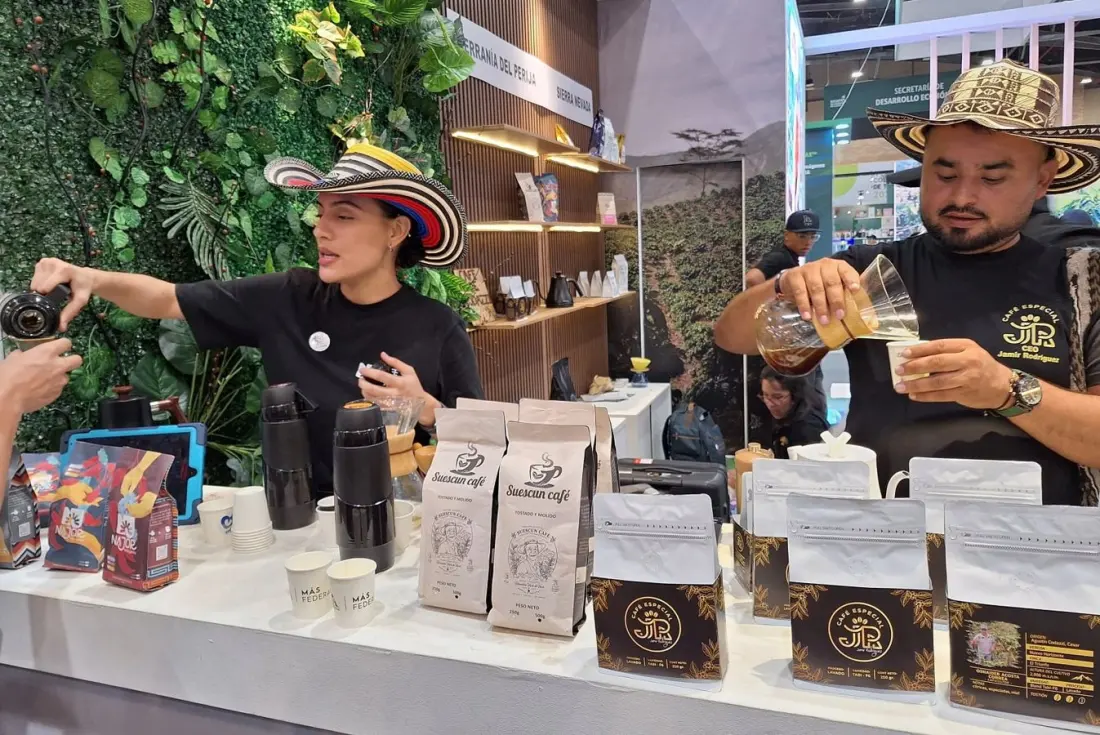
Bogotá's Corferias exhibition center just hosted the 17th Cafés de Colombia Expo, Latin America's leading coffee trade show, which ran from October 15 to 18 with more than 180 exhibitors — up 21 on the previous edition. Organized by the National Federation of Coffee Growers and Corferias, the four-day event drew tens of thousands of visitors, following a year when attendance topped 40,600, a jump of over 40% on 2024.
The fair is no longer just a business bazaar connecting growers with roasters and buyers. The theme echoing through the halls was "educating the palate": teaching consumers, both in Colombia and abroad, to tell the difference between commercial and specialty coffee, and to understand how altitude, variety, fermentation and roasting shape what ends up in the cup. Producers argue this has a real economic payoff — drinkers who can identify quality and origin are more willing to pay prices that reflect it, which helps small farms and cooperatives sell finished branded coffee rather than raw beans.
The exhibitor list showed the industry's range, from first-time stands to decades-old cooperatives. Agrocafe, a company of 52 coffee-growing families from El Tambo in the southern department of Nariño, near the Ecuadorian border, was exhibiting for the first time and already counts a Californian roaster as its main customer. Further north, Café Zabdi of Salazar de Las Palmas, Norte de Santander, trades on a great origin story: legend has it a priest named Francisco Romero assigned coffee seed planting as penance, spreading the crop across the country.
There was high-level backing too — Vice President José Manuel Restrepo and three cabinet ministers toured the fair over the weekend, calling Colombian specialty coffee a world-class product. Next year brings another milestone: the growers' federation marks its 100th anniversary in 2027, a century that has seen Colombia shift from simply exporting green beans to building its own specialty brands. The industry's next frontier, many exhibitors say, is China, especially as European Union access grows tougher.
Why should a traveller care? Because Bogotá is now one of the best places in the world to train your own palate. The expo's program of tastings, brewing and roasting competitions, and the Colombia Land of Diversity national quality contest reflects a wider boom in cupping sessions, farm tours and specialty cafés across the country. Whether you wander the coffee districts around Manizales, Medellín or Huila, or simply spend an afternoon tasting single-origin brews in Bogotá, the country is actively trying to show visitors that "Colombian coffee" isn't one flavour — it's dozens.