Some of Colombia's most loved coastal escapes — the whale-watching villages of Nuquí, the black-sand beaches of Ladrilleros, the shores near Riohacha — are being eaten away by the sea, and the country's Ombudsman's Office has now documented just how bad things have become.
Fieldwork carried out in 2026, drawing on data from the Institute of Marine and Coastal Research (Invemar) and the national Coastal Erosion Master Plan, identified three hard-hit zones. In Nuquí, in Chocó department, eight communities including Termales, Arusí and Jurubirá face flooding, river overflows and shrinking beaches — a situation made worse after the Aguas Calientes and Ostional rivers burst their banks in May 2024, triggering a public calamity declaration. More than 1,300 families there are at risk of environmental displacement.
On the Caribbean side, the Wayuu community of La Cachaca 3 near Riohacha has watched its coastline retreat since 2005, with the loss accelerating after seven groynes were built in Riohacha in 2009. Homes, a pier, an Indigenous cemetery and fishing barges have been destroyed, pushing some families to move to Santa Marta, Pereira and Bogotá.
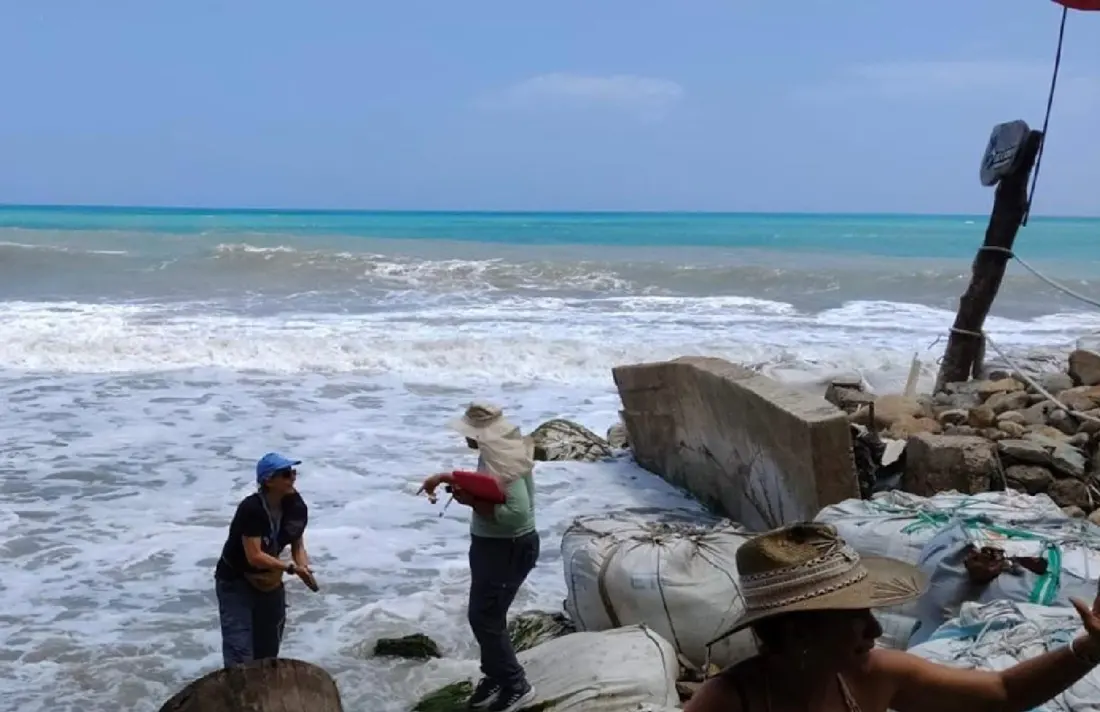
And in Buenaventura on the Pacific, three Afro-Colombian community councils — Juanchaco, Ladrilleros and Punta Soldado — report roughly 1,800 people affected between them. Ladrilleros has lost its beach entirely, with residents relocating to higher ground. In Juanchaco, locals built their own sandbag defences around the children's playground.
Why should this matter to travellers? These are exactly the places people go for humpback whale season (July to October), surf, hot springs and Afro-Colombian and Indigenous culture. Erosion is already disrupting access trails, transport routes and water and power networks — meaning trips may need extra planning or local guidance. More importantly, tourism dollars can be a lifeline for communities whose fishing and shellfish harvesting (like piangua collection) are under threat. Going with community-run tours and operators, and spending locally, has more impact here than in most destinations.
The flip side: visitors should expect changed conditions. Whale-watching bases in Nuquí are exposed to flooding, and beach space in places like Ladrilleros is nothing like what older guidebooks describe. Check current conditions with local operators before booking, and treat any visit as a chance to support resilience rather than just take photos.
The Ombudsman's Office is calling for technical and legal support for environmental recovery and risk management, noting that erosion is not just a scenery problem — it interrupts daily life, health access, and cultural practices such as "navel planting," which ties newborns to the land.
Colombia's coasts remain extraordinary. They're also fragile, and the communities living there are asking for partners, not just spectators.