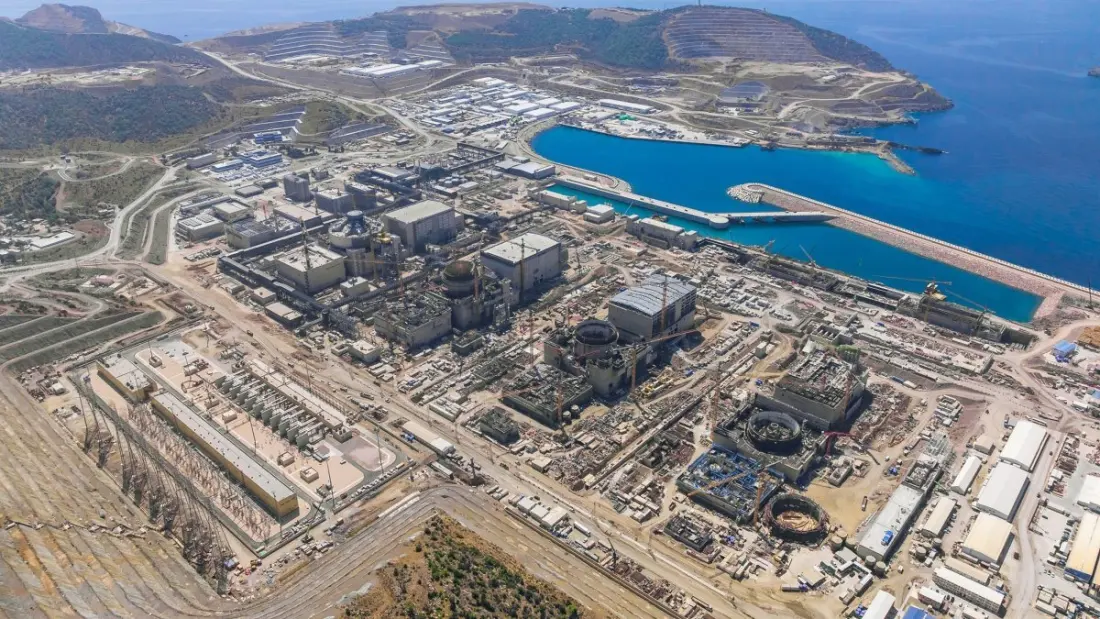
Türkiye's long-gestating nuclear dream is finally coming to life on the Mediterranean coast. Alexei Likhachev, head of Russia's state nuclear corporation Rosatom, says the first reactor at the Akkuyu plant is on track to reach its initial self-sustaining chain reaction before the end of this year.
The $20 billion project in Mersin province is Türkiye's first nuclear power station. When all four reactors are running, they will have a combined capacity of 4,800 megawatts — enough to cover roughly 10% of the country's electricity demand. Getting there has taken years of construction and geopolitics, given that the plant is being built by a Russian state company amid a very changed regional landscape.
Ankara isn't stopping at one site. Two further plants are planned: one at Sinop on the Black Sea coast and another in the Thrace region. Talks are ongoing with Canada, China, Russia and South Korea over who builds them, so Türkiye's nuclear map could look very different within a decade.
Energy diversity is clearly the theme of the moment. On the same day as the reactor announcement, Energy and Natural Resources Minister Alparslan Bayraktar met the chair of Novatek, Russia's largest LNG producer, in Moscow to discuss cooperation in liquefied natural gas. Türkiye consumed 59 billion cubic metres of gas last year, making it one of Europe's biggest gas markets, and it imports most of that supply. Despite signing long-term LNG deals with several major producers over the past two years, it has no such agreement with Novatek — so this meeting signals where Ankara is looking next.
Why should holidaymakers care? Energy news rarely makes a travel itinerary, but it matters for anyone visiting Türkiye. A country that generates more of its own power is less exposed to the price swings and shortages that can ripple into costs for hotels, transport and flights. Mersin itself is a growing Mediterranean destination — a working port city with a long seafront, easy access to the beaches of the Turquoise Coast, and proximity to ancient sites like Kizkalesi, the striking castle rising from the sea. Ironically, the nuclear plant is being built on the same coastline, and the project has already drawn both jobs and infrastructure investment to the region.
For now, the headline is simple: Türkiye is weeks or months away from producing nuclear power for the first time, with more reactors, more plants and more energy deals in the pipeline. Travellers planning trips to the Turkish coast in the coming years will notice the difference indirectly — in a country working hard to keep the lights on and prices stable for the tens of millions of visitors it welcomes each year.
Daily Sabah Travel