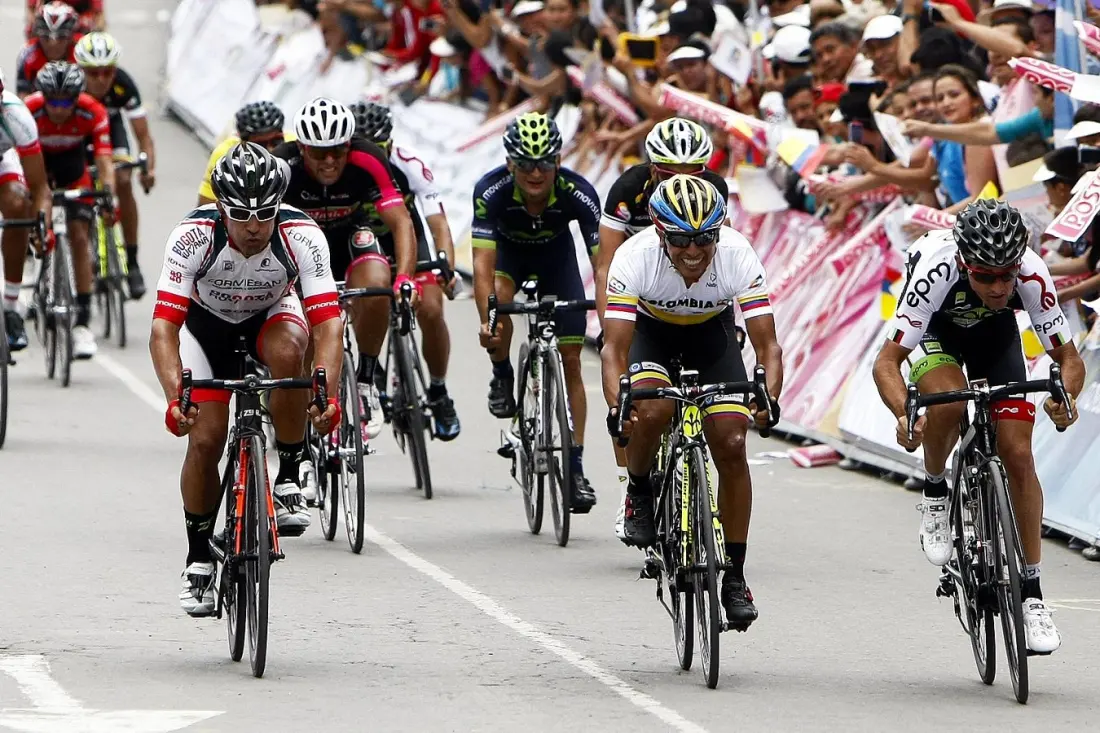
October 2026 marks the end of an era: Nairo Quintana, the man who carried Colombian cycling through its golden years, has retired. His departure leaves a question hanging over the country's most beloved sport — who comes next, and is the system still capable of producing riders like him?
The numbers suggest strain. Just 12 Colombian men will ride for WorldTour teams in 2026, down from 16 two years ago, according to ProCyclingStats. Worse for fans at home, the Tour Colombia has been cancelled two years running. Organisers needed roughly 10 billion pesos (about US$2 million) to stage the 2026 edition and couldn't raise it — a blow to the domestic calendar and to young riders who lose their best chance to race international opposition without leaving the country.
Colombia's cycling pedigree runs deep. Luis Herrera became the first Colombian to win a Grand Tour at the 1987 Vuelta a España, backed by the pioneering Cafe de Colombia team, while Santiago Botero took the Tour's mountains jersey in 2000 and a world time trial title in 2002. Then came the peak years: Quintana's Giro d'Italia and Vuelta wins, Rigoberto Uran's two Grand Tour runner-up finishes, and Egan Bernal winning the 2019 Tour de France at just 22. All three grew up in cycling-mad regions — Boyacá, Antioquia and Cundinamarca — where high-altitude roads double as training grounds.
The cracks now appear earlier in the pipeline. Coach Luis Fernando Saldarriaga told Infobae that Colombia has no consistent model for developing riders once junior careers end, and commentator Jhon Jaime Osorio notes teenagers aged 15 to 17 may get only three races a year. Big events still draw crowds — the 2025 Vuelta de la Juventud pulled in 155 riders from 28 teams — but one strong field doesn't make a season. The fold of Team Manzana Postobon in 2019 and the loss of Tour Colombia funding have cut the bridges between local racing and European contracts. Quintana himself is calling for government and private-sector investment to give young riders certainty.
For travellers, this matters because cycling is woven into the Colombian experience. Riders and fans flock to places like the Alto de Pati climbing routes outside Medellín, where locals line the roads on Sunday rides, and Boyacá's high passes remain pilgrimage terrain for anyone who loves the sport. The WorldTour numbers may dip, but the culture — the weekend pelotons, the mountain villages, the coffee-farm rides — is exactly what draws cycling tourists. If Colombia rebuilds its development pathway, expect the fan atmosphere at future races to be as electric as ever, and the country's reputation as a cycling destination to keep growing.
Story via Colombia One.