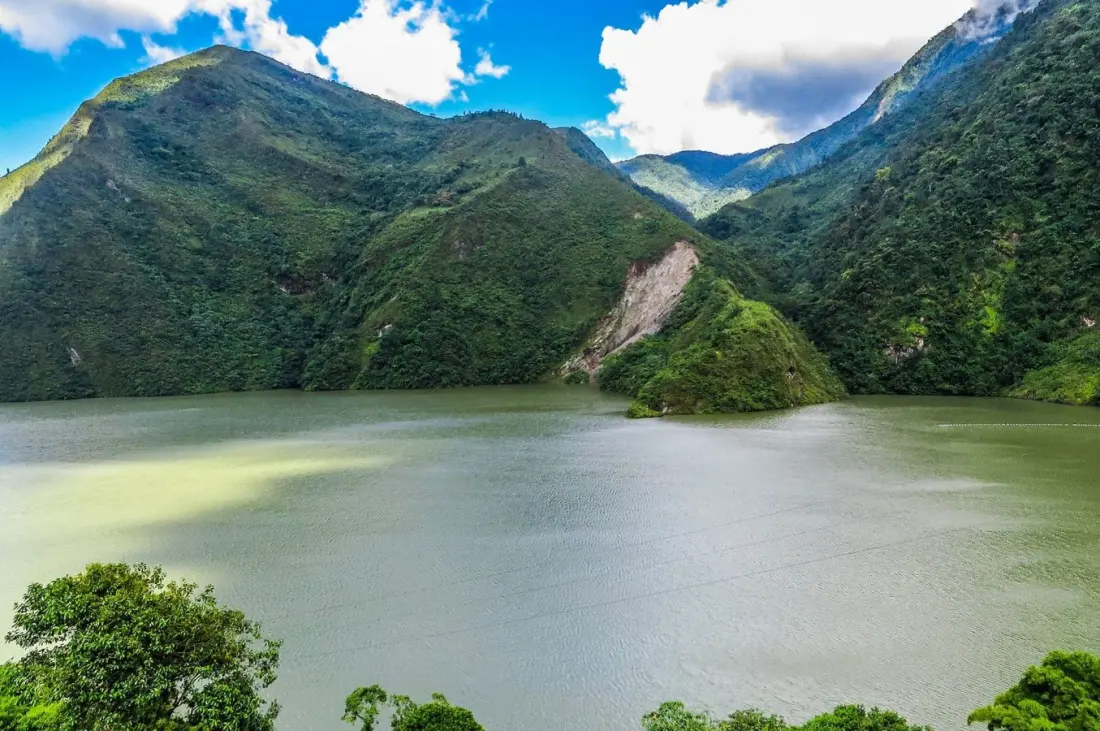
Colombia has slipped past a key warning line. Reservoirs that feed the country's power grid were sitting at roughly 76.5% of usable capacity in late November, according to grid operator XM — below the 80% level officials want restored before the December dry season kicks in.
The bigger worry is what's coming in. Water inflows were running at just 46% of the historical average as of November 22, and October marked the sixth straight month of below-average rainfall. Some reservoirs are in worse shape than others: Calima I was around 64% full and Salvajina about 59%, both well under the national figure.
Why does water matter so much here? Because Colombia runs on rivers. Hydroelectric plants generated about 54.8% of the country's electricity in October, with reservoir-based hydropower making up more than three-quarters of renewable output. When the rain stops, the grid leans on natural gas and coal plants — exactly when hotter El Niño temperatures push electricity demand up.
Forecasters expect the rough patch to last. Colombia's weather agency IDEAM has warned that El Niño could stay intense through the first quarter of 2027, with December 2026 and January 2027 flagged as the most critical months. The US NOAA puts a 61% probability on El Niño conditions persisting until May 2027 — and even after the rain returns, refilling rivers and reservoirs could take considerably longer.
Officials are quick to stress there's no imminent risk of rationing or blackouts. But the government is clearly nudging the public to act early. Bogotá's mayor, Carlos Fernando Galán, published energy-saving tips for residents — shifting heavy appliance use away from the 6–9pm peak, switching to LED bulbs, running washing machines only with full loads — and said public agencies in the capital now face mandatory energy-saving directives. December is also when national electricity consumption traditionally spikes, adding pressure at exactly the wrong time.
For travellers, the takeaway is practical rather than alarming. If you're heading to Colombia in early 2027 — peak season for the Caribbean coast and a popular time for Bogotá and Medellín — it's worth building some flexibility into plans. Occasional power cuts or local water restrictions are possible in a worst-case scenario, particularly outside big cities, so a torch, a charged power bank and patience go a long way. Booking accommodation with backup generators, staying updated on local news, and being mindful about your own electricity and water use (as locals are being asked to be) are all sensible moves. None of this should stop a trip; Colombia remains open, and the current situation is a watch-and-conserve story, not a crisis. But if El Niño delivers the dry spell forecasters expect, visitors will notice the conversation about energy everywhere they go.