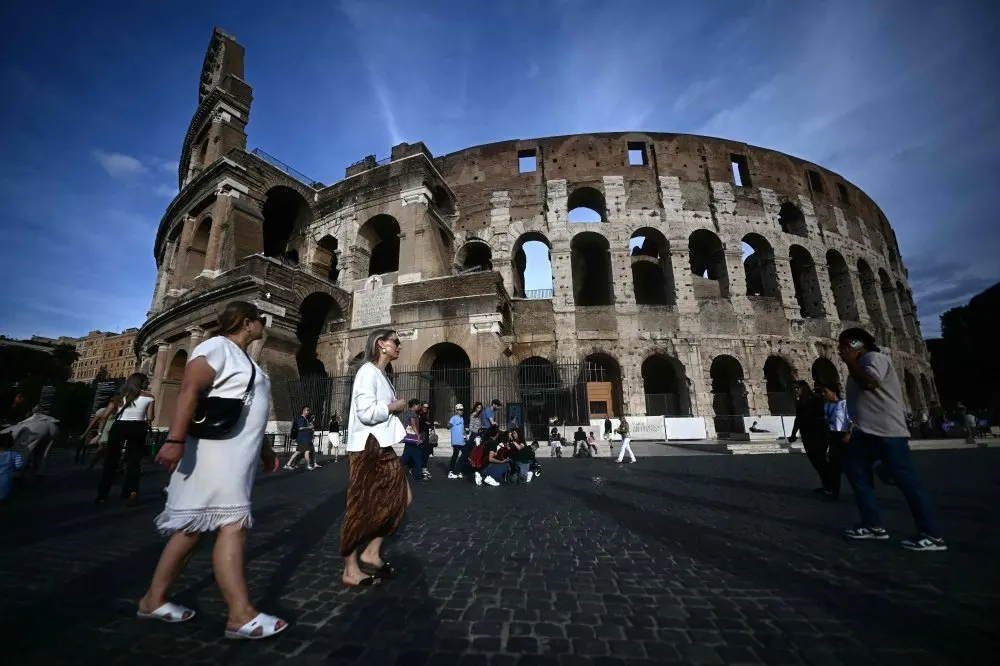
Rome's Colosseum is back open to visitors after a three-day closure prompted by the death of a 22-year-old worker who fell ten metres while installing a new lighting system at the ancient amphitheatre. The accident happened shortly after midnight on a Wednesday, when the monument had long closed for the day. The man died in the early hours of that morning, and the circumstances remain unclear.
The reopening sequence was a bit choppy: the site briefly opened for a few hours that Wednesday before shutting again for the remainder of the day, then stayed closed until Culture Minister Alessandro Giuli announced it would reopen on Friday. By the time doors opened properly, only the small area where the accident occurred — roughly ten square metres — remained cordoned off. Italy's ANSA news agency reported around 25,000 visitors were expected on reopening day, which tells you how much demand there is for the world's largest ancient amphitheatre even mid-scandal.
There's a legal thread running through the story too. The Rome Public Prosecutor's Office is investigating the death on suspicion of manslaughter, examining whether safety regulations were followed. According to La Repubblica, investigators are also checking the young worker's qualifications. Meanwhile, the government has said it will sit down with trade unions to discuss safety for work carried out at cultural sites. The CGIL union has criticised the use of subcontractors and is pushing for stricter checks.
For travellers, the practical upshot is simple: the Colosseum is operating essentially as normal. If you've booked a visit, nothing about the reopening changes your plans — you'll see the full monument apart from one small fenced-off section, and you may notice a new lighting system being finished at the nearly 2,000-year-old site. Book timed tickets in advance as usual, since demand at that scale means walk-up entry is rarely a good idea in peak season.
It's also a story worth a moment of thought beyond the itinerary. Italy's most visited monument runs on a constant cycle of restoration and improvement work, much of it done overnight while tourists are away. The death has reignited a debate about who carries out that work and how well it's supervised — a debate that could shape how heritage sites across the country manage maintenance in future. For now, though, visitors are walking the same arena floor, underground chambers and upper tiers as before, with one small patch of the site holding a quieter story.