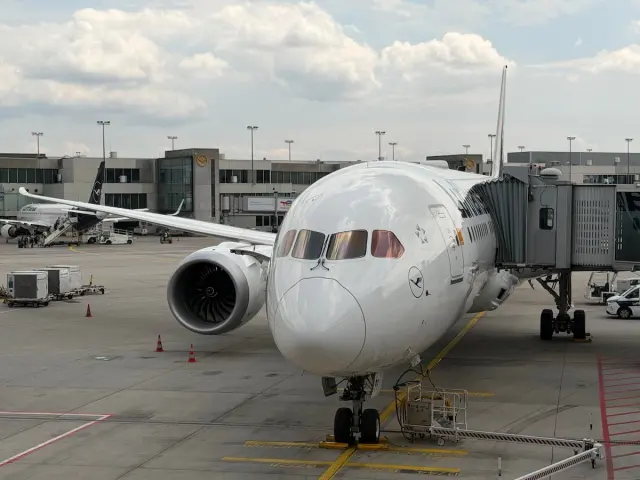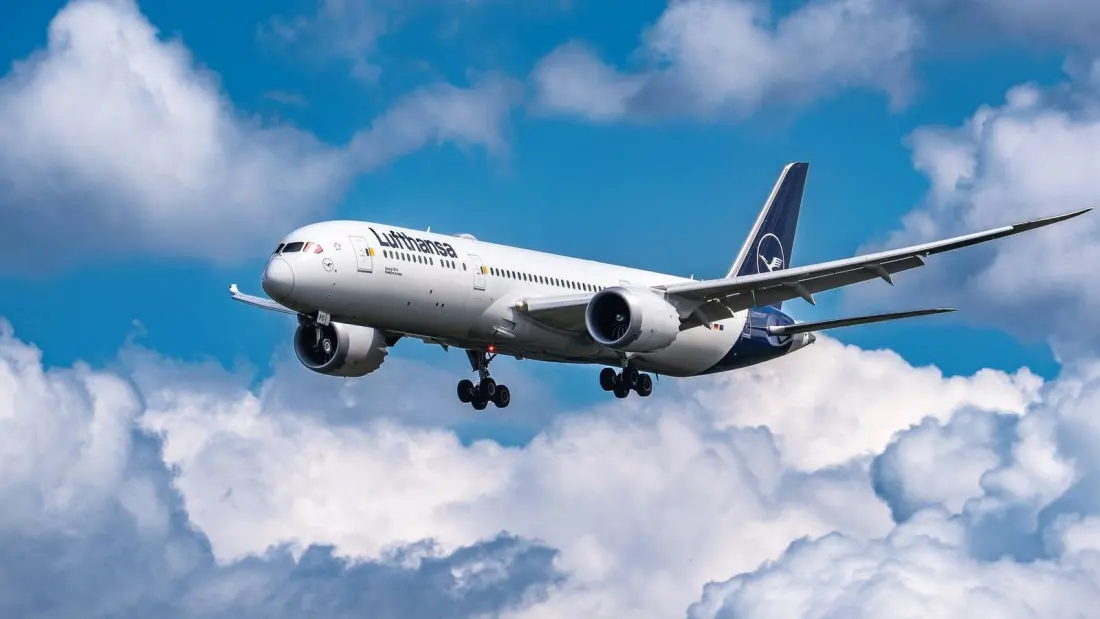
Columbus has long been the odd one out among US state capitals: a growing, wealthy metro with zero nonstop flights to Europe. That changes on May 5, 2027, when Lufthansa launches three flights a week between John Glenn Columbus International Airport (CMH) and its Frankfurt hub, flown on a Boeing 787-9 fitted with the airline's newest Allegris cabins.
The route runs Wednesdays, Fridays and Sundays, covering roughly 4,250 miles — about eight hours 45 minutes westbound and just under eight hours back. Tickets go on sale October 20, 2026. From Frankfurt, travellers can connect to more than 130 destinations across Europe, Africa, the Middle East and India, which turns one nonstop hop into a gateway to most of the continent.
The economics behind the route are interesting. Lufthansa has found that secondary US cities punch above their weight: its Frankfurt–St. Louis service hit an 88% load factor this year, well above the network average, and routes to Raleigh–Durham, Austin and San Diego all track at or near the network norm. That track record — starting with three weekly flights, then adding frequencies — is exactly the playbook expected in Columbus. Ohio's German business ties help too: around 38 German companies operate in the Columbus region, supporting an estimated 41,000 jobs statewide. State incentive money (a $46.9 million statewide revenue-guarantee programme) also played a role, though Lufthansa's specific share wasn't disclosed.
There's a second reason to watch this airport. Columbus is building a $2 billion replacement terminal, its first new facility since 1958, due to open in early 2029. The Y-shaped, million-square-foot building will have 36 gates — including two dedicated international arrivals — a centralised security checkpoint, 5,000+ parking spaces and a skylight bigger than two basketball courts. Lufthansa's first flights will still use the old terminal, so travellers arriving in 2027 shouldn't expect the shiny new building right away.
For travellers, this is genuinely useful news if you live in central Ohio or are planning a European trip without the usual slog through Chicago, New York or Atlanta. It also fits a broader trend: British Airways has grown Cincinnati, Pittsburgh and Nashville to daily summer service, while Air France and KLM have expanded in Phoenix and Las Vegas. Midsize American cities are the new transatlantic frontier — and Columbus is the latest proof.