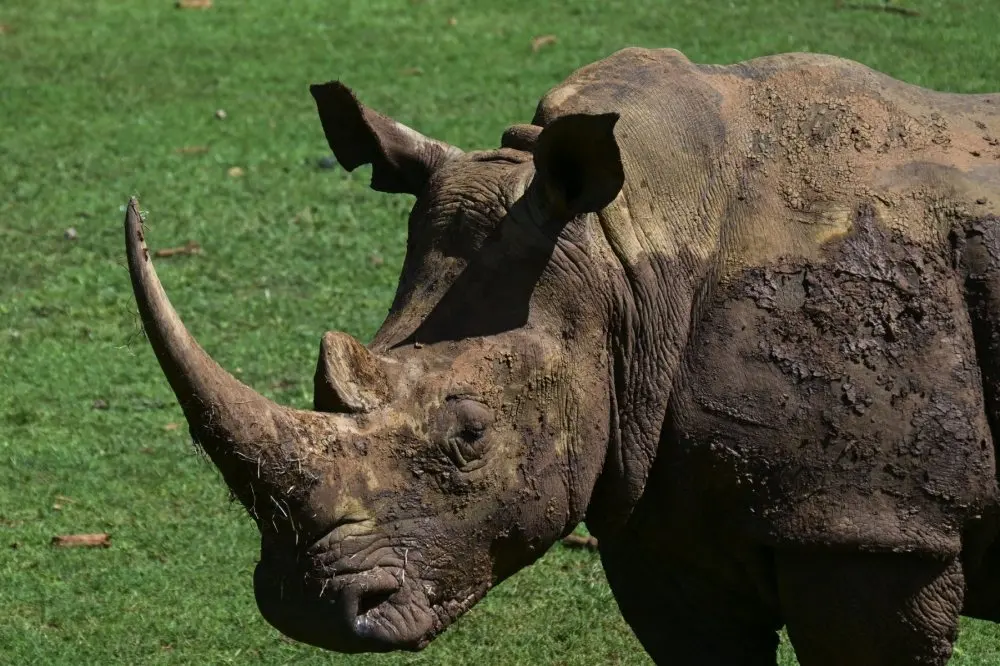
A rhinoceros skull roughly eight to 8.5 million years old has been unearthed in Sitia, a town on the eastern end of the Greek island of Crete. Greek news agency ANA reported the discovery, which belongs to Dihoplus pikermiensis — a massive, two-horned rhino that roamed western Eurasia during the Upper Miocene epoch.
The fossil came to light during palaeontological fieldwork in March 2026 in the Magantze and Trapeza areas of Sitia Geopark, where a team of scientists located fossilised bones. Researchers are now examining the skull closely, including three intact molars from the upper left jaw. Those teeth are the real prize: they should tell scientists what the animal ate and how old it was when it died.
Dihoplus pikermiensis is considered a signature species of the so-called Pikermian Fauna, the animal community that spread across western Eurasia in the Late Miocene. Finding a well-preserved representative in Crete adds a Greek island to a record better known from mainland fossil sites.
Sitia Geopark itself is worth a look if the story piques your interest. It forms part of UNESCO's global network of Geoparks and protects a geological record stretching back nearly 300 million years — long before any rhino, or indeed humans, arrived on the scene.
For travellers, this is a good reminder that Crete offers far more than beaches and Minoan palaces. The island's eastern Sitia region is quieter than the well-trodden west, with rugged hills, gorges, traditional villages and a slow-food wine culture. The geopark adds a genuine scientific draw: walking routes through terrain that preserves hundreds of millions of years of history, now with a headline fossil find to its name.
If you're the kind of traveller who enjoys science-flavoured exploring — think fossil sites, caves and geology trails — Sitia makes a strong base for a few days away from the crowds. And with research ongoing at Magantze and Trapeza, there's a decent chance more discoveries will be announced in the years ahead, giving the area a reason to stay on your radar.
First reported by Malay Mail Life.