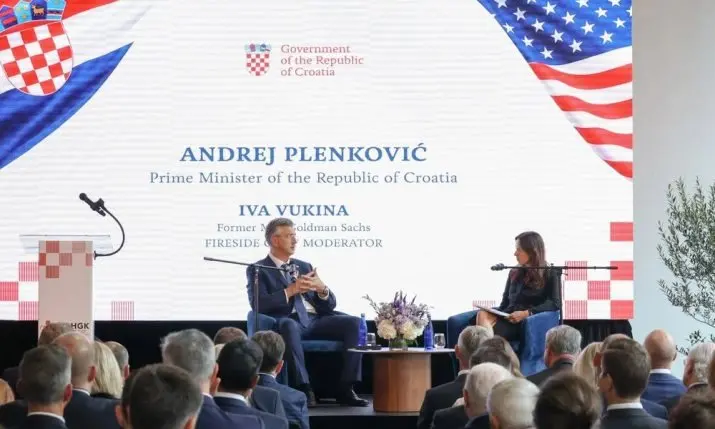
More than 100 Croatian and American companies gathered in New York on 25 September for the Croatia-US Business Forum, a joint effort by the Croatian Chamber of Economy and the Croatian National Tourist Board to deepen ties between the two markets. Around 70 US firms and 35 Croatian companies took part, 15 of them from tourism, with Prime Minister Andrej Plenković attending during his visit for the UN General Assembly.
The sticking point on the business side is familiar: the Croatia-US double taxation agreement, signed nearly four years ago, still hasn't come into force. Croatian representatives argue that implementing it would cut costs and smooth the path for investment, especially in borderless sectors like IT. Energy featured too — Croatia's expanded LNG terminal on Krk is set to handle 6.1 billion cubic metres a year, and over two-thirds of the gas arriving there already comes from the United States.
For travellers, the tourism angle is the interesting one. Services exported from Croatia to the US now run at close to €1 billion a year, and tourism makes up a big chunk of that. Tourist board director Kristjan Staničić called the US Croatia's most important long-haul market, noting that Americans are among the highest-spending visitors and are increasingly showing up outside the traditional summer window. He flagged better air connectivity and more US investment in Croatian tourism as next steps.
Croatia also took over Times Square this week with a new promotional campaign fronted by actor John Malkovich — hard to miss if you were walking through Manhattan.
The commercial relationship is already substantial. Museum of Illusions creator Metamorfoza runs 26 US locations with over 350 staff, while Podravka has sold Vegeta and its other food brands stateside for more than two decades. US direct investment in Croatia over the past decade tops €640 million, and bilateral trade hit nearly US$1 billion in the first half of 2026 alone. Pfizer, IBM and Vertiv already operate in Croatia.
What does this mean if you're planning a trip? Expect Croatia to keep pushing for more direct flights from the US, more off-season opening hours, and experiences aimed at American visitors who historically clustered on the Dubrovnik-Split summer route. The broader message from the forum is that Croatia wants Americans year-round — and is putting money and political weight behind that pitch. For travellers, that usually translates into better flight options, newer hotels and attractions, and a country that's easier to visit outside peak July-August crowds.