Croatia now has the second-fastest rising rents in the European Union. Only Romania saw a bigger jump, according to Eurostat figures comparing Q2 2026 with the annual average for 2025: Croatian rents rose 22.1%, behind Romania's 41.2% and ahead of Slovenia's 10.2%. At the other end of the scale, Estonia and Finland barely moved at +0.1%, with Luxembourg at just +1.2%. Rents went up in every EU country over the period, so Croatia isn't an outlier in direction — just in speed.
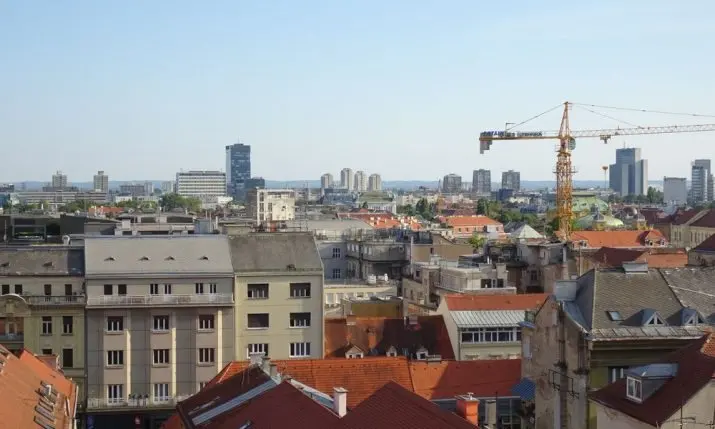
So what does a rental actually cost? National asking prices averaged about €15.33 per square metre per month in September 2026, which works out to roughly €766 for a 50-square-metre apartment. City figures from EURES show the usual coastal-and-capital premium: around €923 a month in Zagreb, €904 in Split, €763 in Rijeka, and a much gentler €487 in Osijek. Utilities typically add another €120–€240 on top.
The squeeze comes from demand outpacing supply in the places people most want to live. Zagreb pulls in students and job-seekers, while the coast has to absorb tourism and seasonal workers on top of everyone else — a familiar tension for any country with a hot summer season. When holiday lets pay better than year-long tenants, long-term housing gets scarce and expensive.
Why should a traveller care? If you're planning an extended stay — a month of remote work in Split, a winter in Zagreb, an off-season base on the Adriatic — budget accordingly. Monthly apartment rentals in the capital or on the coast now sit close to Western European levels, so the old assumption that Croatia is a bargain long-stay option no longer holds in its main cities. Inland cities like Osijek remain dramatically cheaper, nearly half the price of Zagreb, and smaller inland towns generally undercut both the capital and the coast.
The affordability crunch is also reshaping the places you visit. Rising housing costs push young workers and students harder to find somewhere to live, which affects staffing in bars, restaurants and hotels — and, ultimately, the vibe of the destinations themselves. Short-stay visitors won't feel much of it on a week's holiday, but anyone comparing Croatia against, say, Portugal or Spain for a longer stint should run the numbers carefully.
For now, the takeaway is simple: Croatia's rental market is heating up fast, the coast and capital carry the biggest premiums, and the smart long-stay move is inland, off-season, or both. Story sourced from Croatia Week.