
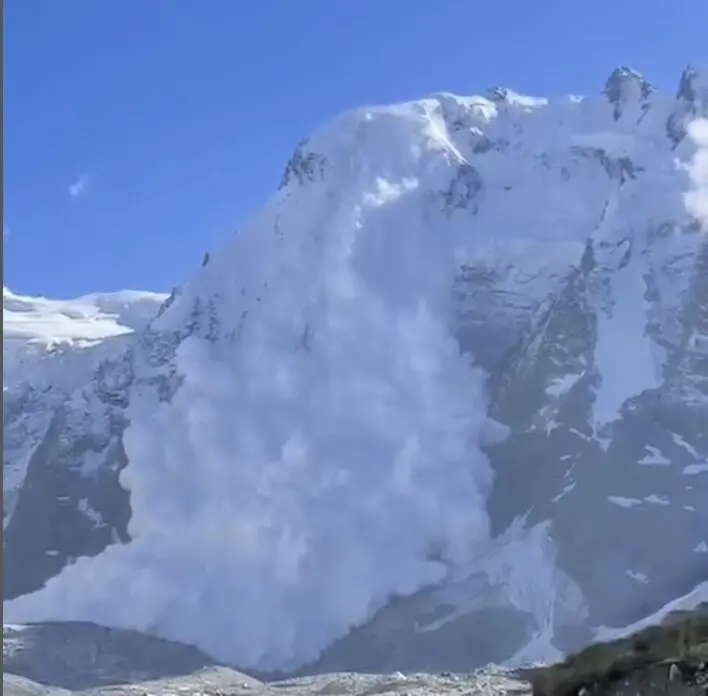
A large avalanche swept down Mount Mizhirgi in Russia's Kabardino-Balkaria region on Sunday at around 5 pm, catching a group of 33 climbers on the mountain near Mount Elbrus, Europe's highest peak.
The numbers are grim. Eleven people have been confirmed dead, six remain missing, and six others were injured and airlifted to hospital. Ten climbers managed to escape the slide and descend on their own. The incident was reported by CNN and Mountain Club's Anna Piunova, and a helicopter pilot named Alexander Davydov captured the avalanche on video, showing the enormous scale of the slide.
Search efforts are continuing, with roughly 50 rescuers on the ground. Their job is far from straightforward: the terrain around Mizhirgi is steep and difficult, and the same unstable snowpack that produced this slide raises the constant threat of another one.
Mount Mizhirgi sits in the central Caucasus, one of the highest summits in a range that also draws thousands of skiers, trekkers and mountaineers each year, many of them basing themselves around the Elbrus area. The region's dramatic relief and heavy snowfalls make it prized for big-mountain objectives — and, as this accident shows, genuinely hazardous when conditions turn.
For anyone planning a Caucasus trip, the practical lesson is about timing, local knowledge and respect for avalanche forecasts. Climbing in this range is not a casual undertaking: conditions can change fast, and guided groups with experienced local leaders are far better placed to judge snow stability than independent parties. Anyone with trips booked to the Elbrus area in the coming weeks should follow updates from local authorities and operators, as rescue operations and route closures may affect access to parts of the Kabardino-Balkaria mountains.