A new push from the Jordan Tourism Board is making the case that the country's biggest selling point isn't any single monument — it's density. Roman ruins, Byzantine mosaics, early Islamic sites and living Christian pilgrimage traditions all sit within a destination small enough to tour without a single internal flight.
Start in the north. Umm Qais, built on the ancient city of Gadara, pairs Greco-Roman ruins and pillar-lined streets with sweeping views, while nearby Jerash ranks among the best-preserved Roman provincial cities anywhere — colonnaded avenues, temples, theatres, plazas and public baths you can wander at ground level rather than peer at from a rope line.
Central Jordan covers a different set of chapters. The capital, Amman, stacks Roman, Byzantine and Umayyad remains together on the Amman Citadel. In Madaba, the sixth-century Madaba Map — a mosaic floor depicting the Holy Land — is one of the oldest surviving cartographic records of the region, and Mount Nebo nearby offers the ridge-top views tradition links to Moses. The Baptism Site of Jesus Christ (Al-Maghtas), a UNESCO World Heritage site of churches, chapels and monasteries on the Jordan River, remains a major draw for Christian pilgrims.
UNESCO recognition extends beyond the obvious names. Umm ar-Rasas preserves layered Roman, Byzantine and early Islamic remains, including churches with extraordinary mosaic floors, and the hillside city of As-Salt — all yellow stone, stairways and traditional merchant homes — joined the World Heritage List in 2021 as a model of Ottoman-era urban tolerance and craft.
The tourism board's pitch, summed up by its area marketing manager Ahmad Kraishan, is that history here isn't something you look at behind glass; you walk through it, eat well doing it, and meet the people keeping traditions alive. Trove Tourism Development Advisors founder Danny Cohanpour adds that the country's real strength is variety — each city and community adds a different layer to the story.
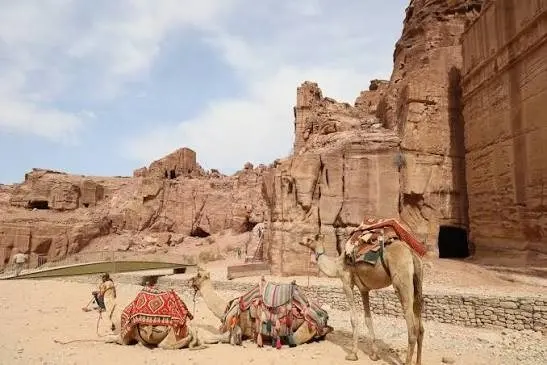
Why it matters for travellers: Jordan rewards a slow itinerary. A single week can cover Jerash, Amman, Madaba, Mount Nebo and Al-Maghtas without long transfers, leaving room for Petra, Wadi Rum and the Dead Sea if you extend. Food has become a headline attraction in its own right, and the compact scale makes it one of the easier Middle East trips to self-organise.