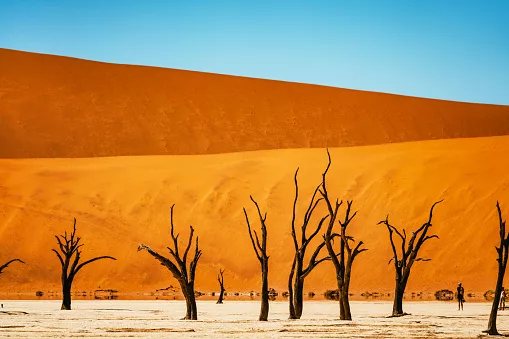
A white clay pan dotted with blackened, century-old trees and framed by rust-red dunes, Deadvlei is arguably the most photographed spot in Namibia — and one of the strangest landscapes on Earth. The story behind it is a slow-motion drama of water, sand and one of the driest climates on the planet.
Located in the Namib-Naukluft National Park near Sossusvlei, Deadvlei was once fed by the Tsauchab River. Seasonal floods brought enough water for camel thorn trees to grow in the basin. Then advancing dunes blocked the river's path, cutting off the water supply. The trees died — commonly estimated around 600 to 700 years ago — but they never fell. The desert's extreme dryness means the fungi and insects that normally break down dead wood simply can't survive here, so the trunks remain standing, sun-blackened and skeletal, looking almost petrified though they're not fossils.
The pan sits in the shadow of Big Daddy, a dune estimated at around 325 metres, and forms part of the Namib Sand Sea, a UNESCO World Heritage Site. The combination of bleached clay — which cracks into patterns during extreme dry spells — dark trees and glowing sand is what gives the place its almost surreal palette. Light changes everything here: pale gold dunes at dawn deepen to burnt orange by mid-morning, shifting the whole mood of the scene hour by hour.
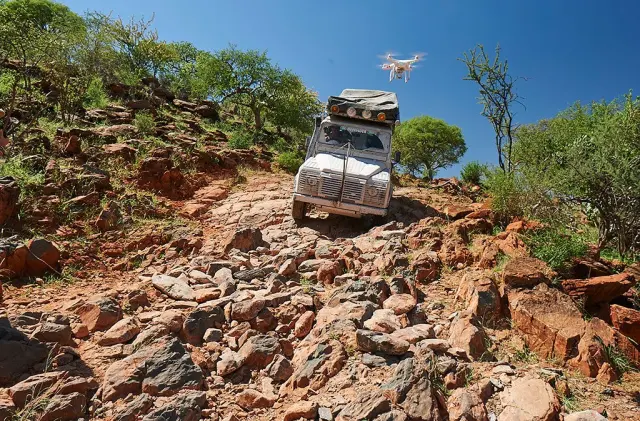
Visiting is straightforward but not trivial. From the Sesriem gate you drive a paved road, then face a final stretch of deep sand requiring a 4x4 or a shuttle. From the parking area it's a short but sweaty walk over soft dunes to the pan — there's no shade at all, so early morning is the smart play, both for cooler temperatures and the best photography light. Note that access arrangements for 2026 have been in flux, so confirm current 4x4 and shuttle rules with park authorities or your lodge before you go.
The Sossusvlei area rewards a full day or two. Climb Dune 45, named for its position 45 kilometres from Sesriem, for panoramic views in the morning light. Sossusvlei itself occasionally floods after heavy rains, briefly becoming a lake among the dunes — a rare treat if you time it right. Closer to the park entrance, Sesriem Canyon offers a narrow, rocky contrast to the open sands, carved by the same Tsauchab River that once nourished Deadvlei's trees.
Pack more water than you think you need, plus sunscreen, a hat and sturdy walking shoes. The desert heat is easy to underestimate, especially on the walk back out mid-morning.
Deadvlei suits photographers chasing that iconic shot, but it's just as compelling for anyone who wants to stand somewhere the planet's slowest processes are on full display — a forest of trees dead for centuries, still standing because almost nothing here can rot.