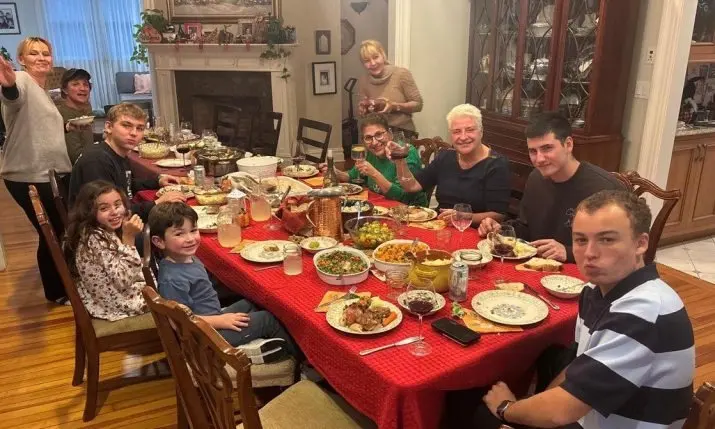
Every fourth Thursday of November, millions of American tables feature a roast turkey — and a surprising number of those tables carry a distinct Croatian flavour. For the Croatian community in the United States, Thanksgiving has become a genuinely dual celebration: gratitude for the new homeland, with the old country never far from mind.
The holiday itself traces back to 1621, when English settlers at Plymouth shared a harvest feast with the Wampanoag people — an event that helped shape the modern Thanksgiving, though Native American traditions of giving thanks for the land long predate European arrival. Today it is the quintessential American family holiday, and Croatian immigrants have embraced it fully: generations gather, turkey is non-negotiable, and the table groans under the weight of both classic American dishes and the recipes families carried across the ocean.
What makes the Croatian version distinctive is the emotional layering. Many in the community arrived as hardworking migrants and built lives, homes and businesses they consider the realisation of the American Dream. On Thanksgiving they give thanks for that — but they also use the day to talk to their children and grandchildren about Dalmatian coastal towns or Slavonian plains their family left, about grandparents still in Zagreb or Split, and about the Croatian defenders who fought in the 1990s for the country's independence. The message passed down the generations is simple: you can love two countries at once.
That dual loyalty has practical consequences for travel, too. Thanksgiving week is one of the busiest periods for family visits, and the diaspora's summer and holiday trips back to Croatia are a real phenomenon — some families return every year with the kids in tow, and a growing number of older immigrants relocate to Croatia permanently, buying or rebuilding family houses. For anyone travelling in Croatia in high summer, much of the family tourism along the coast is powered by exactly these roots-and-return trips.
The piece's author spent this year's Thanksgiving at the home of the Tomić family, and her account reads as a warm reminder of what the day is actually about: hospitality, a crowded table, and gratitude for the people around you — values that translate seamlessly between an American suburb and a Croatian village.
Why should a traveller care? Because diaspora communities are often the best-kept introductions to a country. Croatian-American clubs, churches and festivals across the US — from Pittsburgh to Chicago to the West Coast — keep food, music and traditions alive, and visiting Croatia with even a vague family connection can unlock a far richer trip than any guidebook. And if you happen to be American in Croatia in late November, don't be surprised to find a fellow traveller's table with both turkey and sarma on it.
Story via Croatia Week.