Swap Spain's crowded winter-sun hotspots for Tunisia's south-east and you get whitewashed medinas, layered history and mild December weather — plus the chance to sleep in Luke Skywalker's childhood home.
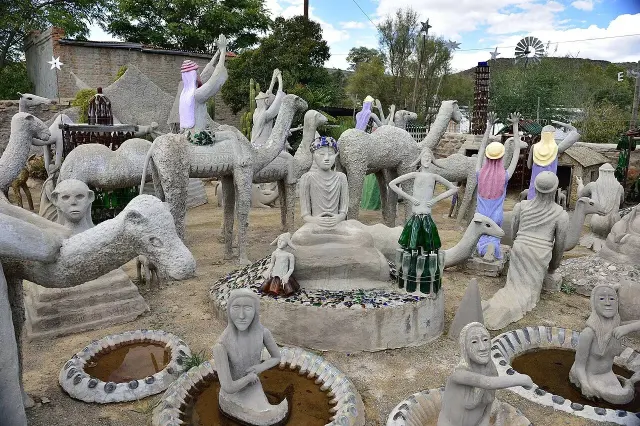
The island of Djerba sits off Tunisia's southern coast, a three-and-a-half-hour flight from the UK. Its main town, Houmt Souk, has a labyrinthine medina stacked with spices like cumin and tabil, and a local language blending Arabic, French, Amazigh, Italian and even Maltese. Like Andalucía, the island shows centuries of Jewish, Muslim and Christian influence — but without the queues. Unesco inscribed Djerba as a World Heritage site in 2023, recognising not grand monuments but the ingenuity of its self-sufficient settlements: traditional 'menzel' estates, recreated at Explore Djerba Park, where families grew pomegranates, chillies and dates behind fortress-like walls and collected rainwater in an arid landscape.
Ninety minutes inland, the terrain shifts to the Dahar hills — Unesco's newest Global Geopark, with rock layers dating back 250 million years. Around the village of Matmata, Amazigh (Berber) communities have carved troglodyte homes directly into the rock for natural insulation against desert temperatures. Several still function as family homes and welcome visitors; the matriarchs famously brook no argument when it comes to sitting you down for tabouna bread, olive oil, honey and homemade harissa. Some let travellers stay overnight, channelling income directly to local families.
Film fans will recognise one of them instantly. Hotel Sidi Driss doubled as Luke Skywalker's underground homestead in two Star Wars films, and the nearby town of Tataouine lent its name to Luke's home planet. There's reportedly a replica Darth Vader on site.
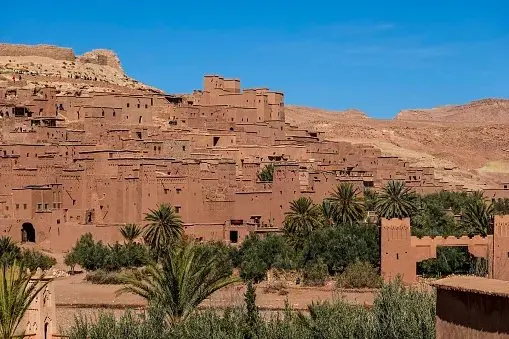
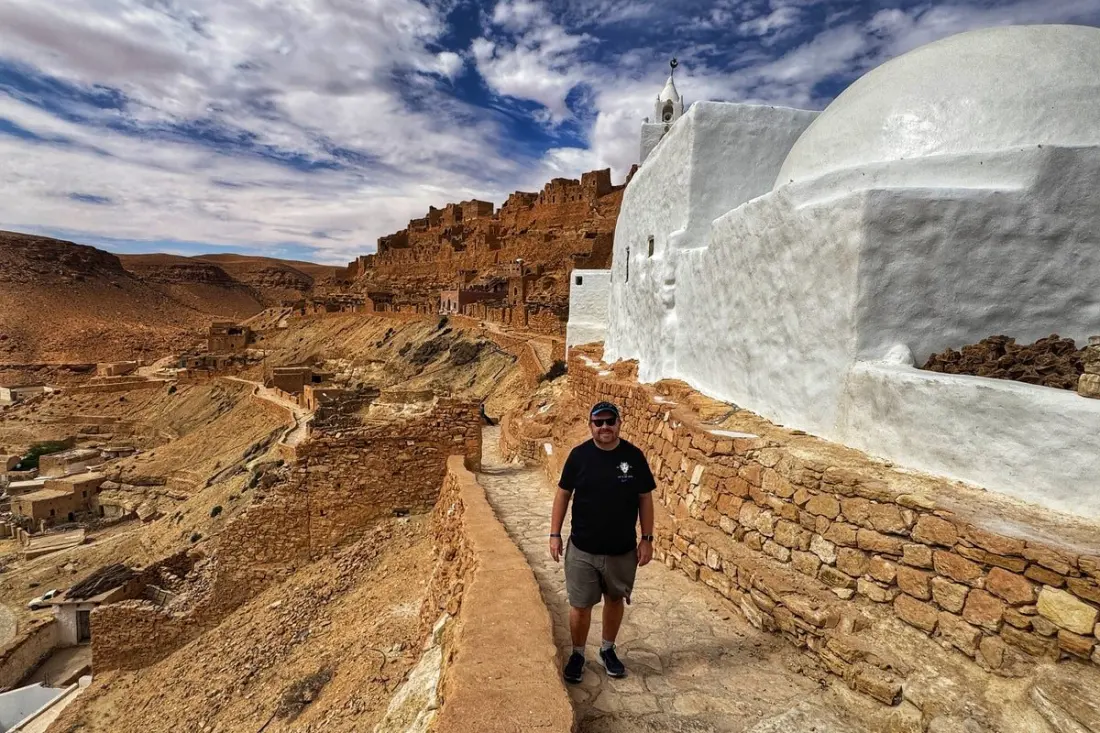
Further into the Dahar region, fortified ksour — ancient granaries with vaulted storage chambers called ghorfas — honeycomb the hillsides. Most are ruins, but the 13th-century Ksar Ouled Debbab now operates as a hotel, restaurant and museum, complete with a hammam reserved 'for honoured guests'. Rooms start around £90 a night. At the mountain village of Chenini, stone houses cling to a hillside below the whitewashed Mosque of the Seven Sleepers, linked to a legend that appears in both Christian and Islamic traditions. Guesthouses like Kenza, built into the hillside, offer sunset views from about £40 a night.
Practicalities are straightforward: easyJet flies direct from Luton and Manchester from £105 return, and Tunisair connects via Tunis the rest of the week. Tunisian dinars can't be bought outside the country, so withdraw cash on arrival — cards work in Djerba but small notes are essential on the mainland. Guided day trips to Matmata, Tataouine and Chenini run from around €70 per group of four. For anyone chasing winter sun who'd rather skip the Costa del Sol crowds — or just wants to argue about Star Wars trivia in a cave that starred in the films — southern Tunisia delivers on both counts.
Story via The Independent Travel.