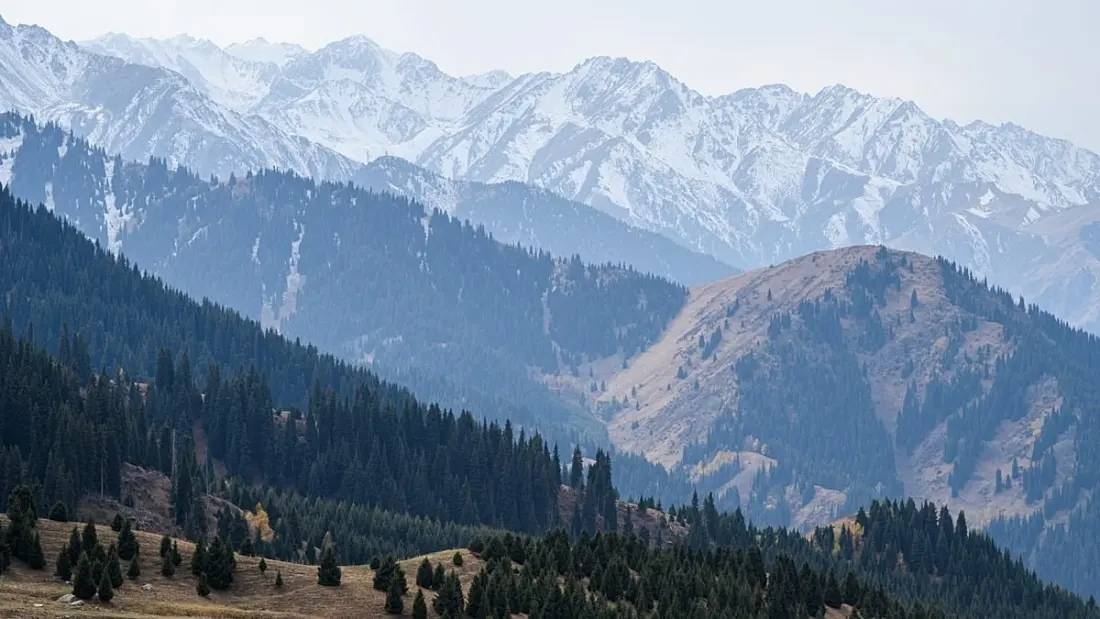
Kazakhstan's biggest city recently threw itself a birthday party, complete with apple fairs and street markets, but the real argument for visiting Almaty is what happens the rest of the year. The former capital sits directly beneath the snow-capped Trans-Ili Alatau range, close enough that locals navigate by them. In a city built on a grid, directions come as "up" (towards the peaks) or "down" (away). That geography shapes the pace of a visit: you can drink coffee downtown and be walking in the foothills before lunch.
The classic mountain outing starts at the Medeu base station, where a cable car climbs to Shymbulak Mountain Resort. In winter it draws skiers and snowboarders, but the lifts and views work just as well for anyone after a mountain meal or a summer hike. Trails run all year.
Back in town, Almaty rewards slow looking. Facades of older buildings hide vivid mosaics installed between the 1960s and 1980s by monumental artists from across the Soviet Union. Some have been damaged or lost, which makes the survivors worth hunting down. The wooden Ascension Cathedral, finished in 1907, is another survivor — it came through a major earthquake just four years after completion. For something newer, the Almaty Museum of Arts opened last year in a building by British firm Chapman Taylor: two interlocking forms, one limestone, one aluminium, symbolising mountains and city, with modern and contemporary art from Kazakhstan and Central Asia inside.
Come hungry. The Green Bazaar piles apples next to dried fruit and nuts — fitting, since the region is the ancestral home of the apple. Around it, the food scene spans Central Asia: beshbarmak (meat over flat pasta), kazy (horsemeat sausage), kurt (salty dried curd balls) and kumys, the tangy fermented mare's milk. Add plov, lagman noodles and steamed manty dumplings and you get a edible map of the communities that built the city.
Almaty also works as a launchpad. Flights connect it to Europe and East Asia, and it sits within easy reach of Bishkek in Kyrgyzstan and Tashkent in Uzbekistan, making it a natural stopover on a wider Central Asia trip. The advice from those who know it: don't just transit through. Give the city a few days of its own.