
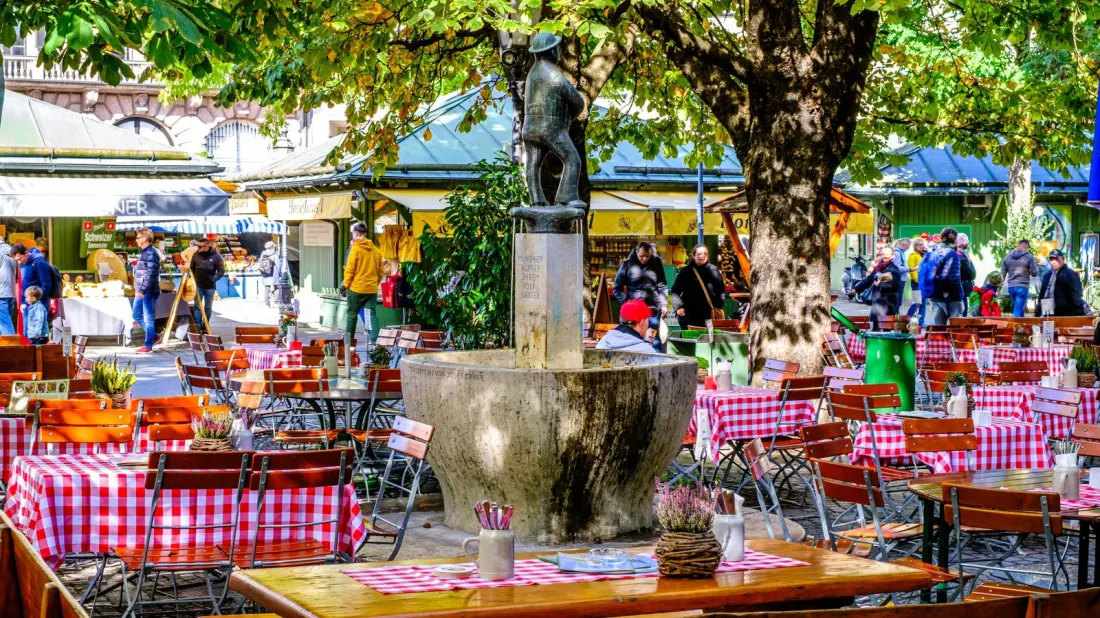
Skip the festival tents this Festbier season. Germany's beer garden culture doesn't require a ticket to Oktoberfest — it runs all summer in shaded courtyards and riverside terraces, and the best seats are at the spots locals actually queue for. A recent round-up from Islands compiled eight such gardens, sourced from resident reviewers rather than tourist guides, and it doubles as a handy mini-tour of the country.
In Munich, Zum Flaucher Biergarten sits along the Isar in the leafy Flaucher recreation area, with room for 1,700 people and — tellingly — no car access; one regular admitted to hesitating over a five-star review for fear of drawing crowds. Back in the city centre, Zollpackhof in Berlin is another surprise: a garden shaded by a 150-year-old horse chestnut, seating up to 2,000, about 20 minutes on foot from Brandenburg Gate yet still uncrowded. It pours Augustiner from Munich and serves quirky specials like a Bavarian döner and a shareable meat-and-cheese board.
Bamberg gets two entries, which says a lot about the Franconian town's beer credentials. Spezial-Keller perches above the city with wide views, and its claim to fame is rauchbier — the famous Bamberg smoked beer — matched to hearty Franconian food. Mahrs Bräu, a family-run brewery operating since 1895 in the quiet suburb of Gereuth, pours unfiltered lagers like its AU Ungespundet Naturtrüb, which one fan ranks among their top five beers ever.
The list rounds out with variety. In Potsdam, Bürgerbahnhof occupies a former railway station complex, seats nearly 400, and runs a busy food calendar — an Alpine-style Pentecost celebration and a summer pig roast among them. Hamburg's Zum Anleger is a seasonal, unpretentious hangout by the water with canoe hire and yellow-striped umbrellas, well off the tourist trail. In Cologne, Alteburg works as an event space that becomes a shady countryside-feeling garden in summer. And on the edge of Essen, Jagdhaus Schellenberg overlooks the Baldeneysee lake; Essen, Germany's third-greenest city, rarely feels overrun, and regulars say they've been coming for over a decade without tiring of it.
The appeal for travellers is obvious: a beer garden like this costs a fraction of a festival weekend, requires no booking months ahead, and puts you at a sticky communal table next to actual residents rather than a stadium of visitors. Timing matters — most of these gardens only open in warm weather, from late spring through early autumn — but that window is long, and September brings Festbier on tap without the October crowds.