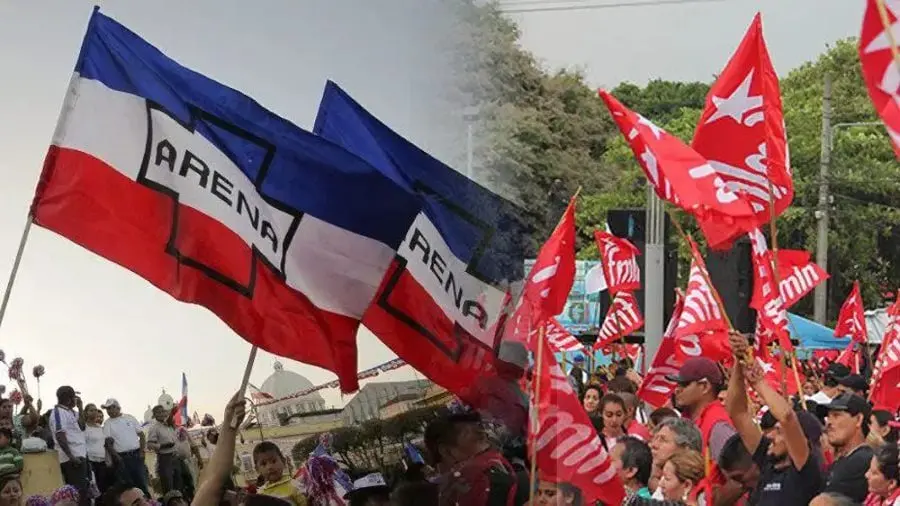
For roughly 30 years, El Salvador was governed by two names: ARENA on the right and the FMLN on the left. That era is effectively finished. Since Nayib Bukele won the presidency in 2019, both traditional parties have been routed in three straight elections, and their prospects for the next general vote on 28 February 2027 look grim.
The 2019 contest was the warning shot. Bukele, running under the GANA banner, tapped into frustration with corruption scandals, gang violence and stagnant living standards — problems neither party had solved during their alternating spells in power (ARENA governed 1989 to 2009, the FMLN from 2009 to 2019). ARENA's presidential coalition managed about 857,000 votes; the FMLN, after a decade in office, roughly 390,000.
Then came the collapse proper. In 2021, Bukele's Nuevas Ideas party seized a commanding legislative majority: ARENA fell from 37 seats to 14 in the 84-member assembly, the FMLN from 23 to just four. Municipally, ARENA's mayoralties dropped from 139 to 35, the FMLN's from 66 to 30. By 2024 the picture was starker still. Bukele won reelection with about 82.7% of valid votes while the two legacy parties combined took under 12% — the FMLN second on 204,167 votes (6.25%), ARENA third on 177,881 (5.44%). Against a combined total of roughly 1.24 million in 2019, that's a near 70% drop. ARENA kept two of 60 legislative seats and one of the country's 44 municipalities; the FMLN won neither a seat nor a town hall. Note that the system changed too — the assembly shrank from 84 seats and 262 municipalities were consolidated into 44 — but the scale of decline is unmistakable.
Why the freefall? Corruption cases tied to officials from both parties gutted public trust, and neither found leaders who could reach beyond their base. Bukele's hard-line gang crackdown, whatever its human rights criticisms, gave many Salvadorans the security they had long been denied. A June 2026 poll by the UCA's IUDOP institute found nearly six in ten respondents support no party at all, with ARENA and the FMLN stuck in low single digits against a dominant Nuevas Ideas.
For 2027, both parties have named candidates — ARENA fielding former legislator Maytee Iraheta, the FMLN physician and union leader Rafael Aguirre — but they face a rewritten rulebook: 2025 constitutional reforms allow indefinite presidential reelection, stretch terms to six years and scrapped the runoff. Significant gains look unlikely without fresh leadership and credible answers to everyday problems.
Why should a traveller care? El Salvador's politics shape the realities on the ground — the security policies that have transformed its beaches, surf towns and Ruta de las Flores, plus questions about rule of law that affect how the country is perceived abroad. If you're heading to the 2027 election period or beyond, understanding that the old left-right framework is gone helps make sense of a country reinventing itself at speed.