Bhutan's Royal Bhutan Police have wrapped up one of the country's biggest religious artefact investigations, linking 18 suspects to 35 cases of chorten (stupa) vandalism and monastery burglary across Thimphu, Paro, Wangdue, Punakha and Bumthang. The cases, some stretching back to 2015, have been forwarded to the Office of the Attorney General.
The breakthrough came after a routine vehicle stop. Police had set up a temporary checkpoint on the Thimphu-Phuntsholing Highway near Khasadrapchu Junction following a wave of vandalism reports, and on 15 May 2026 officers intercepted a car travelling at an odd hour. Inside they found a thro — a sacred bowl — which triggered the formation of a Special Investigation Team. Suspects questioned at the checkpoint then confessed to vandalising chortens in multiple locations, opening the door to the older monastery cases.
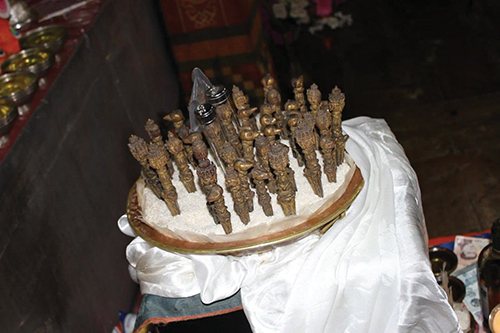
The most valuable recoveries relate to the 2023 burglary at Thadra Goenpa, where 64 phurpas (ritual daggers) were stolen. Police tracked down 42 of them in Nepal with help from authorities abroad. Three more arrived by a very different route: two Singaporean nationals who had bought phurpas on trips to Nepal years earlier learned of their link to the burglary and travelled to Bhutan to return them voluntarily. On 5 October 2026, all 45 daggers were ceremonially handed back to the monastery after a purification ceremony led by the Laytshog Lopon of the Zhung Dratshang, verified by culture ministry and monastic officials, and confirmed undamaged. Nineteen daggers are still missing.
Beyond the daggers, investigators recovered statues, patang, thro bowls and antiques taken from other religious sites. Police say some relics were sold to buyers overseas, and they are working with foreign authorities to trace Bhutanese artefacts still held abroad. They've also flagged weak security at remote chortens and lhakhangs, with protective measures now being planned and custodians advised on safeguards.
Why should travellers care? Two reasons. First, if you're touring Bhutan's temples and dzongs — Thimphu, Paro, Punakha and Bumthang are all on classic itineraries — be aware that theft from sacred sites is a real issue the country is actively fighting. Second, and more directly: if you've bought what looks like a Bhutanese ritual object elsewhere in the region, it may be stolen heritage. The two Singaporeans who flew to Bhutan to return their phurpas are a good example of doing the right thing. Under Bhutan's Penal Code, buying or selling sacred objects is itself an offence. When in doubt, buy your souvenirs from legitimate craft shops, not antiquities dealers.