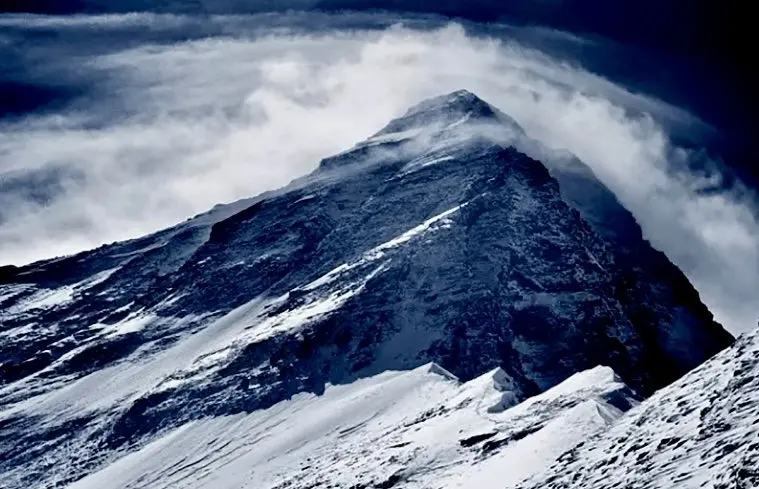
In spring 1971, a single expedition took on Everest — and it remains one of the most dramatic cautionary tales in Himalayan climbing. Led by Norman Dyhrenfurth and Jimmy Roberts, the team planned two simultaneous routes: a direct line up the steep Southwest Face and a complete ascent of the West Ridge. Thirty-one climbers from a dozen countries joined, plus Sherpas including Ang Phurba and Sonam Girme. It was billed as a grand experiment in international cooperation. It fell apart instead.
The expedition was heavily commercialised before it even left for Nepal. The BBC bought exclusive TV rights and embedded a nine-person film crew, while The Sunday Times sent journalists including Murray Sayle. Press coverage framed the climb as practically a formality — expectations no expedition could realistically meet.
Base Camp went in on March 22 at 5,425m, and the Khumbu Icefall that season was in the worst condition Dyhrenfurth had ever seen. Then came tragedy. On April 18, Indian climber Harsh Vardhan Bahuguna died of cold and exhaustion near 7,000m during a storm, roughly 25m from safer ground, after descending untied from Austrian Wolfgang Axt. A formal inquiry followed, with Frenchman Pierre Mazeaud branding it murder through negligence. Recriminations flew: Axt defended himself by saying an hour longer in the storm would have frozen him too.
The death fractured the team. When Mazeaud, Carlo Mauri and the Vauchers pushed to abandon both hard routes for the easier South Col — a move others read as chasing personal firsts — a vote favoured concentrating everything on the Southwest Face. The West Ridge group accused the leadership of a plot to keep them off the summit, and four climbers flew home in early May. A virus, possibly mononucleosis, then swept the camps, felling Dyhrenfurth himself.
The endgame belonged to Dougal Haston and Don Whillans, backed by Japanese climbers Naomi Uemura and Reizo Ito hauling loads high on the mountain. They reached a Camp 6 at about 8,290m and fixed ropes into the Rock Band, but ran out of rope, oxygen and food. On May 21 they turned around just 450m from the top. Roberts judged the effort 50 percent successful — no summit, but the climbers who stayed worked well together.
Why should a modern traveller care? Because Everest's 1971 season shaped how the mountain is climbed and sold today: the first mega-funded, media-saturated commercial expedition, complete with embedded crews, national rivalries and public expectations outpacing reality. Later analysis in Mountain magazine blamed the oversized merger of factions and brutal weather rather than any single personality — a reminder that even on the world's most famous peak, logistics and luck decide more than headlines. For anyone trekking to Everest Base Camp or following the spring climbing seasons, this is the backstory behind the crowds.