A three-man Russian expedition is gearing up for another shot at Everest by one of its least-travelled routes — and facing an awkward choice between a dangerous ridgeline and a shortcut that crosses an international border.
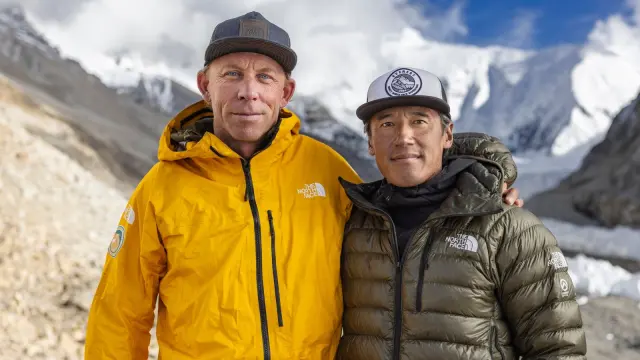
Andrei Vasiliev, Vitaly Shipilov and Sergey Kondrashkin are currently in Kathmandu, shaking off a viral infection and waiting out Cyclone Arnab before returning to their base at Lobuche. Their goal: climb Everest without supplemental oxygen, via the West Ridge rather than the crowded standard route.
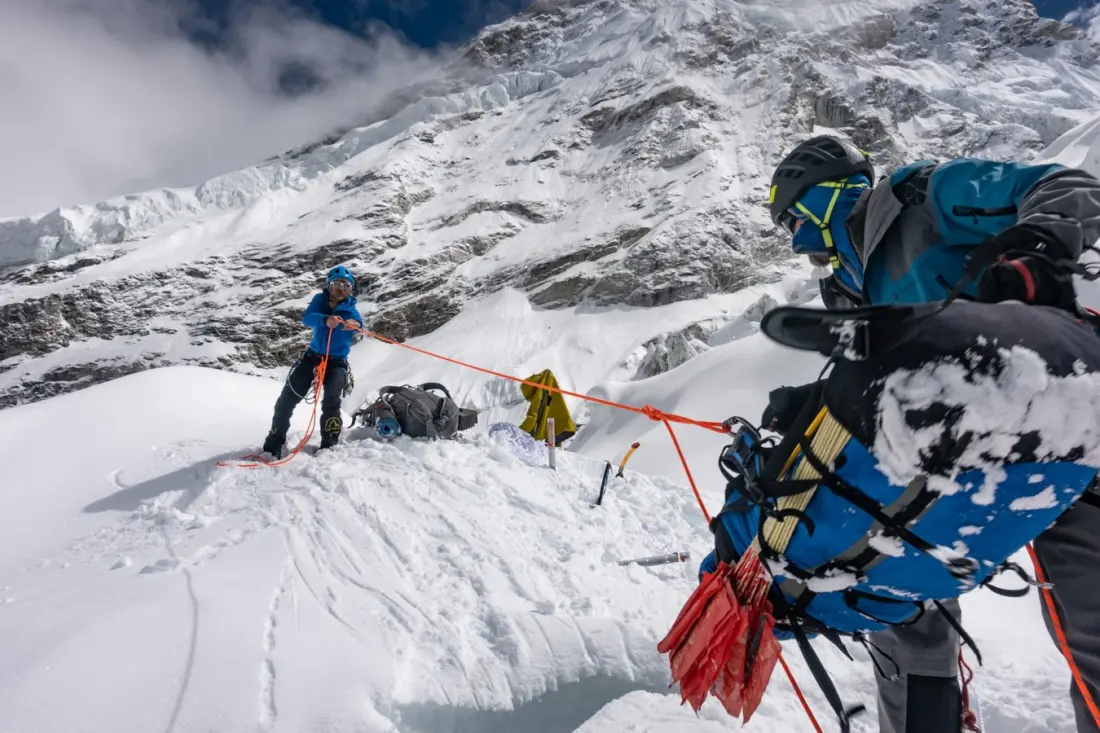
Their Nepal-side permit comes with a catch — it's only valid if they avoid the classic Khumbu Icefall–South Col–Southeast Ridge line used since Hillary and Tenzing's 1953 first ascent. Getting to their chosen route has been a saga in itself. Heavy snow blocked an attempt to bypass the Icefall via the Nuptse Shoulder, and crossing the Icefall itself proved treacherous, with deep snow and unstable snow bridges over countless crevasses. Their solution was a third option: climbing via the Lho La pass, then continuing over the West Shoulder and onto the West Ridge.
Three rotations in, the team's high point stands at 6,400m, gained after roughly twelve 60-metre pitches of moderate rock, snow and ice. Old ropes and snow anchors from earlier expeditions dot the route to the West Shoulder. Ahead, Vasiliev spots two more steep rock steps of about 100m each, with possible detours on snow slopes, before the ground eases off enough for simultaneous climbing.
The route history is sobering. The Lho La–West Shoulder–West Ridge link has been fully climbed only twice: by a Yugoslav team led by Tone Skarja in 1979, who descended via the Hornbein Couloir, and by Bulgaria's Hristo Prodanov in 1984, who summited alone and died on the descent. Three other teams have used the Hornbein Couloir — on the Tibetan North Face — as their summit line.
That couloir is now the crux of the Russians' dilemma. Objectively, it offers better summit and survival odds than the upper West Ridge. But it sits in Chinese territory, and their permit covers Nepal only. Whether a brief border crossing is on the table remains unconfirmed — Vasiliev says the team needs one more rotation before deciding.
For armchair adventurers, this is a rare window into serious alpine-style Everest climbing at a time when the mountain's normal route is a queue of bottled oxygen and fixed ropes. It also highlights the strange politics of Himalayan mountaineering, where a few metres of snow can separate one country's permit system from another's. Conditions are turning wintry, and with a fourth rotation pending, the team's route decision — ridge or couloir, Nepal or Tibet — will shape one of the season's most interesting stories on the world's highest peak.
Story via ExplorersWeb