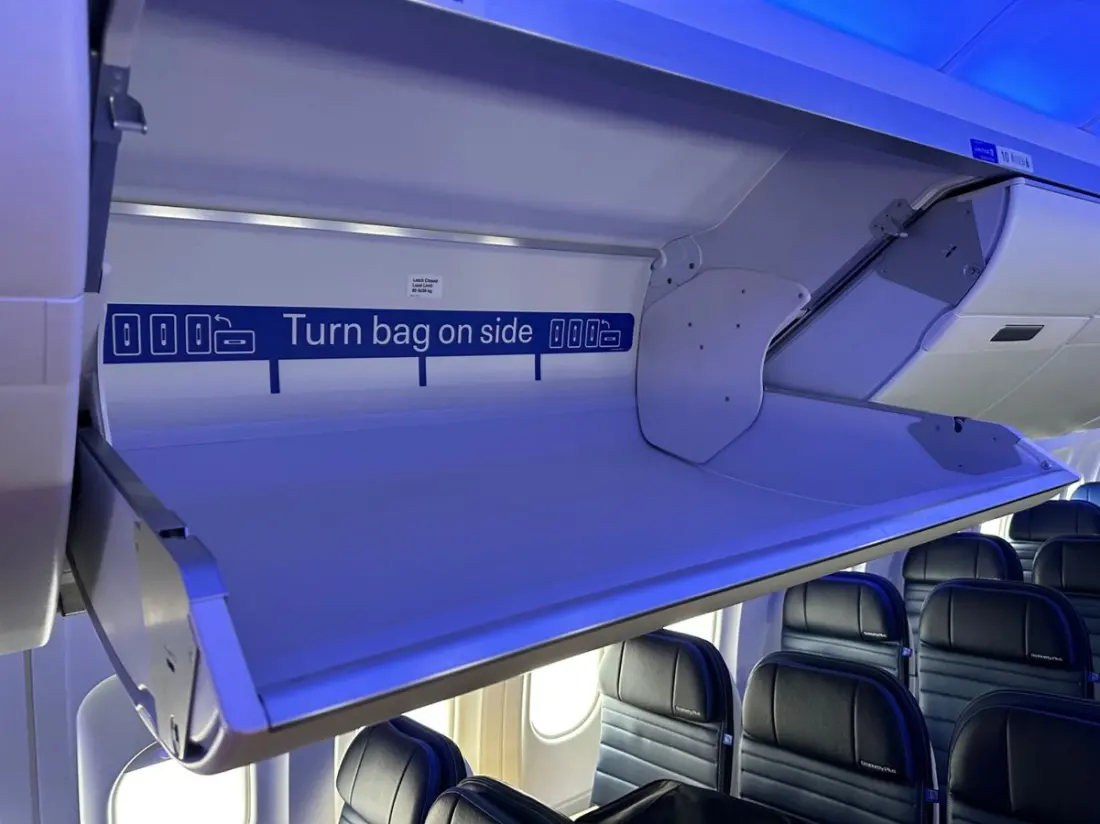
A new scam is catching flyers off guard before they've even left the aircraft. Passengers reaching up to grab their carry-on from the overhead bin are being accused of injuring a fellow traveller — an injury that, according to a recent account, was staged.
The report comes from a reader who says he has now witnessed two attempts. The first was on an AirAsia flight earlier this year, where the targets appeared to be seated in the first five rows. The second, more recent, unfolded in the business class cabin of a Singapore Airlines flight. His conclusion: it's premium-cabin and front-row passengers — the ones assumed to have money — who are being singled out.
The playbook is simple. One scammer positions themselves right next to where your bag sits, sometimes close enough that contact is hard to avoid. An accomplice might casually warn you to "be careful" taking your bag down, drawing your attention. Then, when you pull it out, they cry out loudly and claim you hit them. They demand medical attention, insist on a police report, and can even block the aisle so nobody deplanes until the situation is "resolved" — pressure designed to make you settle on the spot.
This isn't purely hypothetical. In 2011, Chinese prosecutors described a man who deliberately collided with passengers handling luggage on flights, then claimed a diamond had been knocked out of his watch and demanded compensation. On one occasion a flight attendant warned the passenger he was probably being extorted, but he paid anyway — 15,000 yuan (around $2,300 at the time) — out of fear, after the scammer himself called police to the airport and demanded 20,000 yuan. Airport police grew suspicious, investigated, and found he had extracted 29,000 yuan and a phone from four separate passengers before his arrest on extortion charges.
There's another angle worth knowing: the payout isn't only from fellow passengers. A staged injury could also be leveraged against an airline or an insurer. And under the Montreal Convention, which applies to most international flights, carriers can be liable for onboard injuries — even when another passenger handled the bag rather than the crew. That makes airlines potential soft targets too.
The complication is that real injuries do happen. An 80-year-old United million miler was once hospitalised after a bag fell from an open bin. So you can't dismiss every claim out of hand — which is exactly what scammers rely on.
If someone accuses you of injuring them with your bag, the sensible move is to involve the cabin crew immediately and let them arrange any medical attention. Ask the crew to document your account, and take contact details of witnesses — remember that passengers who booked through third-party sites may never have given the airline an email or phone number, so their testimony could be the only way to reach them later. Don't hand over cash, and don't let anyone pressure you into an on-the-spot settlement before landing.
Frequent flyers on Asian routes, especially those up front or in premium cabins, are the likeliest targets. A little awareness at the moment you stand up to deplane goes a long way.
Story first reported by View from the Wing.