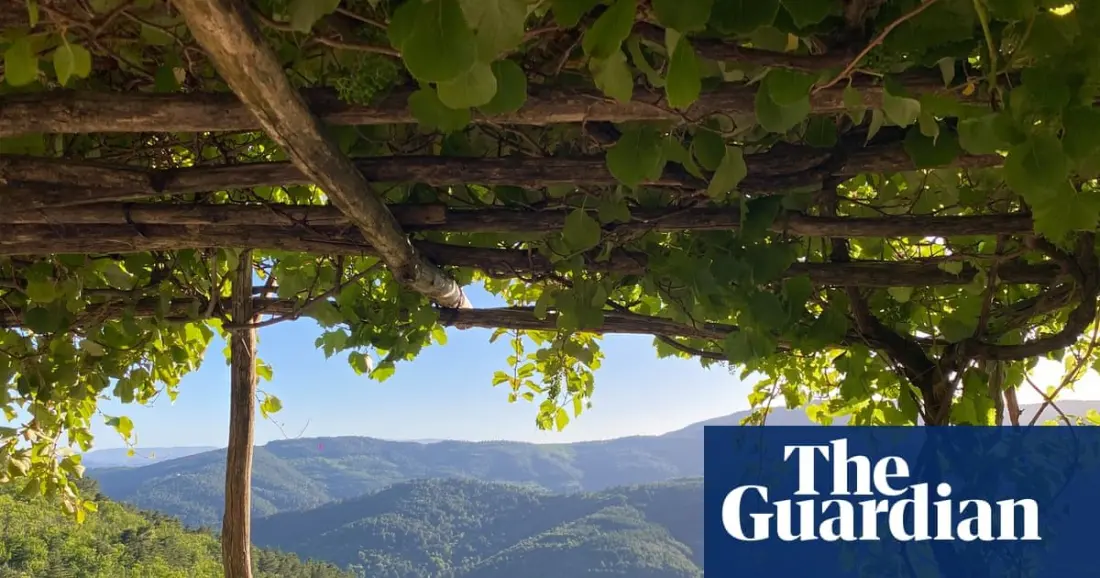
Faced with yet another feed of identical 'hidden gem' holiday posts, one traveller tried a blunt counter-strategy: close the laptop, open a paper map of western Europe, shut eyes, point. The finger came down on Saint-Hilaire-de-Lavit, a commune in the Cévennes — a name that would never surface in a 'best of France' search bar. It turned out to be one of the best trips they'd had.
The logistics were pleasingly simple. Overnight in Paris, then a three-hour TGV to Montpellier and a hire car inland. A Lidl stop on the edge of town stocked them for the whole week — there are no shops up in the hills. From there the roads narrow, zigzag and climb into the south-east corner of the Massif Central, well away from the Med crowd. There's no mobile signal on the high passes, so the cottage owner's written directions were the only navigation.
Their destination was Les Ayres, a hamlet of roughly ten stone buildings at 800 metres, hosted by a local woman named Guilaine. Think rough granite walls, a shuttered village cafe, and a veranda looking over chestnut and pine forest rolling to the horizon. It looks wild, but the slopes have been shaped by farming and the seasonal movement of livestock for thousands of years — the paths they hiked are drailles, ancient sheep tracks still in use today.
That was the rhythm of the week: daylong walks on those old transhumance routes without meeting a single other person or hearing a car, punctuated by discovery of cold, clear swimming pools where mountain streams carve through shaded gorges. Wild strawberries on the bank, damselflies overhead, tadpoles in the shallows, and at one point a snake crossing a pool minutes after a swim. Morning entertainment arrived on hoof: three generations of shepherds driving a flock past the cottage to graze under a chestnut tree, bells clanging, herders dozing. Evenings brought brass band practice drifting over the valley, calling owls and a far-off wild boar.
Why should this matter to you? Two reasons. First, the Cévennes is a genuine alternative to the algorithm-served south of France: empty paths, swimmable rivers, cheap self-catering and a landscape with real history in it. Second, the method travels. Pick a region with a rail link and quiet interior, let chance choose the pin, book a local host, and pack supplies. The writer's own conclusion was that the real luxury wasn't the pool or the views — it was going days without looking at a phone.
It's not for everyone. You need a car, a tolerance for no signal, and a head for heights, since you sleep on a mountain pass and every walk ends with a climb back up. But if your holidays have started to feel like optimised itineraries, a finger-on-the-map trip into the Cévennes is a solid argument for giving the search bar a rest.