Pumpkin spice season arrives earlier every year, but the real flavour of autumn in the American West comes straight from the fields — and the people who grow it say timing, variety and storage make all the difference.
Take cranberries. At Seaview Cranberries near Cape Blanco on Oregon's southern coast, Scott McKenzie's family has worked the same land since 1874, though cranberries only arrived in 1996. The temperate coastal climate and sandy-clay soil let them harvest later than most. Contrary to popular belief, cranberries don't grow in water — they grow on dry vines, and bogs are only flooded at harvest because the hollow fruit floats, making gathering easier. Visitors to the region in autumn can see this unusual harvest in action, and the farm's favourite way to use the crop is humble cranberry bread, good for breakfast through dessert.
The storage tip worth stealing comes from the UC Master Food Preserver Program: freeze berries flat on a tray first, then transfer them to a moisture-proof freezer bag kept at 0°F or below. That way you can grab exactly what you need months later.
Further south at Delta Breeze Orchards in Vacaville, California, Lauren and Eric Wagner tend 400 pomegranate trees — mostly the Wonderful variety, sweet but tangy — planted by Lauren's father after the family bought the land in 1987. Harvest runs from mid-October into November and sometimes early December, with fruit handpicked and sold on the property. Eric's advice for shoppers: judge by firmness, not colour. Wind marks and patchy rinds mean nothing; a soft fruit does. He also shares a neat opening method — slice off the crown, score the rind along the internal sections, then pull it apart to reach the arils. Beyond salads, the family presses juice (mixed with ginger ale, apparently a winner) and folds arils into chocolate bark.
Winter squash rewards patience, says Lane Selman of the Culinary Breeding Network. Long-storing varieties sweeten over weeks as starches convert to sugar, so the early-season supermarket squash often disappoints. Her exception: delicata, which needs no curing, no peeling, and is ready right away. Black Futsu, she notes, is best eaten raw, while Winter Luxury shines in baking.
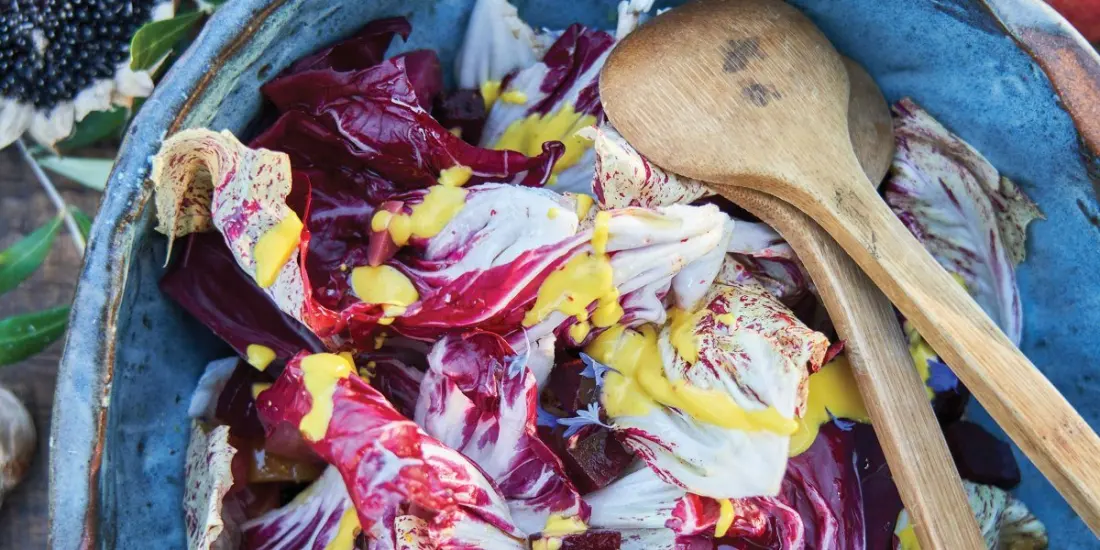
And when the cold sets in, Selman argues radicchio should replace summer lettuces entirely. Beginners should start with milder Castelfranco or Lusia, soak cut leaves in ice water to soften the bitterness, and pair them with something creamy — the trick behind good restaurant radicchio salads. Her book with Margaret Waterbury, Radicchio: A Celebration of the Beloved Italian Vegetable, goes well beyond the salad bowl.
For travellers, this is a perfect autumn road-trip thread through northern California and coastal Oregon: farm stands, orchard gates and bog country, all within a few hours' drive of each other, with the harvest calendar running October through early December.