
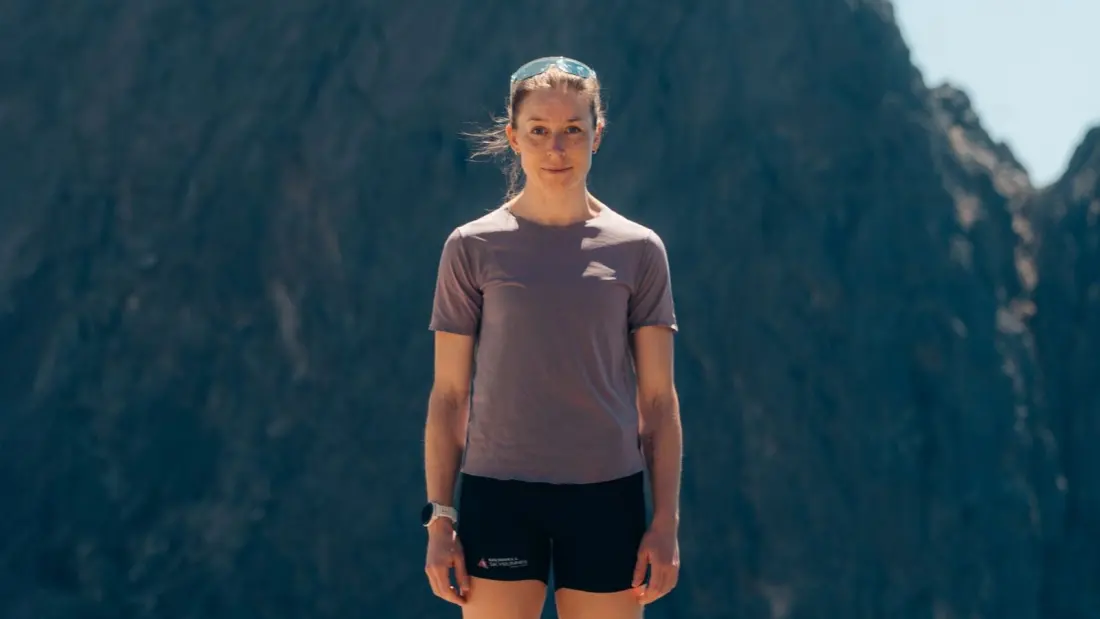
Two weeks after Canadian trail runner Kalie McCrystal vanished on the Matterhorn, her family has spoken publicly for the first time — and confirmed what many feared. In a statement released through Outside Online, her mother Wendy Cooper and sister Jody McCrystal said everything they now know points to a fall while she was descending the peak.
McCrystal, 38, was an elite skyrunner from Squamish, British Columbia, and no stranger to the mountain. On September 1 she set out on a reconnaissance run ahead of a planned speed-record attempt, climbing the Lion Ridge route from the Italian side. She summited at 14,682 feet and was last seen on her way down. Her plan was to beat the record of 5:14:53 set by Karina Anderson just weeks earlier, on August 9, with a sub-five-hour time of her own.
When she failed to return, friend and fellow runner Hillary Gerardi raised the alarm. What followed was a major international effort: Italy's Guardia di Finanza mountain rescue specialists, the Royal Canadian Mounted Police, drones, and ground searchers including Gerardi herself. Eight days after the disappearance, Italian authorities called off the search without finding any trace of McCrystal.
The family's statement is both a farewell and a tribute. They thanked the Italian rescuers for their professionalism and kindness, the RCMP and Canadian Embassy for their support, and the worldwide community of friends who mobilised to help. They described Kalie as someone who moved through life with equal parts determination and fun, and said her loss will be felt across the skyrunning world and in Squamish. There is a measure of comfort, they wrote, in knowing she was doing what made her feel most alive, and that she remains among the mountains she called home.
The story is also a stark reminder of what the Matterhorn demands. Straddling the Swiss-Italian border in the Pennine Alps, the four-sided peak draws roughly 3,000 climbers to its summit each year. Around six die annually, according to Zermatt Tourism, and some 600 people are believed to have lost their lives on the mountain over the past 160 years. Even for athletes with McCrystal's résumé — including prior experience on this very mountain — the descent is often the most dangerous part of the day.
For travellers, the takeaway isn't to avoid the Alps but to respect them. Rapidly changing weather, loose rock on the classic ridges, and the fatigue of long days at altitude catch out even the highly experienced. Anyone eyeing the Matterhorn should go with a guide, treat the descent with as much caution as the climb, and always share a route plan with someone on the ground.
The outdoor community, from the Skyrunner World Series circuit to the trails of Squamish, has lost one of its own. Her family's words close on the mountain itself: majestic, unforgiving, and the place she felt most at home.