MSC's newest flagship, the MSC World Asia, was delivered by French shipyard Chantiers de l'Atlantique in late November 2026, and it's the third LNG-powered ship in the line's World Class series after World Europa (2022) and World America.
What's interesting is how much has changed. MSC says roughly 60 percent of the ship's public areas were redesigned or tweaked compared with its siblings — not a fresh prototype, but a serious evolution of one. William Monts de Oca, the cruise line's head of guest experience innovation for hotel newbuilds, says the changes came straight out of guest feedback collected on the first two ships.
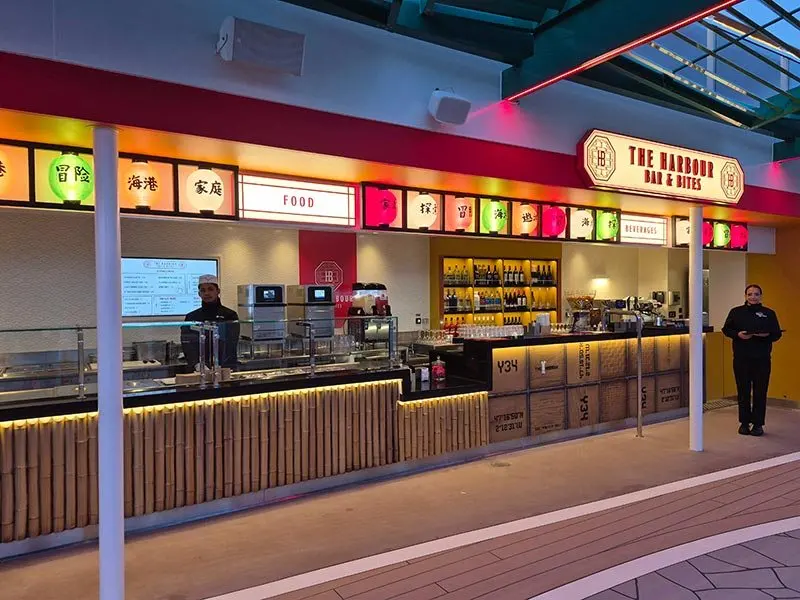
Two themes dominate. The first is multigenerational travel: MSC has deliberately built more indoor and outdoor spaces where grandparents, parents and kids can actually hang out together, rather than splitting everyone into separate age zones. The second is dining variety, specifically an expansion of complimentary fast-casual options — a nod to the reality that not every family wants a formal, two-hour dinner every night of a cruise.
Monts de Oca frames the approach like a theme park strategy: each new World Class ship adds enough new "worlds" to give past guests a reason to come back. Expect the pattern to continue on future vessels in the series.
For travellers, the practical part: MSC World Asia launches its maiden voyage on December 4, 2026, running seven-night Western Mediterranean cruises. The itineraries call at Barcelona and Civitavecchia (for Rome) in Spain and Italy, Marseille in France, and Valletta in Malta — a solid first-timer's loop of the region's big-hitter ports.
If you've cruised on World Europa or World America and found the dining options a bit predictable, or you've struggled to find spaces that work for a mixed-age group, this ship is MSC's direct answer to both complaints. Families are clearly the target market, and the free fast-casual expansion is a genuine value point at a time when many cruise lines keep pushing pay-as-you-go specialty restaurants.