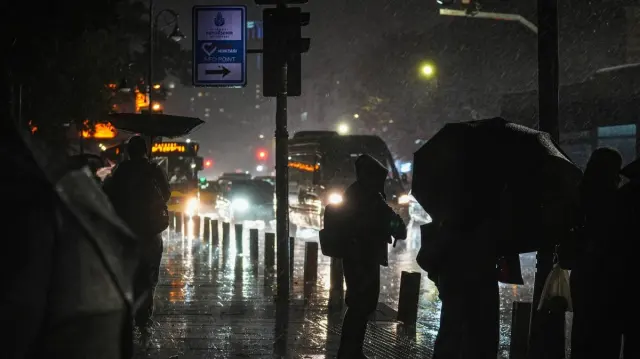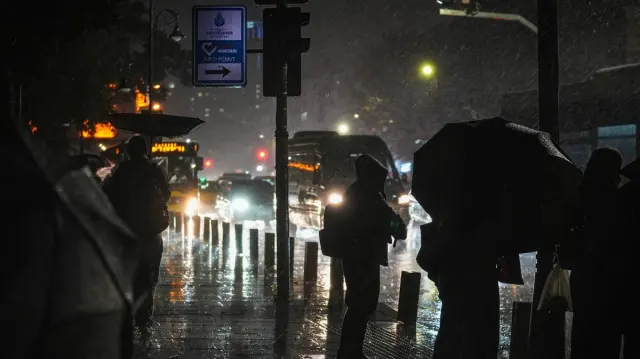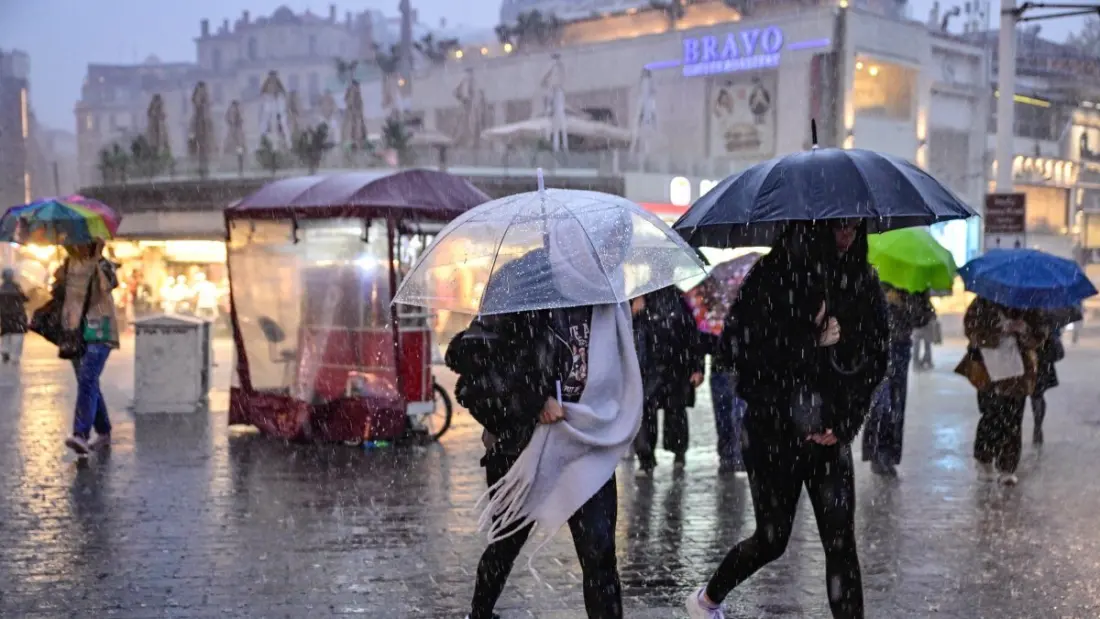
Istanbul had a rough Wednesday. Nearly 100 kilograms of rain per square metre fell on the city in just 12 hours — between 10 p.m. Tuesday and 10 a.m. Wednesday — an amount officials say usually counts as excessive even when spread across a full 24 hours. The result: flooded roads, near-standstill traffic and a citywide push to keep people off the streets.
Congestion across Istanbul hit 89%, according to the municipality's traffic map. On the Asian side, the D-100 highway was jammed from Uzunçayır all the way to Kartal, while the TEM Highway backed up from Sancaktepe to the Çamlıca toll booths. Approach roads to the Fatih Sultan Mehmet and July 15 Martyrs bridges crawled, as did the Şile Highway and the Üsküdar–Beykoz corridor. On the European side, the D-100 toward Edirne was congested from the July 15 Martyrs Bridge through Haliç, Edirnekapı and Cevizlibağ as far as Haramidere, with slow traffic also reported around Beylikdüzü, Levent, Sarıyer and the Karaköy–Beşiktaş coastal road.
Anyone switching to public transport didn't get an easy ride either. Metro, metrobüs, tram and bus stops were overcrowded, with long queues at major hubs like Zincirlikuyu, Altunizade, Uzunçayır, Yenibosna, Cevizlibağ and Zeytinburnu.
The city mobilised on a large scale: 8,392 personnel and 2,246 vehicles were deployed, coordinated from the Disaster Coordination Center (AKOM) in Eyüpsultan. Deputy Mayor Nuri Aslan warned that more rain was expected around the Bosporus and on the Asian side into Thursday morning, with winds potentially reaching 75–80 km/h — storm territory. Schools across Istanbul were ordered closed on Thursday.
If you're in Istanbul or heading there soon, the practical takeaway is simple: during heavy weather, leave the rental car alone. The municipality itself urged residents to avoid unnecessary private car trips and use public transport instead — a good rule for visitors at any time, given the city's chronic congestion. Keep an eye on official municipal channels and weather warnings, build buffer time into airport transfers, and remember that Istanbul's metro, tram and ferry networks are usually the most reliable ways to cross the city when the roads seize up.
For travellers, this is a reminder that Istanbul's autumn and winter months can bring serious downpours. The city is still very much worth visiting in the rain — museums, the Grand Bazaar and countless covered food spots don't care about the weather — but packing a proper rain layer and checking the forecast around the Bosporus crossings is a smart move.