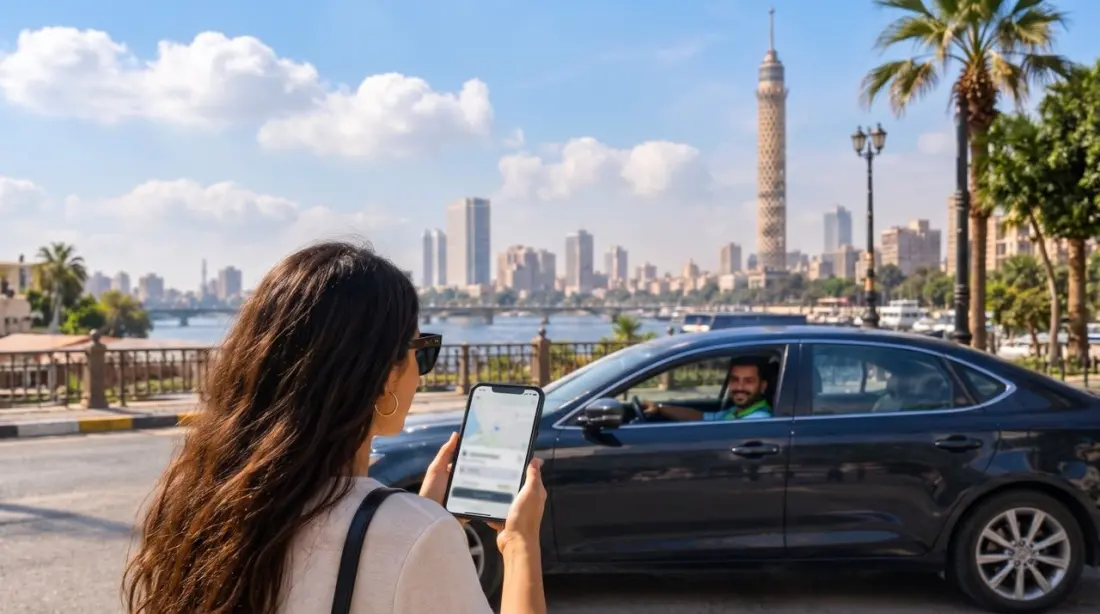
Hailing a ride in Cairo in 2026 is no longer a two-tap affair. A growing range of apps now covers the capital, Alexandria, the North Coast and Hurghada, and the differences between them matter more than you'd think — from who sets the price to whether your driver can even see where you're going before accepting the job.
The most distinctive player is inDrive, which flips the usual model: you propose your own fare, and nearby drivers either accept it or counter with their own price. You then pick from the offers based on driver rating, vehicle details and estimated arrival time. Drivers see your destination and passenger rating too, so it's a genuine two-way negotiation. An Oxford Economics report from January 2026 found roughly three-quarters of inDrive trips across seven emerging markets involved negotiated fares — climbing to about 80% in Egypt. A September 2026 update added a colour-coded price hint (green means your offer is close to the recommended fare and likely to get quick responses; orange means you might wait longer) plus more visible driver-verification badges.
The app has also expanded beyond standard city rides in ways that are useful for travellers. inDrive Premium launched in January 2026 with newer cars (2018 or later) for those prioritising comfort. City to City lets you book intercity journeys between governorates, individually or shared — a handy alternative to buses and trains for places like the Red Sea coast. And since April 2026, Hurghada has had inDrive Moto, a motorcycle option for shorter trips, with the usual caveats about helmets and confirming details.
How does it stack up against Uber and the others? The honest answer is that no single app is always cheaper or faster. Fares, waiting times and payment methods shift by city, time of day and demand. Sensor Tower ranked inDrive first among free Android Maps & Navigation apps in Egypt in its October 2026 listing, and the platform has topped 400 million downloads globally — but popularity doesn't guarantee the best price on your specific route.
The practical takeaway: before each trip, check which apps cover your destination, compare live offers, and confirm your payment method works. Egyptian Streets' guide also runs through sensible safety habits worth adopting wherever you ride — verify the plate and driver photo before getting in, share your trip with someone you trust (especially on late or intercity journeys), use the app's emergency tools, and report any issues through the platform afterwards.
For visitors, this is genuinely useful knowledge. Cairo traffic is intense, taxis rarely use meters, and negotiating from scratch in a foreign language is tiring. Knowing that one major app lets you set the price — and that cheap offers can mean longer waits — helps you balance budget against time. It also matters outside the capital: a Red Sea holiday in Hurghada or a coastal trip from Cairo now has app-based options that didn't exist a couple of years ago.
Story via Egyptian Streets.