Think of an African holiday and the mental picture is usually acacia trees at sunset and a 4x4 rolling across the savannah. But the continent's geology has produced landscapes that look nothing like that postcard — and several of them belong high on any adventurous traveller's list.
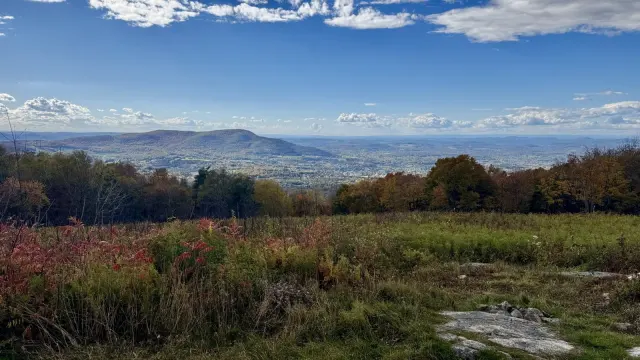
Take the Rwenzori Mountains on the Uganda–DR Congo border. Known as the Mountains of the Moon, they top out at 5,109m on Mount Stanley's Margherita Peak, Africa's third-highest summit — high enough to hold actual glaciers despite sitting on the equator. The trek climbs through montane forest, bamboo, heath and moorland before reaching misty slopes where giant groundsels and lobelias grow to absurd sizes. It's a UNESCO World Heritage site, but it demands fitness: expect steep terrain and weather that changes fast.
Namibia's answer to an alien planet is Deadvlei, a white clay pan ringed by orange dunes in the Namib-Naukluft region. Centuries ago the shifting dunes cut off the Tsauchab River, killing the camel-thorn trees that grew there. The desert air is so dry they never decomposed — their blackened skeletons still stand on the pale clay, a photographer's dream in soft early-morning or late-afternoon light. Nearby Sossusvlei brings the colossal dunes. Bring plenty of water; the walk in is hot.
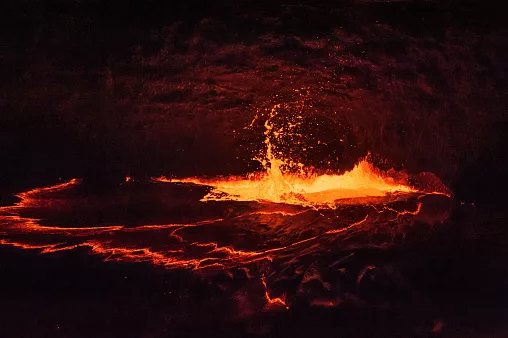
Ethiopia arguably wins the geological jackpot. In the Afar region, the Danakil Depression sits where tectonic plates are pulling the crust apart, producing salt flats, traditional salt caravans and, at Dallol, hydrothermal pools in vivid yellows, oranges and greens. Beautiful but corrosive — this is not a swimming spot, and travel here needs local expertise and current safety advice. The same region holds Erta Ale, an active shield volcano famed for its lava lake (when conditions allow; activity varies). Up north, the Simien Mountains offer a cooler contrast: escarpments dropping some 1,500 metres, gelada monkeys on the grassy slopes, Walia ibex on the cliffs and the rare Ethiopian wolf in the high grasslands.
For a greener take on African wildlife, Nyungwe Forest in south-western Rwanda is a vast montane rainforest home to eastern chimpanzees and a wealth of birds. The famous canopy walkway lets you see over the treetops, and guided trails reveal primates you often hear before you see. It's a welcome reminder that African wildlife experiences don't have to happen from a vehicle.
Finally, Botswana's Okavango Delta flips river logic on its head: it never reaches the sea. Rain falling in the Angolan highlands arrives in north-west Botswana during the dry season, flooding the Kalahari's edges just as everything around it parches. The result is a wetland bursting with elephants, hippos and waterbirds — geography and game viewing in one.
These landscapes reward travellers who want drama beyond the game drive: high-altitude treks, volcanic heat, flooded desert and misty rainforest, all within one continent.