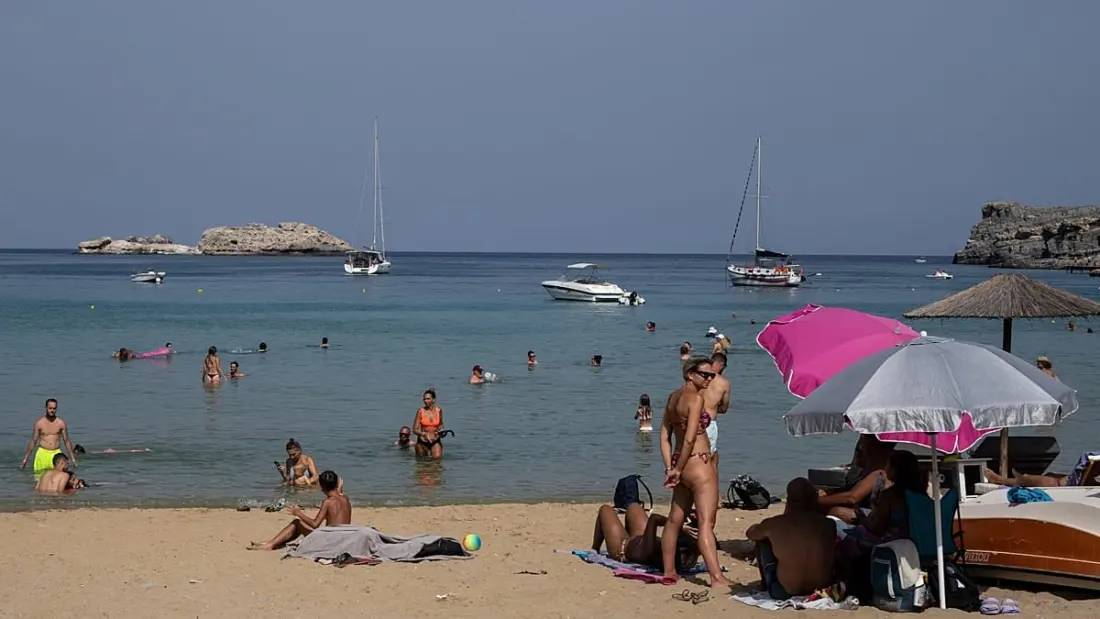
Greece had a busy July. Provisional figures from the Hellenic Statistical Authority (ELSTAT) show 6.61 million arrivals and 31.7 million overnight stays across hotels, campsites and short-stay rentals in July 2026 — up 2.5% and 2.0% respectively on the same month last year.
What's striking is who's doing the travelling. Foreign visitors made up more than eight in ten arrivals (80.3%, about 5.3 million people) and a hefty 87.6% of all nights spent in Greek accommodation. Domestic trips grew too, but slowly: Greek arrivals rose just 0.8% and their overnight stays 0.4%, compared with 2.9% and 2.2% for international visitors.
Foreign guests also stick around longer. Their average stay across all accommodation types was 5.2 days, against 3.0 days for Greeks — pushing the overall national average to 4.8 days, flat year on year. Short-stay rentals saw the longest foreign stays at 5.4 days on average.
The pattern holds across every kind of accommodation. Hotels drew roughly 81% of their arrivals from abroad, and foreigners accounted for 89.3% of hotel nights. Short-stay rentals tell a similar story (79.6% of arrivals, 85.6% of nights). Campsites are the only place where the split narrows: foreigners took 60.2% of arrivals but Greeks actually logged more nights there, 44.1% to 55.9% — locals clearly still love a camping holiday.
Why should this matter to anyone planning a trip? Two reasons. First, it confirms Greece's peak season is as crowded as ever — expect busy islands, fuller hotels and higher July prices, especially where international demand dominates. Second, the strong domestic camping culture is a genuine insider angle: Greek-run campsites are often cheaper, more low-key and less foreign-tourist-heavy than the hotel scene, and locals stay there longer than they do in hotels. If you want a quieter Greek summer, that's one place the crowds data suggests looking.
One caveat worth keeping in mind: the July 2026 figures are provisional, so the final numbers may shift slightly. But the direction of travel is clear — Greece's tourism engine remains firmly powered by international visitors, who arrive in greater numbers and stay longer than anyone else.