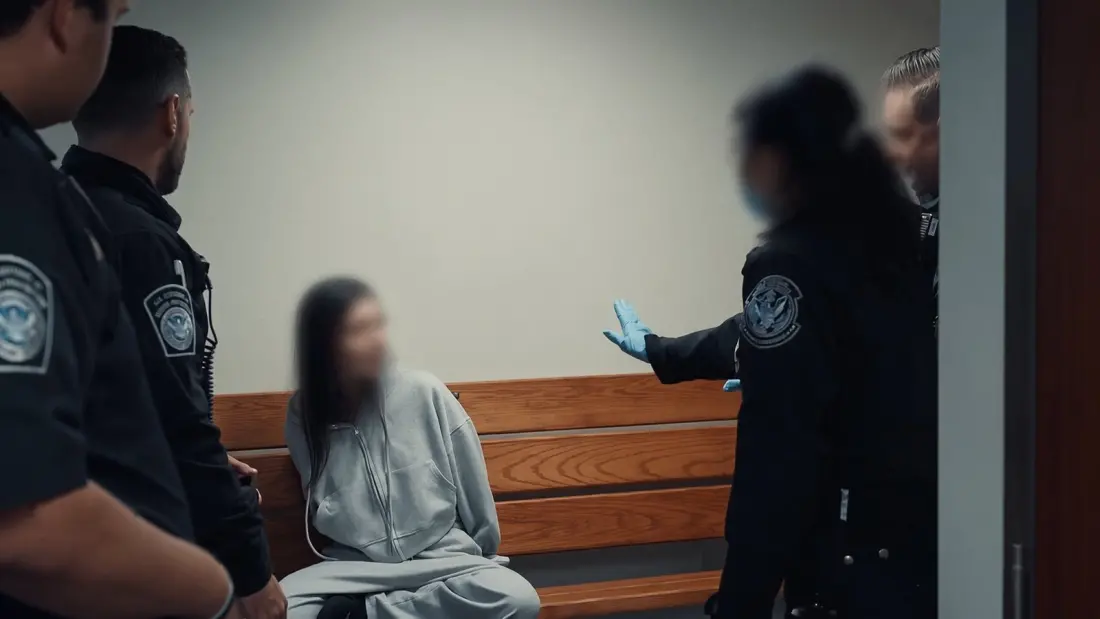
A video making the rounds again on social media shows a Japanese woman handcuffed and screaming for help at Honolulu airport, before being put on a flight back to Nagoya that was leaving in half an hour. The urgency wasn't cruelty for its own sake — if she missed that departure, she'd have spent the night in US federal detention.
The footage, uploaded in July by Frontline Crime, comes from an episode of the TV series Airport Security: USA that appears to have aired roughly two years ago. In it, the woman — described as a hostess — refuses to move to secondary inspection when border officers ask. She insists she's in Hawaii on holiday, and when basic questions start, she accuses officers of suspecting her of prostitution. The officer treats that defensive reaction as a red flag rather than a misunderstanding.
Then the questioning gets more pointed: who paid for the trip? She says a man covered her airfare and hotel, but she doesn't know where he is and hasn't been in contact with him. Officers reportedly linked that man to Japanese organised crime. The upshot: she failed to convince officers she'd leave the US, which makes her ineligible to enter as a temporary visitor. Deportation follows. Even if she'd only planned to chat with customers and serve drinks at a Hawaii club — no other work — that's still unauthorised employment on a tourist entry, and grounds for refusal.
This isn't a one-off. The story echoes a pattern that should concern any visitor to the US on the Visa Waiver Program or an ESTA. A British woman named Molly Hill said she was strip searched and jailed after flying to Hawaii to visit her boyfriend, despite holding a return ticket 88 days out — she ended up being marched back through the airport in handcuffs on her birthday. In 2022, an Australian traveller, Jack Dunn, was detained in Honolulu over an onward-ticket problem and says he slept on a concrete floor with a paper bag for a pillow.
Why should a holidaymaker care? Because entry to the US is never guaranteed, even with an approved ESTA and a return ticket. Officers can and do ask about who funded your trip, where you're staying, and how well you know anyone you're visiting. Getting defensive, refusing to move to secondary inspection, or assuming the questioning is an accusation tends to make things worse, not better. If someone else paid for your holiday, be ready to explain the arrangement plainly. And if your onward ticket, accommodation story, or reason for visiting doesn't hold up, the consequences can involve detention — not just a polite turn-around at the gate.
For most travellers this is background noise: arrive with honest answers, a return booking, and funds you can account for, and Hawaii remains as welcoming as ever. But the video is a useful reminder that the border interview is a legal threshold, not a formality. Japanese social media users, including 2channel founder Hiroyuki Nishimura, were blunt about it: making a scene at the booth is a fast track to a seat on the next plane home.
View from the Wing