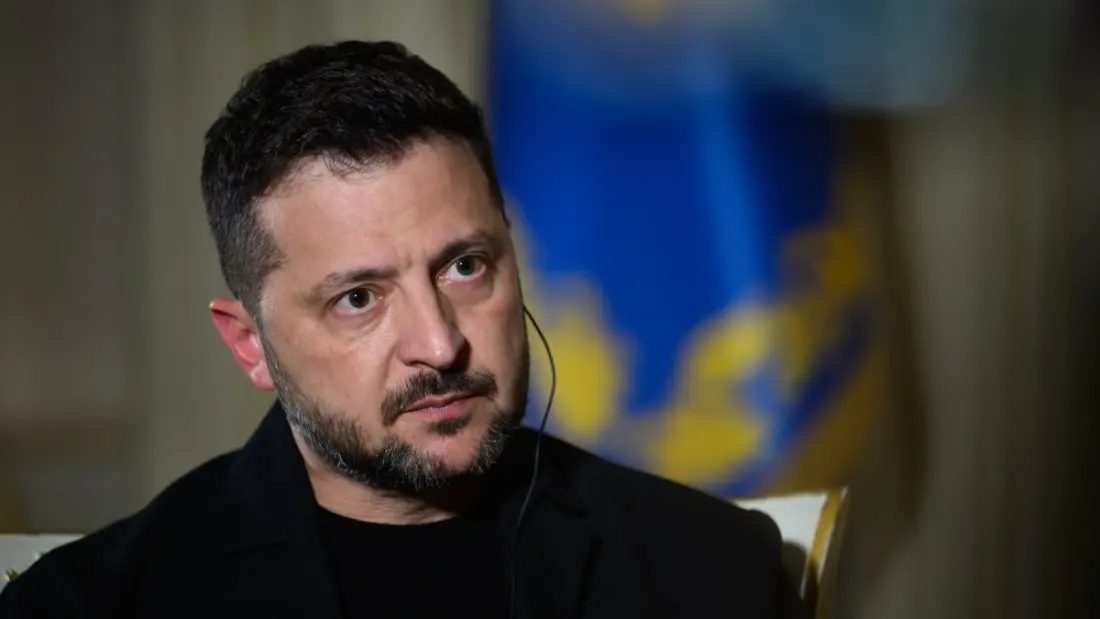
Ukraine's president Volodymyr Zelenskyy has raised the alarm over a proposed new European security framework, saying the United States floated the idea as part of efforts to end Russia's 4.5-year war — and that Moscow could exploit it to weaken NATO and redraw the continent's borders.
Speaking to reporters, Zelenskyy argued the danger lies in scope creep: talks meant to stop the war could morph into a broader renegotiation of Europe's security architecture, exactly the sort of conversation Putin has wanted since raising similar ideas with then-President Biden in 2021. He predicted Russia would push for changes affecting Finland and Sweden, US troop levels in the Baltic states and Hungary's status. European leaders, he noted, have consistently insisted that decisions about the continent's security stay in European hands.
On the war itself, Zelenskyy confirmed the US had asked for the first time whether Ukraine would cede parts of the Donbas region it still controls in exchange for NATO membership. His answer was no — Kyiv will not surrender territory, and any deal would not recognise occupied land as Russian. Neutrality is also off the table, since that would require constitutional change. What Ukraine is negotiating instead is a comprehensive package: security guarantees involving NATO and the EU, a strong domestic military, financial support for a set period and a recovery plan, which he would then put to Ukrainian society.
On the battlefield, Ukraine's General Staff reported strikes on a major oil export facility near the village of Prosvet in Russia's Samara region, setting storage tanks alight, along with a hit on the Lipetsk-2 airfield. Moscow has not commented.
Diplomacy is moving on several fronts. Talks in Abu Dhabi — with Britain, France, Germany and Italy among those present — covered an energy ceasefire (which Russian negotiators said they lacked the mandate to accept), reopening the Black Sea, prisoner releases and groundwork for a leaders' summit. Discussions in Moscow produced agreement in principle on a prisoner swap of roughly 1,200 to 1,300 people per side. Washington, Zelenskyy added, backs Ukraine's demand that Europeans sit directly in future negotiations.
One spat with a private company also made headlines: Zelenskyy accused SpaceX of throttling its Starshield satellite system in Russian-occupied territory, capping speeds at 161 kph for five days and hampering Ukrainian attempts to intercept Russian jet-powered Shahed drones. He questioned whether the cause was truly technical, given earlier assurances from US Secretary of State Marco Rubio about government control of the system.
Why does this matter to travellers? The war's shape — and any settlement — directly affects European aviation routes, Black Sea cruising and the security climate across NATO's eastern flank. A ceasefire would be the first step toward Ukraine's tourism and transit corridors reopening; in the meantime, anyone flying between Europe and Asia should watch how airspace restrictions evolve, and monitor official travel advisories before booking trips near Ukraine, Russia or the Baltic border region.